
The EU economy is expected to keep growing through 2028, even as inflation remains higher than previously forecast, according to the European Commission’s Autumn 2026 Economic Forecast.
EU real GDP growth is forecast at 1.4% in 2026, which is higher than projected in the Commission’s spring forecast, with growth also put at 1.4% in 2027 and 1.5% in 2028, the Commission announced on Tuesday.
The euro area is expected to expand by 1.2% in both 2026 and 2027, rising to 1.3% in 2028.
Annual inflation across the EU is forecast at 3.3% in 2026 and 3.2% in 2027, before easing to 2.3% in 2028.
Inflation in the euro area is expected to reach 3.2% in 2026 and 3.1% in 2027, then fall to 2.1% in 2028.
Growth in the first three quarters of 2026 was stronger than expected, supported by steady household consumption and a rebound in exports of goods, which helped manufacturing. Investment was slightly below expectations over the same period.
Private consumption growth is expected to slow to 1.3% in 2026 and 1.1% in 2027 as the cost of living weighs on households’ real disposable income, before edging back up to 1.3% in 2028 as inflation eases.
Inflation, jobs and public finances
Inflation in the euro area reached 4% in October, with energy inflation projected to moderate next year as falling retail fuel prices more than offset higher electricity and gas prices, the Commission said.
Food inflation began rising in October and is expected to accelerate due to a delayed pass-through from higher energy and fertiliser costs, as well as crop disruption linked to extreme weather conditions in summer 2026.
Employment growth is projected to slow, but still add about 800,000 jobs in 2026. The EU unemployment rate is expected to remain just above 6%, close to a record low.
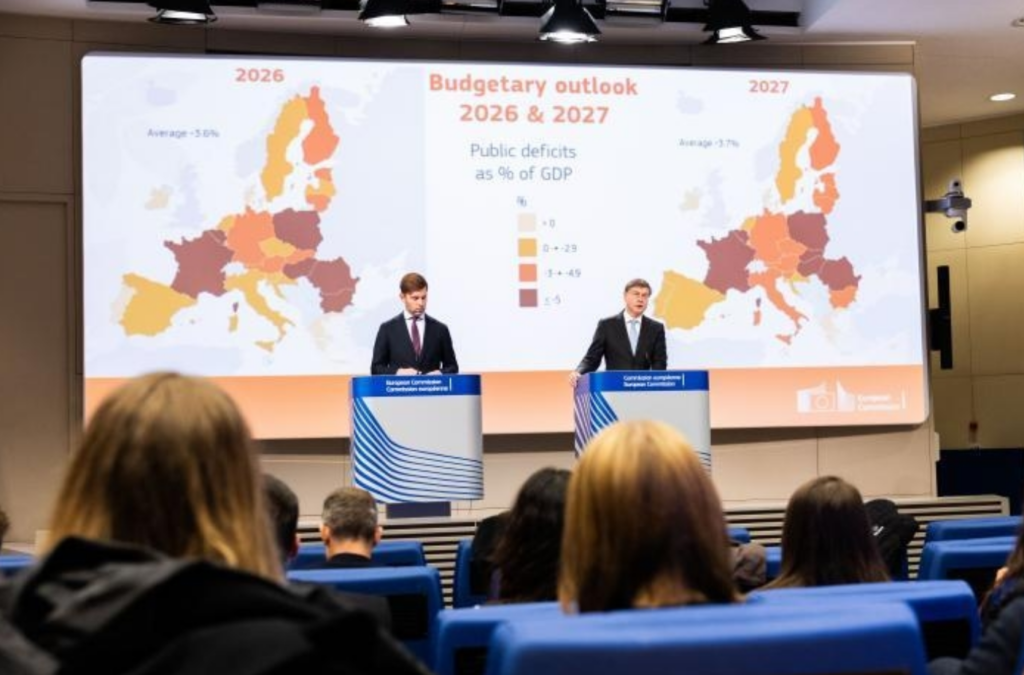
The EU’s aggregate government deficit is forecast to rise “markedly” in 2026, linked to higher defence spending, rising interest costs and new measures to shelter households and firms from high energy prices.
Interest expenditure is projected to rise to 2.4% of GDP by 2028 — the highest ratio for more than a decade — while the EU debt-to-GDP ratio is expected to increase from 82.6% in 2025 to 85.6% in 2028.
Valdis Dombrovskis, the European Commissioner for Economy and Productivity, said: “In 2026, Europe’s economy is holding up better than expected.”
