
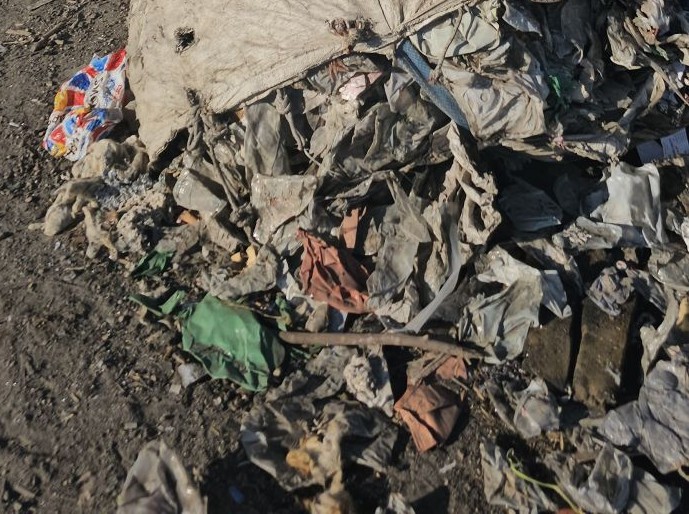
The exports of plastic waste from EU countries to Turkey continues to raise concerns about environmental pollution amid discussions at the UN Climate Change Conference, COP31, taking place in Antalya, Türkiye, until 20 November.
According to a recent article in The New York Times about Türkiye’s recycling industry in Adana on its Mediterranean coast, the European Commission says that the EU is not exporting its waste problem to third countries.
In fact, the EU is continuing its exports of waste to Türkiye according to a staff working document dated 18 September 2026. The purpose of the document is to provide an assessment of the plastic waste management in OECD countries importing large volume of such waste. This follows the upgrade of the Waste Shipment Regulation which entered into force on 21 May 2026.
In 2025, the overall export of plastic waste from the EU to third countries amounted to 1.4 million tonnes. Out of this, the EU exported 730.000 tonnes of plastic waste to third countries located in the OECD. Since China in 2018 banned plastic waste imports, Türkiye has become by far the largest destination for plastic waste from the EU with 510 000 tonnes imported in 2025.
New York Times quoted scientists who said that plastic shredded during the recycling process had been washed up a far away as Antalya, 400 km west of Adana.
The staff document describes mismanagement of plastic waste as one of the most serious forms of environmental pollution worldwide, with an important transboundary nature as illustrated by the magnitude of marine pollution linked to plastic leakages from different sources.
While Türkiye has developed a comprehensive legal framework on plastic waste management, there is only limited information on how this framework is implemented and enforced in practice. It is unlikely that the recycling capacity is sufficient to deal with all domestic and imported plastic waste in the country, according to the staff document.
The document confirms the problems mentioned in the article. Several cases of mismanaged plastic waste have been reported, notably in the Adana region, resulting in a series of fires in sites where plastic waste was stored, as well as plastic pollution affecting waterways and wildlife and contributing to plastic pollution in the Mediterranean Sea.
Furthermore, the increase in the import of waste from among the EU does not incentivise progress in domestic plastic waste management. The reliance by the Turkish recycling industry on imported waste could even present a risk of hampering progress for a better domestic waste management system because of lack of economic or legal incentives.
Despite a recurring concern by stakeholders about a gap between what is prescribed by law and the reality on the ground, the staff document stops short of proposing an end to EU exports of waste to Türkiye.
Instead, the document concluded that there is a potential to enhance cooperation between the Turkish authorities and the EU institutions and EU Member States to facilitate the exchange of information relating to the shipments and management of plastic waste, especially in relation to possible cases of illegal shipments.
Enforcement of Waste Shipment Regulation
Asked at the Commission’s press conference on Monday about its response to allegations of “ecological colonialism”, a spokesperson repeated its claim that the EU is not exporting its waste problem to third countries. The spokesperson referred both to the rules since May this year in the Waste Shipment Regulation and to the Commission’s staff document in September.
“Türkiye has taken important steps in the last years, in recent years, but what the report found is that there is further work that needs to be done, especially regarding transparency, implementation, and governance, and we are now working on these issues together with Turkish authorities.”
“Importantly, at the same time though, we ourselves in Europe, in the EU, need to accelerate our shift to the circular economy, and better manage our waste,” the spokesperson added. "We have underused capacity in waste recycling here.”
The waste export issue is linked to the COP31 summit, where a Zero Waste and Methane Reduction Initiative has been launched and become a flagship climate action. Asked by The Brussels Times for a comment, the spokesperson declined to comment further.
The Zero Waste initiative aims at setting global implementation target to reduce the projected growth of municipal solid waste generation—including plastics, paper, and metals—by at least 50% by 2035. For Food Waste there is call to halve global food waste by 2030 and end open dumping and burning. However, the initiative does not address the issue of exports of waste.
A draft text on Zero Waste has been released but many countries has reportedly pushed back against embedding new sectoral targets directly into the final decision.
Professor Sedan Gündoğdu, a Turkish marine biologist, wrote before the start of COP31 that it was more likely that the conference will result in voluntary commitments rather than a binding international regulation on zero waste. According to Gündoğdu, the COP31 Presidency should issue an international call to end the international waste trade.
The host nation Türkiye applies Zero Waste guidelines for the venue itself but is unwilling to discuss its own role in the management of domestic and imported waste and the reduction of methane emissions. Türkiye is ranked as a large emitter of methane from solid waste and has not signed Global Methane Pledge to cut global methane emissions by at least 30% below 2020 levels by 2030.
By coincidence, a deadline (article 39) in the Waste Shipment Regulation sets in on 21 November, one day after the closure of COP31 unless it will be prolonged. The rules differentiate between OECD countries and non-OECD countries. From that date, the Regulation bans EU plastic waste exports to non-OECD countries. A general ban on waste exports for disposal and a ban on hazardous waste exports for recovery to non-OECD countries will continue to apply.
OECD countries are believed to have better rules and standards in place and to comply with them. Because Türkiye is an OECD member, it is exempt from the ban. The Regulation requires the Commission to monitor waste management and can suspend waste exports if the waste is not managed in an environmentally sound manner.
