
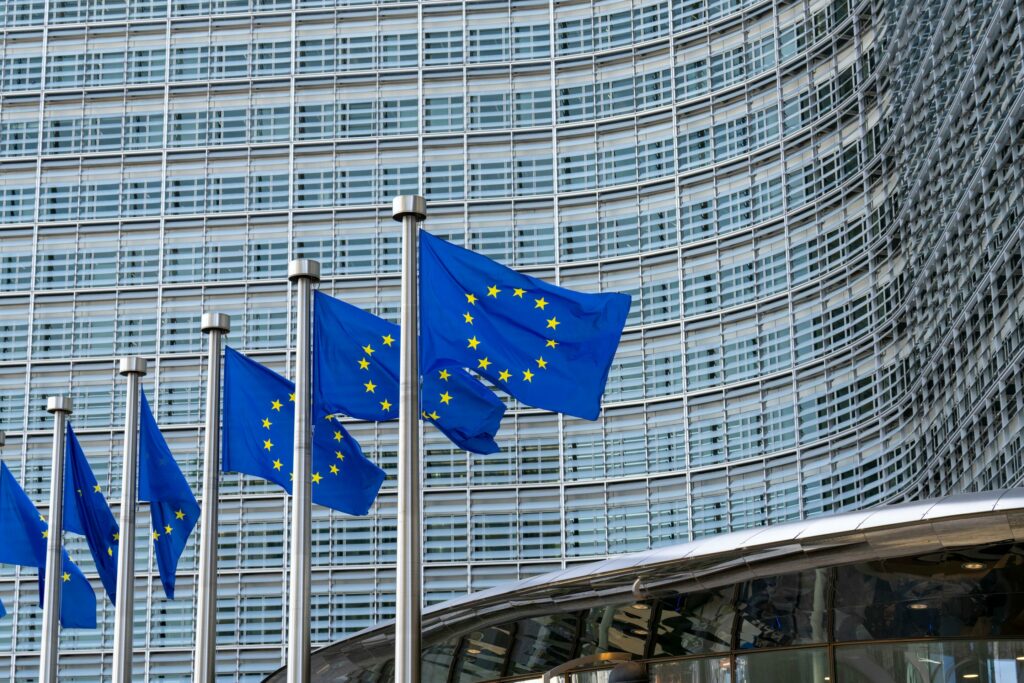
Several of the European Commission's internal applications were disrupted for around ten days following a cyberattack involving AI. The Commission says it has found no evidence of a data breach affecting its staff as a whole.
The European Commission confirmed on Thursday that it had been targeted in a cyberattack involving AI tools, Politico first reported on Thursday morning.
Commission spokesperson Thomas Regnier said the incident was detected on 22 October and that the Commission had launched an investigation. “Indeed we can confirm that this was done with AI tools,” he said.
Most of the affected services have since been restored, although the full extent of the damage remains unclear.
An EU official told Politico that the cybersecurity body responsible for the EU institutions, CERT-EU, identified the use of ARTEX, a publicly available AI-powered tool designed to detect vulnerabilities in IT systems. Several applications were temporarily taken offline as a precaution.
The disruption mainly hit internal tools, especially those used for human resources.
According to Euronews, officials could not access Sysper, the internal HR platform, which handles salary information, leave requests and timesheets, for several days. MyPMO, the system used to process medical expense reimbursements, was also disrupted.
External services such as Outlook reportedly continued to function.
The Commission's response
Asked why the institution had not provided more information about the attack, the spokesperson pointed to standard security procedures. He said disclosing the countermeasures deployed against the attack could undermine their effectiveness and leave the institution more exposed.
He told Politico that the Commission had taken the necessary measures in response to the cyber campaign and that those affected had been informed in line with standard practice.
The spokesperson declined to identify those responsible for the attack, saying the investigation was still ongoing. He described the incident as part of a wider global trend involving the use of AI in cyber operations.
AI tools can help cybersecurity experts identify vulnerabilities and prevent attacks, he said, but they can also be misused to carry out malicious operations.
Politico also reported that the incident was discussed at the highest levels of the Commission.
Its Corporate Management Board, its highest-level internal crisis management body, reportedly met urgently in early November, while Executive Vice-President for Tech Sovereignty, Security and Democracy Henna Virkkunen briefed other commissioners on the incident on Wednesday.
A wave of cyber incidents
The Commission attack comes amid a series of cyber incidents affecting businesses and infrastructure across Europe.
In early November, an suspected cyberattack affecting refrigeration systems at dozens of Belgian supermarkets, including stores operated by Delhaize, Carrefour, Intermarché and Spar, caused temperatures in refrigerators and freezers to rise. Retailers were forced to dispose of affected food products.
Similar cyberattacks had been reported in France in October, affecting hundreds of supermarkets.
However, no confirmed link has been established between the Belgian and French incidents, and the cause of the Belgian disruption has not been conclusively established.
