
Belgian businesses are ready to help meet a proposed global target of raising electrification to 35% of final energy consumption by 2035, but only if key conditions are in place, the Federation of Enterprises in Belgium, FEB, said on Thursday.
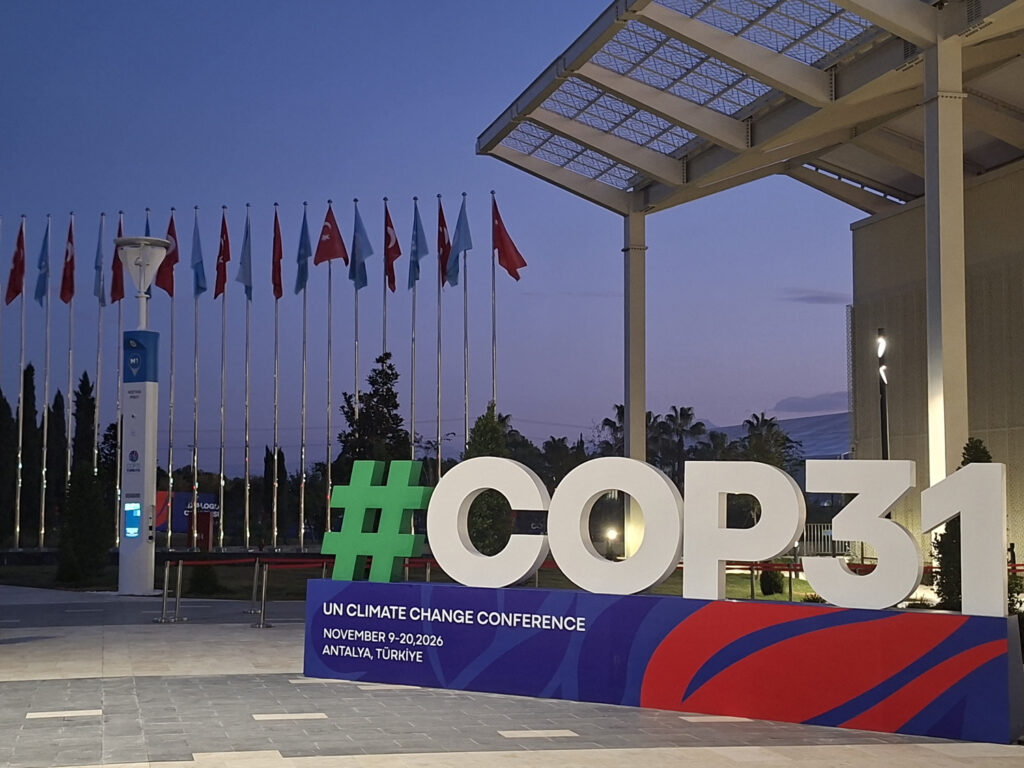
Speaking at the UN climate conference in Antalya, Vanessa Biebel, the federation’s chief operating officer and head of sustainability and the circular economy, said the goal would be difficult to achieve but remained essential to the transition.
The proposal under discussion at the summit, which runs until Friday, calls for nearly 200 countries to adopt a global objective of lifting electrification’s share of final energy consumption to 35% by 2035. The target is included in the latest draft decision being negotiated in Turkey.
Major effort required
In Europe, electricity currently accounts for 23.4% of final energy consumption. In Belgium, the figure is lower, at 21%, meaning a significant increase would be needed over the next decade.
Biebel said reaching the target would require a major effort. She said the transition would depend in particular on sufficient access to competitively priced low-carbon energy, describing this as a crucial issue.
She also pointed to practical obstacles in Belgium, especially the difficulty of securing permits for renewable energy projects and energy infrastructure.
Electrification bottlenecks
She cited the Boucle du Hainaut project as an example and said the country would also need to address bottlenecks in its electricity grids.
The Federation of Enterprises in Belgium is part of the Belgian delegation at UN climate summits through its membership of the Federal Council for Sustainable Development, alongside trade unions and NGOs.
Biebel said attending COP31 also allowed the federation to keep up to date with sustainability issues and benefit from the exchange of knowledge taking place at the conference.
Highlighting Belgium's strengths
She said the federation was also at the summit to represent business interests and did not shy away from describing that role as lobbying. She argued that businesses, like NGOs and trade unions, were entitled to defend their positions and continue discussions with other stakeholders.
At the same time, she said, the federation wanted to highlight Belgium’s strengths, including companies and pioneers developing solutions to climate change. She said this was not only about lobbying, but also about showcasing what Belgian businesses were doing well.
Biebel added that the federation was keen to make the case for the competitiveness of companies during the transition. She said businesses needed a clear, predictable and coherent framework for the future to make the shift workable.
