
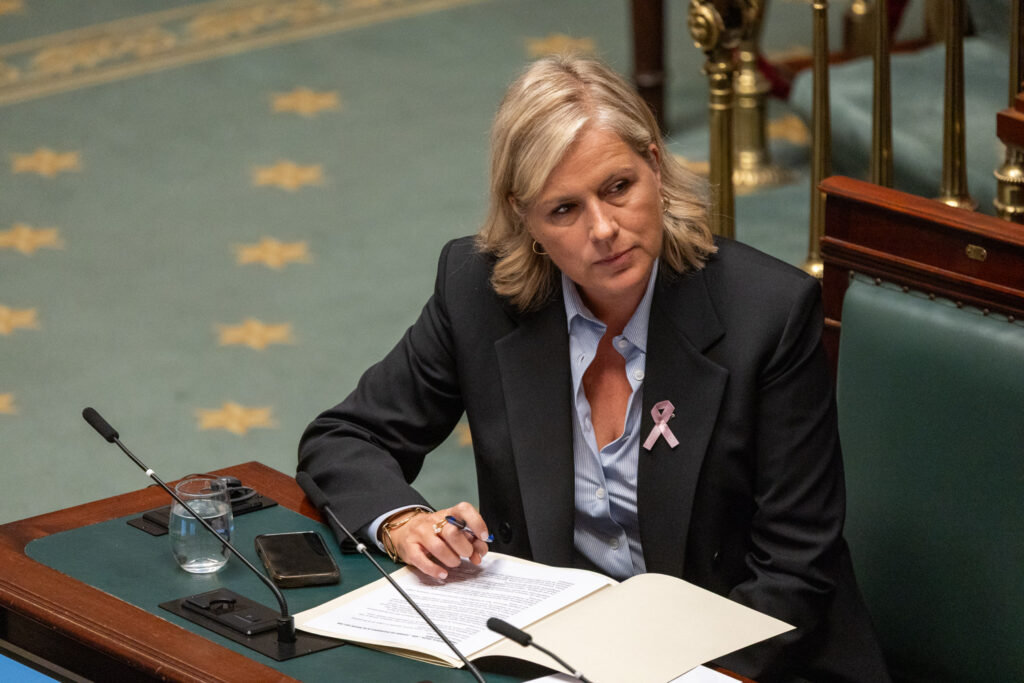
Belgium’s Digitalisation Minister Vanessa Matz is preparing two draft laws to crack down on anonymous cyberbullies, unsolicited sexual images and other forms of online abuse, including by allowing courts to temporarily ban offenders from social media.
Matz, of Les Engagés, announced the plans on Saturday in a press release.
One of the proposed laws is aimed at tackling situations in which cyberbullies cannot be identified because they hide behind anonymous usernames.
Related News
- Love Apptually: Is romance dead in 2026?
- 'I'm scared of dating in Brussels'
- 'I'm sick of having my heart broken': The over 50s looking for love (and good sex) in Brussels
Under that proposal, people would still be able to use a pseudonym of their choice, but their real identity would have to be verified when they create an account by a trusted third party.
Social media platforms would receive only confirmation that the identity check had been completed, without gaining access to users’ civil identity.
Matz will submit the preliminary draft on verified pseudonyms to the inter-cabinet working groups.
A second draft law would update the Criminal Code to cover newer forms of online sexual and sexist violence.
The minister wants three types of digital abuse to be explicitly included in the code: the non-consensual distribution of sexual deepfakes, the unsolicited sending of sexual images, known as cyberflashing, and digital stalking.
That stalking could include abuse through geolocation, spyware or the malicious sharing of personal data.
Deepfakes are images altered using artificial intelligence, while so-called deepnudes are fake sexually explicit or nude images.
Matz said the legislation is intended to respond to the “explosive growth” of generative AI tools.
She also wants judges to be able to impose a temporary social media ban on anyone convicted of using those platforms to harass or threaten another person.
“Just as a driving licence can be withdrawn from someone who commits serious traffic offences, we must be able to stop offenders from continuing to use the same digital tools to attack their victims,” Matz said.
