

It is not only in Belgium that an agreement on a new budget is being sought.
In Europe, too, the negotiations on the next multiannual budget are slowly heading towards a climax. In his latest proposal, European Council President António Costa once again makes deep cuts to the heading for resilience, security, defence and space. Less European money for defence leaves us with only one option: fully Europeanising the investments that are there.
At the end of this week there is an extraordinary European Council, devoted entirely to the next multiannual budget. Europe does not work with annual budgets but with a budget covering a seven-year period. The heads of state and government are currently working towards an agreement on the budgets for 2028-2034. With a possible far-right or far-left victory in the French elections breathing down their necks, the pressure is high to reach an agreement before the end of the year.
In total, we are talking about a pot that ranges from 1,780 to 1,980 billion euros, depending on the proposal. Most of it is financed through contributions from national budgets. Anyone who sees how heavily those are under pressure understands why the negotiations are being fought so hard.
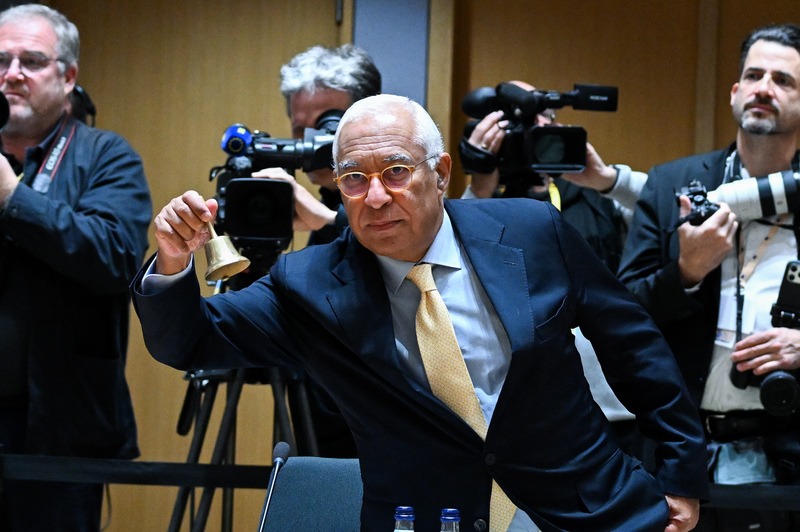
The key figure in all this is António Costa. The Portuguese has been President of the European Council since 2024 and has to get the member states on the same page. Not least the so-called Frugals, who want to bring the budget down, and the Friends of Cohesion, who above all want to keep substantial budgets for the cohesion funds. Those are the funds meant to help the newest member states and less developed regions keep up with the rest.
Cutting back on security
What stands out in Costa's latest proposal is that the largest additional cut falls on the heading for resilience, security, defence and space. Where the European Commission originally planned 130.7 billion euros, Costa proposes lowering the budget to 91.7 billion euros. That is a drop of 30%. For defence spending alone, it means at least 20 billion less.
To put that in perspective, I refer to IRIS², the programme through which the EU is building its own network of communication satellites. That matters for governments, but also for defence and emergency services, or when mobile networks go down.
It should make us less dependent on the American Starlink, not least on the battlefield. Extremely important, in other words. The full rollout costs 11.6 billion euros, a considerable part of which has to come from the European budget. A cut of 20 billion puts essential projects like this at risk.
Getting the budgets in order is one thing, but this cut does not mean that the threat on our eastern border is getting smaller, or that the United States will suddenly open its security umbrella over the EU fully again. If there is one conclusion from recent years that almost everyone agrees on, it is this: when it comes to our security, we will have to stand on our own two feet. And that costs money.
A fifth cheaper
At the same time, the member states themselves have been spending much more on defence in recent years. The European Defence Agency estimates the total national defence spending of the 27 member states for 2026 at 454 billion euros, of which 163 billion is investment.
However, in eight out of ten cases, the member states use a specific procedure that involves no public tender and therefore no European market consultation. This way, the French buy from French companies and the Germans from German companies, but there is no push towards a European defence industry.
According to the Draghi report, however, major efficiency gains can be achieved by Europeanising these resources. Some reports speak of at least a fifth cheaper. If we manage to make these investments jointly at European level, mainly in new equipment and in research and development, that could potentially yield a gain of 32.6 billion euros. That is more than the Netherlands spends on defence in total, and well over double the Belgian defence budget.
Less security or Europeanising
When we talk about resilience, security, defence and the importance of space, we have to look beyond the figures. The member states can now do one of two things. Either we actually invest less in defence at European level, because the European budget simply provides less money.
That means less security for European citizens, no matter what. Or we keep investments at the same level by finally getting serious about the most logical step in European security: buying equipment together at European level and investing together in research and development. That way, Costa can get his troops in the Council on the same page without us having to give up any of our security.
On the contrary, by Europeanising we can even build a far more effective defence, one that uses the same equipment, works to the same standards and will cooperate much better on the battlefield. That way we finally get not just more money for defence, but above all more defence for our money. And that is what it is all about.
