
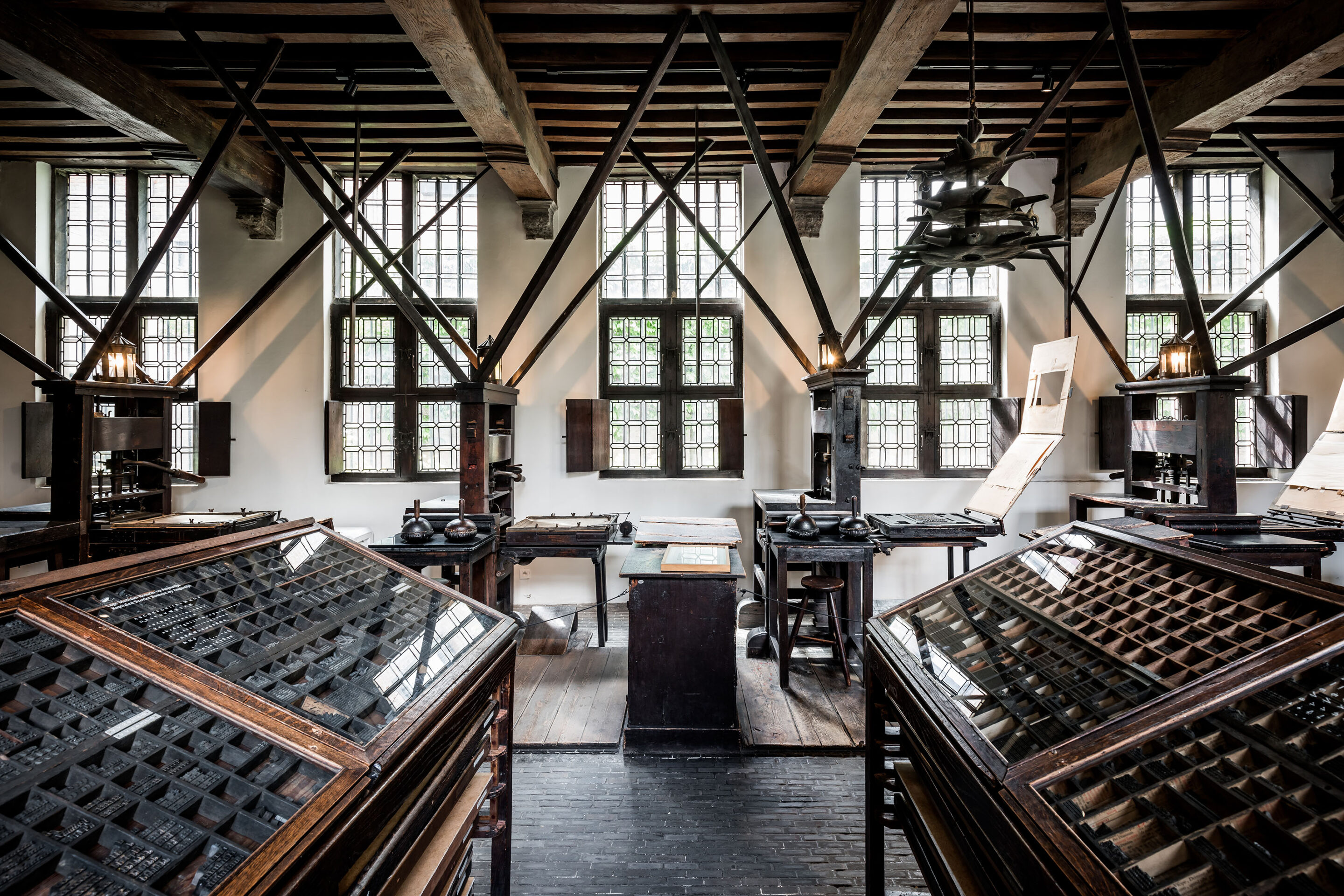
In the heart of Antwerp, the world’s oldest printing presses share a roof with bedrooms, tapestries, and nine generations of a family’s history. As this historic mansion marks 150 years as a museum, Helen Lyons visits the former home and workshop of one of Europe’s great printing dynasties.
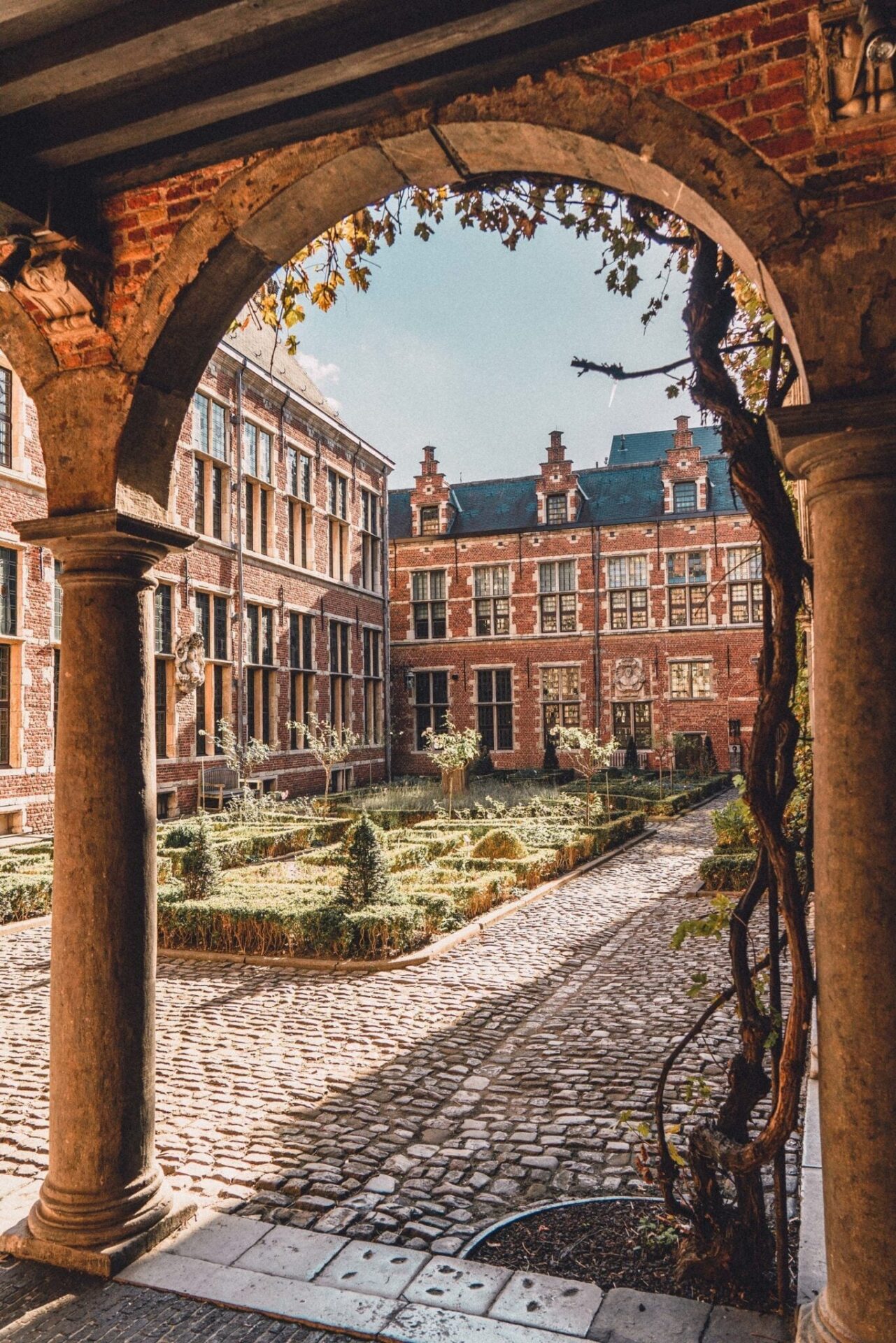
At 22 Vrijdagmarkt, somewhere within the red-brick walls of a stately mansion – perhaps in its Flemish Renaissance courtyard garden, where shadows fall across fig, pomegranate and lemon trees and mark the hours on a sundial – a mother anxiously reads a letter from her son.
The year is 1713, and Jean Jacques is travelling across Europe – a rite of passage for young men from wealthy families at the time. His itinerary was agreed in advance and did not include a sea voyage. But in Italy, Jean Jacques has found an opportunity he is reluctant to pass up: a ship bound for France, soon to depart.
His mother, Anna Maria de Neuf, knows that sailing is not without risk, particularly across the treacherous Bay of Biscay. And at 23, Jean Jacques is still two years short of his official coming-of-age, so he needs permission to change his plans.
The circumstances of the letter that troubled Anna Maria may have been exotic, but the request was not. Beneath eloquent overtures about foreign adventures, uncertain waters and an imminent departure lay perhaps the oldest petition a child can make of a parent: “Mother, may I?”
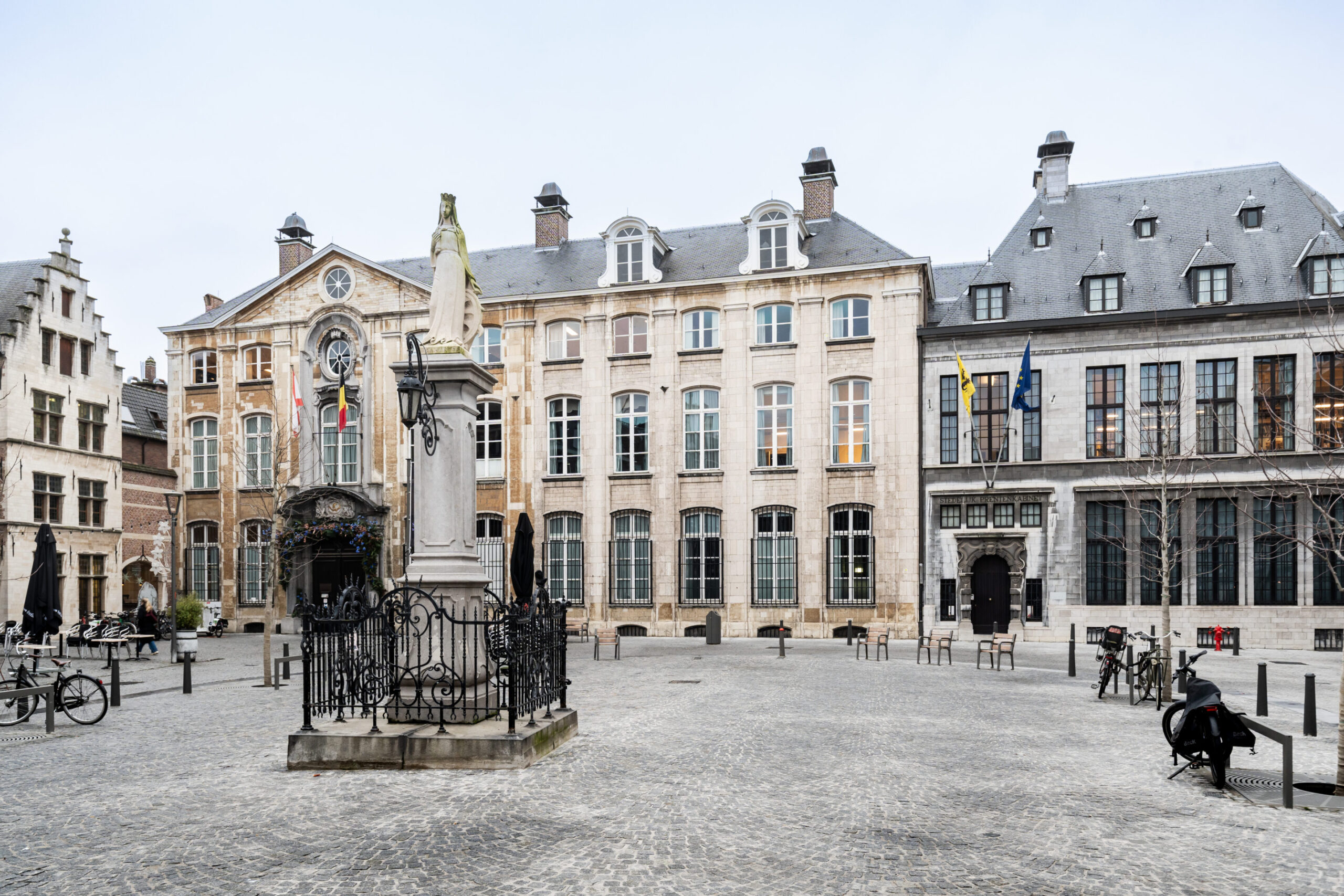
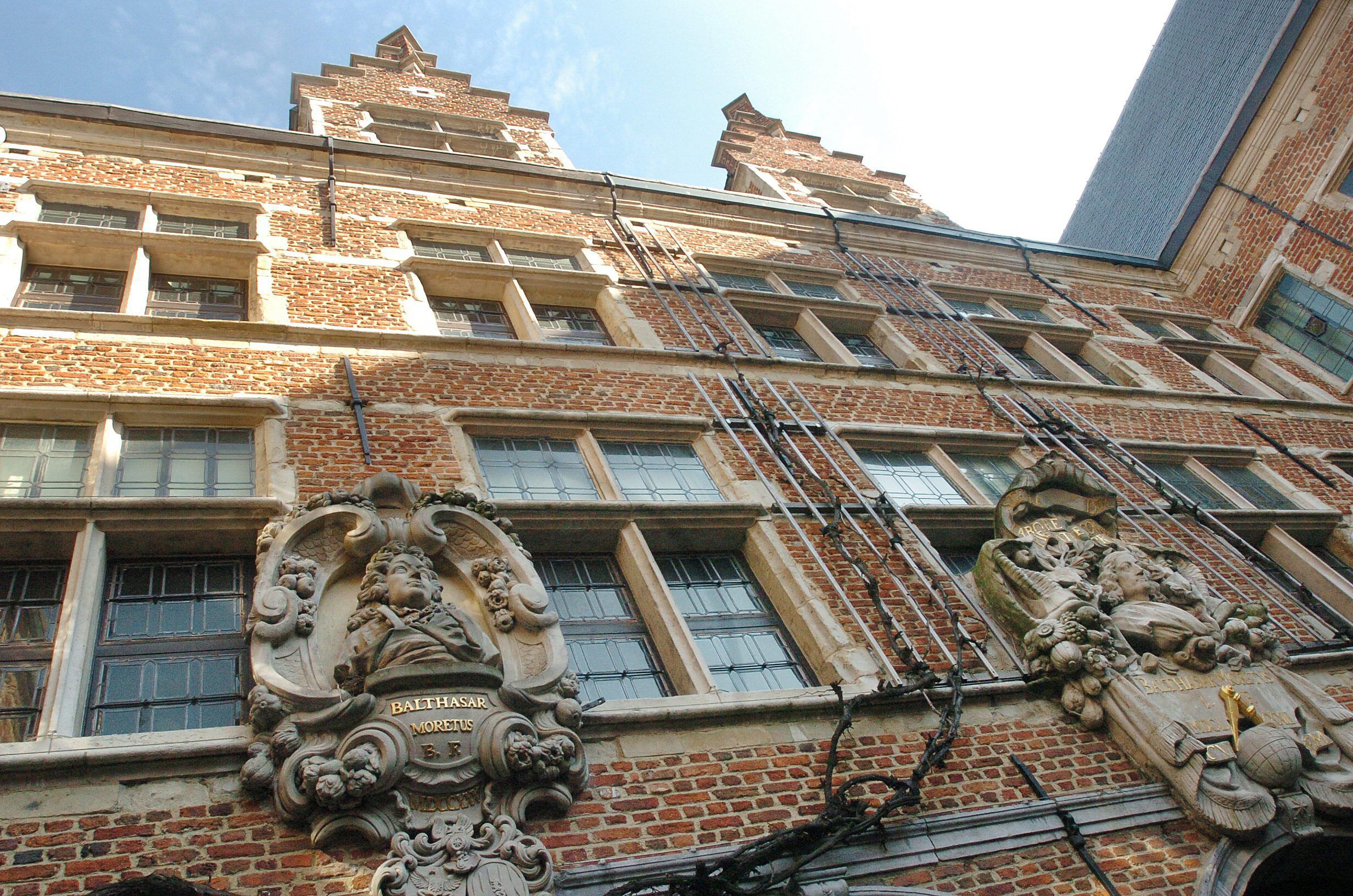
Anna Maria was the matriarch of one of nine generations to live and work at the home on Vrijdagmarkt, now known as the Plantin-Moretus Museum.
Part house and part workshop, the UNESCO World Heritage site contains the world’s oldest surviving printing presses, rare medieval manuscripts, a virtually intact business archive dating back to 1555, and even the original Garamond typeface, whose descendants are found on computers everywhere.
© LUCID PlantinMoretus
There are early maps, botanical compendiums and medical textbooks, sometimes comical in their attempts to turn mystique into science, at other times startlingly accurate.
Yet for all its importance to the history of civilisation, the domestic side of the museum is just as compelling. Visitors can pass from the workshop into extravagant living rooms hung with Brussels tapestries, bedrooms decorated with Spanish gilded leather and salons lined with priceless portraits by Rubens, a long-time family friend.
There’s the art cabinet with its false-bottomed drawers for hiding precious jewellery and documents, a double harpsichord (there are only a handful of these in the entire world), a Louis XV-style pendulum clock, ornate fireplaces and a delicate cabinet filled with porcelain and crystal.
And amid all this treasure and history, there were always children. Across the generations, they ran over the hardwood floors, played in the garden, read proofs and learned Greek and Latin.
Some generations numbered as many as 13 children (Anna Maria de Neuf had nine with her husband Balthasar III Moretus: six daughters and three sons, Jean Jacques the youngest).
“People don’t realise that this isn’t just a printing museum; it’s an emotional journey through the 16th and 17th century,” explains Director Iris Kockelbergh.
“Visitors are welcomed into this house as it existed during these centuries. It wasn’t just this immense business. It was also a home. Today it’s a time capsule – full of family history, stories about their everyday lives, and the lives of the people who worked here.”
The household as enterprise
Christophe Plantin, who would become the wealthy head of one of Europe’s most important printing dynasties, came from far humbler beginnings than the opulent rooms on Vrijdagmarkt might suggest.
Born in France in the first half of the 16th century, Plantin was sent off to Paris at the age of 13 or 14 to apprentice with a family, training as a printer and working with a master bookbinder.
“They became his new family – his brothers, sisters, parents,” Kockelbergh says, “because from that point on, he never saw his father again. He didn’t have a mother anymore.”
In his early 30s, an ambitious Plantin arrived in Antwerp hoping to establish a printing business of his own. Modesty did not survive contact with Antwerp. What began as a small concern grew into one of the great intellectual and commercial enterprises of early modern Europe. Among those who came to work for him was Jan Moretus, who entered Plantin’s service as a teenager.
Plantin was greatly impressed by Moretus’s intellect, affinity for languages, and unwavering loyalty, even during times of misfortune. Plantin wrote that Moretus turned down, “promises or inducements that others were able to make him, even offering him the richest marriages and rewards such as were not within my power to grant him.”
It was for these reasons that Plantin gave Moretus his daughter Martina’s hand in marriage, “to the great pleasure of all my good Lords, relations and friends who have known this young man while he has been conducting the business of my shop.”
As that business continued to expand, it moved to 22 Vrijdagmarkt, where there was room for both a growing staff (which included more than 80 employees at the press’s height) and a growing household.
© LUCID PlantinMoretus
Plantin’s daughters were drawn into the venture remarkably young, reading proofs from as early as five. Later generations likewise grew up with the workshop just a few doors away from the nursery.
Martina Plantin was herself deeply involved in the business, part of a tradition of women whose contribution to the Plantin-Moretus enterprise was substantial even when the historical record made them less visible than their husbands or fathers.
The line between family and business was not so much blurred as erased – and nowhere is that clearer than in the house itself.
From the shopfront, with its weighing scales and sample books, visitors pass into the courtyard, once entered by the horses and carriages of customers, princes, kings and other dignitaries.
The overhanging first floor offers shelter from the Belgian rain as you make your way to the workshop, where ink was rolled onto meticulously arranged type, or to the luxurious living quarters, whose drawing rooms held enough priceless objects to fill museums of their own – all under one roof.
Today, the heart of the complex remains the printing workshop, where two presses dating from around 1600 are believed to be the oldest surviving printing presses in existence. Six others remain operational, and visitors can take home a copy of Le bonheur de ce monde, a sonnet attributed to Christophe Plantin himself, pressed for them on one such machine.
The building from the inner garden of the Antwerp Plantin Moretus Museum, Tuesday 14 March 2006. Credit: Belga/Herwig Vergult
Nearby are the library, proofing and workspaces, with type cabinets and shelves containing the accumulated tools of a trade that was carried on here for centuries.
Yet how quickly the industrial gives way to the intimate. Within minutes, visitors can move from the machinery of mass communication to rooms for sleeping, eating, entertaining and raising children. It is this proximity that gives the museum its peculiar atmosphere.
The workshop was, in effect, an early modern information industry; a few doors away, somebody was deciding what to serve for dinner. The printing presses were never historical attractions installed in an old house: the house grew around the presses, and the family grew around both.
“Many rooms and items are in exactly the same place as they always were,” Kockelbergh says. “The library is in the same place, most of the furniture is in the same place.”
The effect is less that of a historical reconstruction than of a household whose occupants have only just stepped out.
From house to heritage
By the 19th century, the business that had once stood at the centre of European publishing had lost much of its commercial force. Later generations resisted modernising the presses, and in 1876 Edward Moretus sold the property to the city of Antwerp, which opened it as a museum the following year.
Moretus included much of the furniture, books and priceless paintings in the sale, regarding them as heritage rather than family heirlooms, intended for museum visitors rather than private drawing rooms (though copies were made of the family’s favourites).
The Moretus family remains in Antwerp, maintaining ties with the museum and occasionally visiting what was once their home. In 2005, Plantin-Moretus became the first museum inscribed on UNESCO’s World Heritage List; its archives had already entered the Memory of the World Register in 2001.
As it approaches its 150th anniversary, the museum is preparing to reinterpret that inheritance once again. It is closed until December 4 for renovations and an overhaul of its permanent exhibition, designed to bring the family and the printing house into closer conversation.
And if the museum’s great books preserve the public ambitions of the Plantin-Moretus dynasty, its archives preserve something more intimate, even messy: the private lives that sustained it, especially those of its matriarchs – formidable businesswomen and anxious mothers.
“Women weren’t as visible as men, but they were very involved,” Kockelbergh explains.
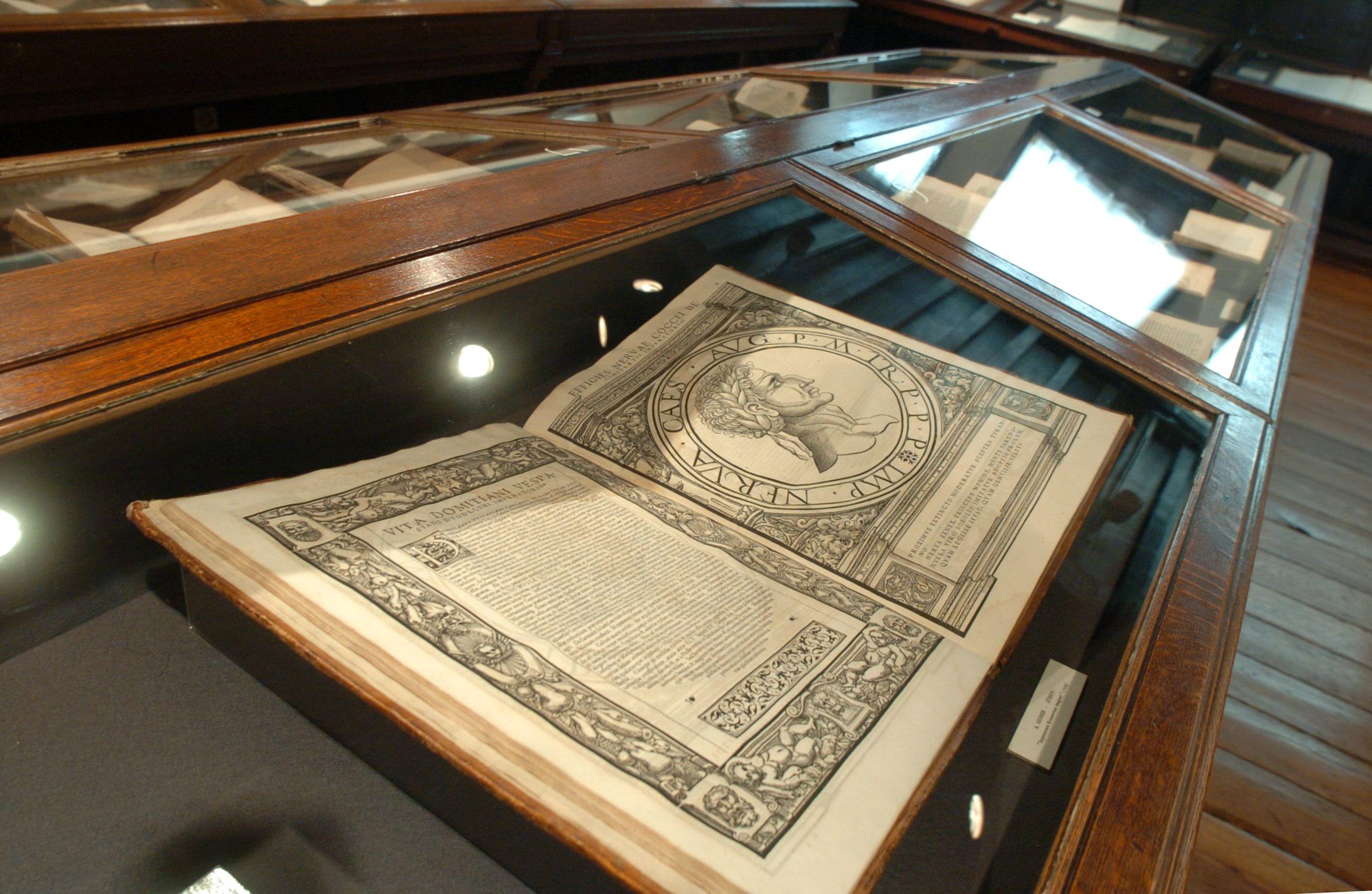
Books at the Antwerp Plantin Moretus Museum, Tuesday 14 March 2006. Credit: Belga/Herwig Vergult
“They read, they write, they speak many languages, they trade – even when they don’t have a husband. It wasn’t rare in the north of Europe, though it was unusual in the south.”
Robin Ollivier, one of the museum’s experts, puts it succinctly: “They were very strong women who could and did take over the business. They had the talent and they had the knowledge. They safeguarded the fortune. They played a different role, but an equal role.”
This relative freedom was so striking that the Florentine merchant and chronicler Lodovico Guicciardini, visiting Antwerp, wrote at length about women’s participation in economic life in the Low Countries. They were active not only in household affairs but in buying and selling goods and property, and in other business usually considered the preserve of men.
There is a pleasing circularity to this observation: Plantin would later publish Guicciardini’s best-known work, Description of the Low Countries, improving on the original edition by using copper plates instead of woodblocks.
Mothers of invention
Anna Maria de Neuf already knew something about mothering sons old enough to resent being mothered when she sat down to reply to Jean Jacques’ request to sail to France.
Her thoughts may have turned to another, older son, Petrus Moretus – or, more affectionately, her ‘Peroken’. ‘Little Peter’ had gone to university in Douai. In a letter written when he was 19, he begged his mother to stop sending gifts and money as tokens of her love, assuring her that he needed no presents to know how deeply she cared for him.
Children – even sons – do grow up, after all.
And while Peroken had begun to resist the visible trappings of maternal affection, Jean Jacques, for all his appetite for independence, still required its legal form. He needed permission. The decision was hers. At 22 Vrijdagmarkt, in the heart of Antwerp, a mother put pen to paper and wrote to her youngest son.
“As I have such a kind heart towards my children and do not readily impose my will upon them, I find it easier to impose my will upon myself, which is what I am doing now with regard to you, by allowing you to travel through Spain and then return via France,” she wrote in flowing old French script, looping her D’s and drawing her accent marks long.
“Do take every precaution,” she added, penning “Le bon Dieu veut estre votre garde.”
“The good Lord wishes to be your guardian, I place you in His hands, that He may preserve you from all misfortune, and may grant you as much wisdom and virtue as you will need for the greatest glory and salvation of your soul.”
The presses at work in rooms close to hers – where they still stand today – were built to preserve words for posterity. Three centuries later, the house has achieved something just as remarkable: it has preserved the people behind them.
