
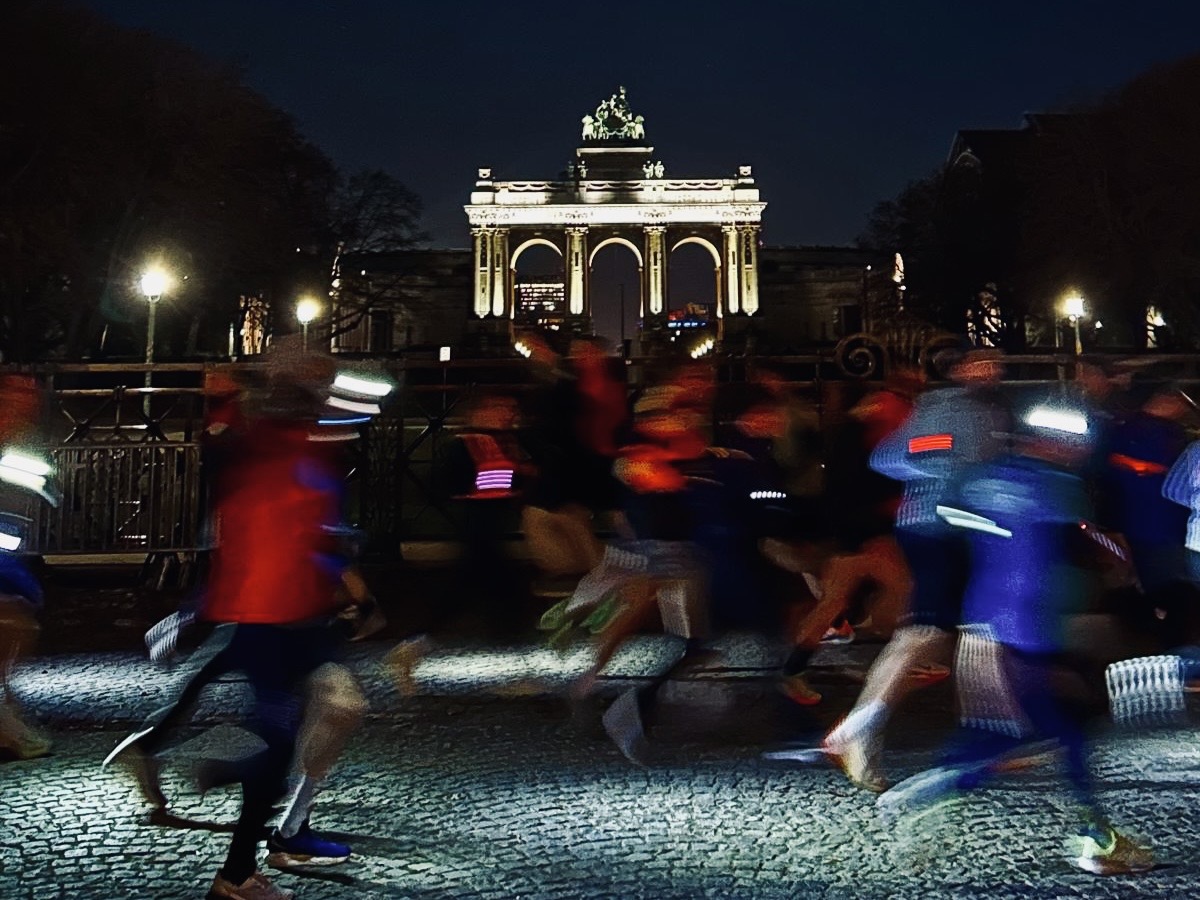
Five Brussels running communities have united against plans to shorten the athletics track at Cinquantenaire Park. They say that one of the capital’s last free public tracks is already too short, too dark and unsafe.
Brussels is teeming with people who like to run; men and women who join running groups take to Bois de la Cambre, Parc Royal or Cinquantenaire to get their sweat on, and sometimes socialise between breaks.
As one of the last free running tracks in a buzzing city, the Cinquantenaire's 356-metre track – which is already shorter than the standard 400-metre required for an officially homologated athletics track – would shrink to 330 metres as part of a revamp plan.
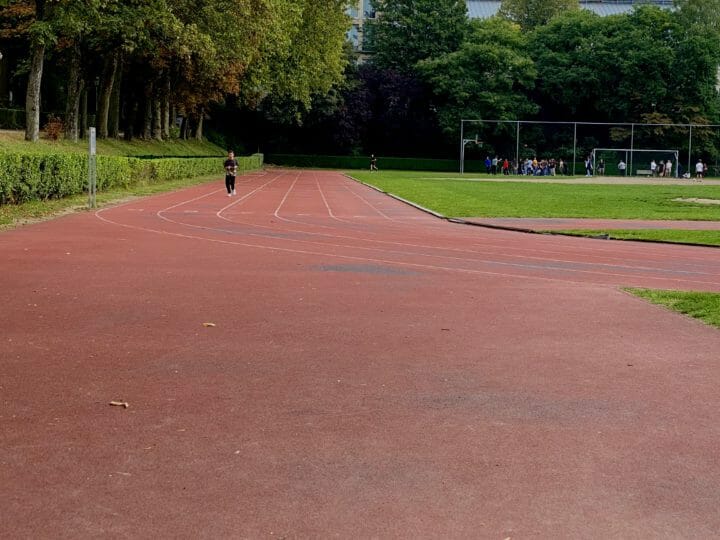
Athletics track at Cinquantenaire Park in Brussels. Credit: InsideBrussels / Pierre Halleux.
The federal agency responsible for major infrastructure projects in Brussels, Beliris, is eyeing a facelift for the park ahead of Belgium’s 2030 bicentenary. But runners say the plan ignores the people who use the track most, and the park in general.
Two petitions, one to preserve the track and one calling for night-time lighting, have gathered over 900 and over 450 signatures respectively, as of publication, close to their targets of 1,000 and 500.
They are now merged under the banner “Save the Track”, backed by BXL Run Crew, Runnification, Cadence, Brussels Runners and BXL Girls Run Club.
The plans seek to restore the park’s historic symmetry, including a double row of trees along the axis of the Horta Pavilion. Yet aerial photographs show that the track was already there in 1953.
Busy, bumpy and completely dark
Giovanni D'Arezzo, founder of Runnification and organiser of the lighting petition, said that between October and March, some runners give up on Cinquantenaire entirely because of darkness, uneven ground and safety worries.
A Runnification member recently twisted their ankle after stepping into a hole near the park’s arches. Tree roots have pushed up bumps in several sections of the surface – a hazard made worse when visibility is poor.
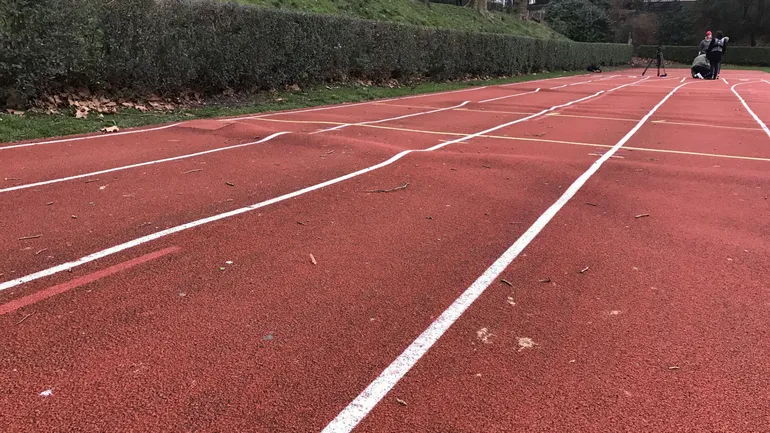
A tree root has pushed up the surface of the athletics track at Brussels’ Cinquantenaire Park, creating an uneven bump that poses a potential tripping hazard for runners. Credit: Philippe Carlot
For women, the concern goes beyond injury.
Ines de Araujo Reis of BXL Run Crew said many women she knows avoid the park after dark, and she does not mean late at night.
“I mean 20:00, or 19:00 in the winter,” she told The Brussels Times. “I would do it on a bike at night, but I would not do it walking because it’s very, very scary. You really don’t see things around you.”
Maria Sibylla Galera Hauer of BXL Girls Run Club says the problem is what led to the club's creation. Founded in February 2024 as a community for women and non-binary runners, it now has more than 800 members.
“A lot of the women I knew were stopping their training during the winter months because it was dark, and they could only go running before or after work,” she told The Brussels Times. “They did not feel safe going running alone in the dark.”
The club’s answer was to pair runners up. “You can take a lot of precautions. You can run in a well-lit street, you can run in an area where there are a lot of people, you can not wear headphones. But ultimately, the way to ensure that you’ll be safe is running with other people.”
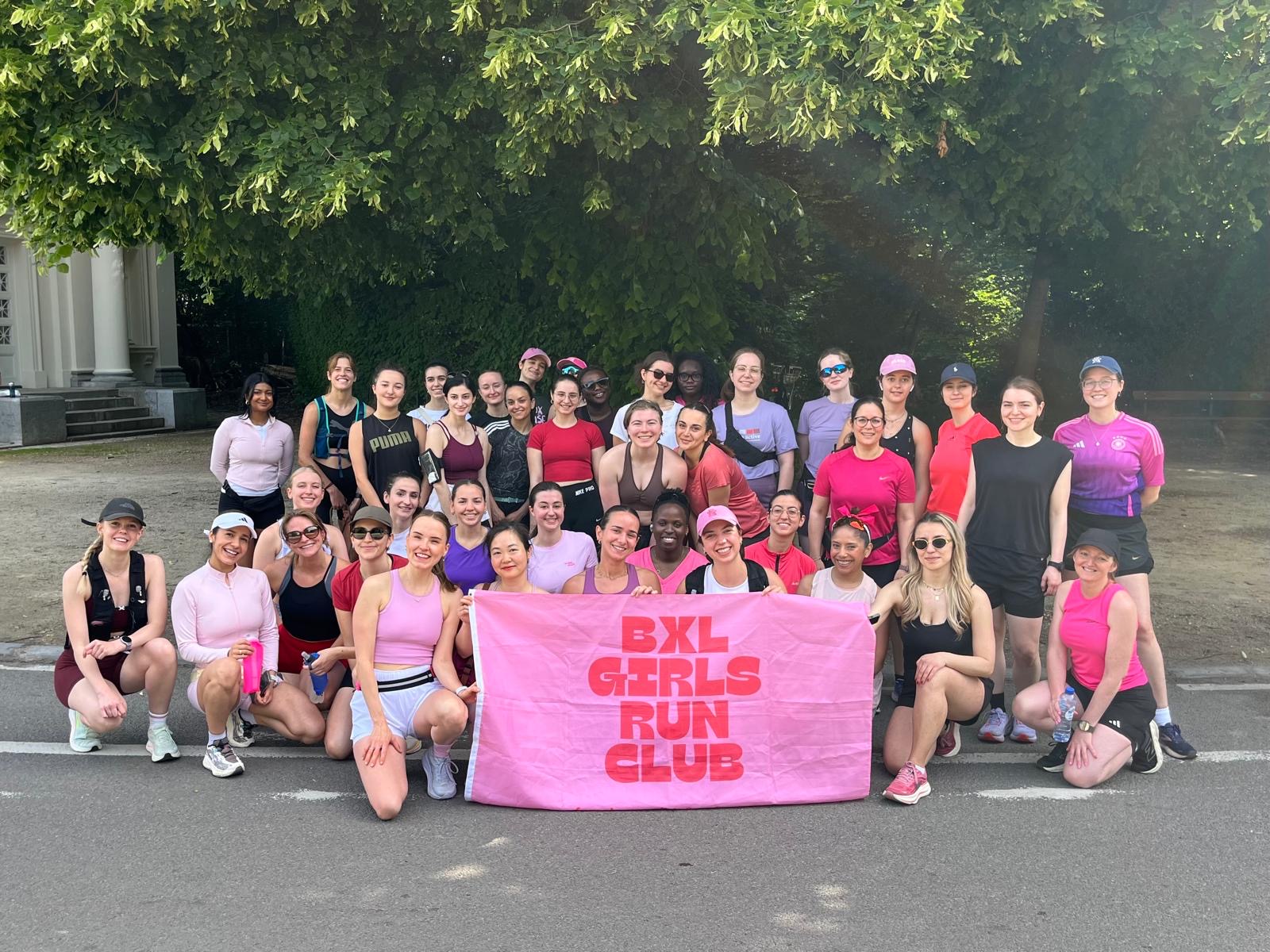
BXL GIRLS RUN CLUB. Credit: Juliette Maes Bodart.
Even so, the club eventually dropped its winter sessions at Cinquantenaire.
“We very quickly realised that it’s not only a matter of safety getting to the track, because you have to cross a park which is completely dark, but also safety while training because you don’t see very well," Galera Hauer added.
The club has also worked with the NGO Run Her Way on a survey of women’s experiences of running in Brussels, including concerns about poorly lit public spaces. The results are published as an interactive map marking where respondents felt unsafe or struggled to exercise.
“The combination of the bad condition of the track in Cinquantenaire and no light makes it a bit of a hazard,” she said. Runners tripped on uneven sections several times, including during last Tuesday’s symbolic protest.
On Tuesday evening, around 300 people joined a symbolic five-kilometre protest run despite freezing temperatures, according to organisers.
The groups are preparing a joint letter to the authorities asking that the track keep its current length or, ideally, be extended to the standard 400 metres, with better lighting and maintenance.
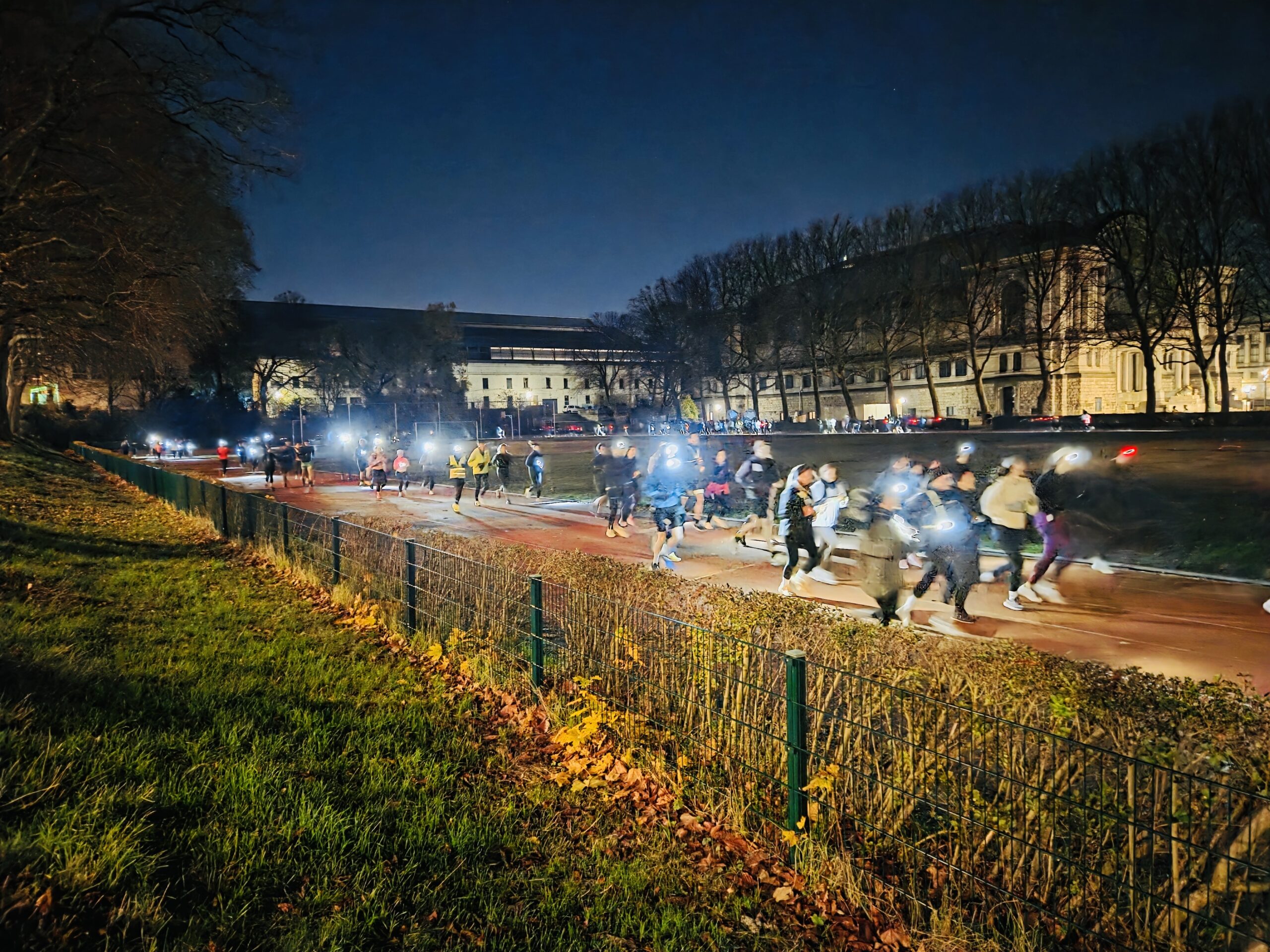
Runners take part in a symbolic five-kilometre protest run at Brussels’ Cinquantenaire Park on Tuesday 24 November, opposing plans to shorten the athletics track. Credit: Runnification group.
Lavy Pinto, who helps manage Brussels Runners, another running club, said the track draws cadets from the nearby Royal Military Academy as well as recreational and structured-training runners.
At busy times, he said, it gets cramped. “Sometimes there is no place. You are kind of trying to avoid people when running.”
The track’s irregular length also makes structured sessions harder, particularly repeats of 200 or 400 metres.
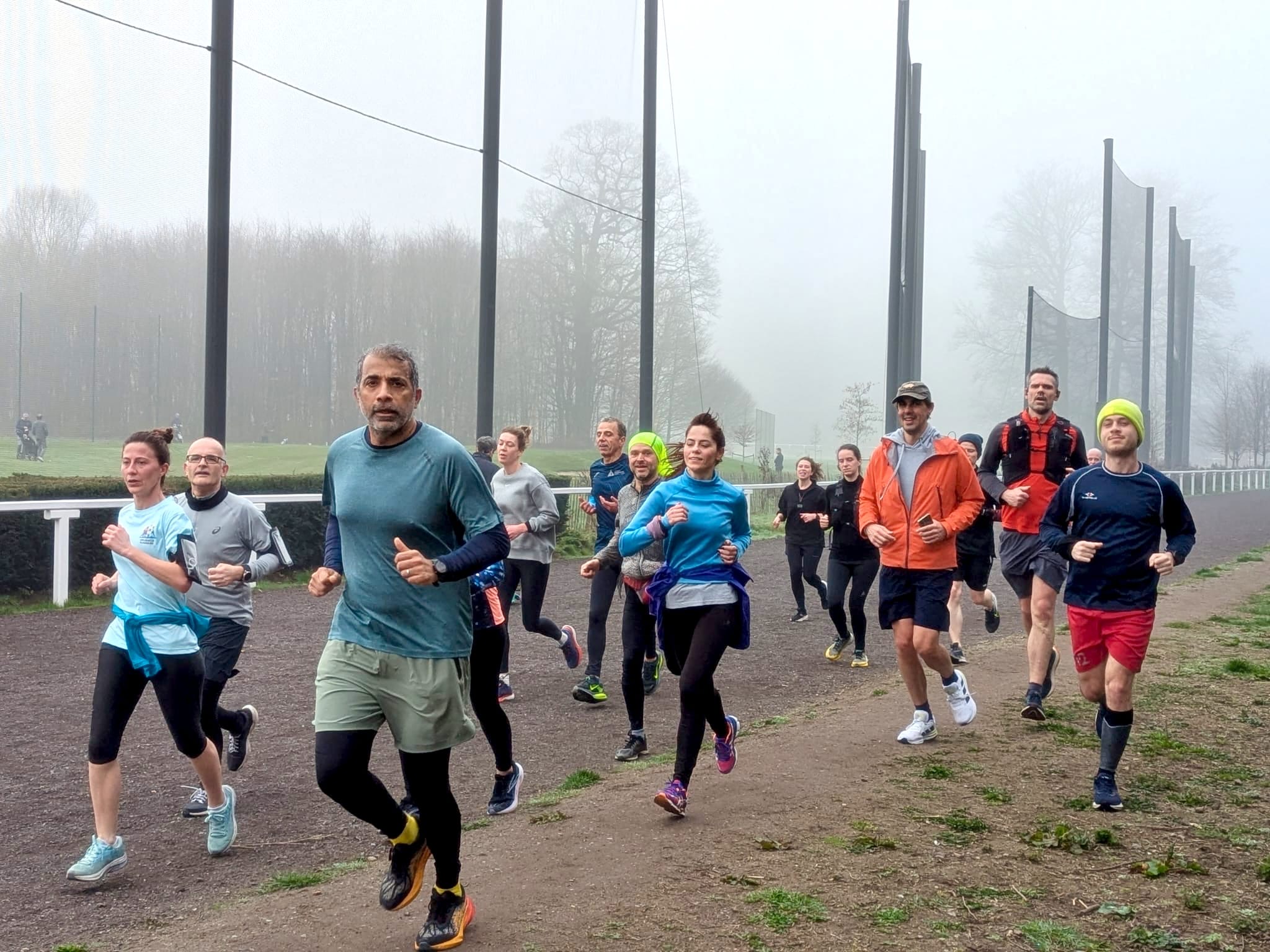
Lavy Pinto, in the blue T-shirt and green shorts, is a faithful runner; he founded the running club Brussels Runners. Credit: Handout
Antoine Brodkom, co-leader of Cadence, which brings together 100 to 150 runners at its regular sessions, joined the campaign even though the group does not train at Cinquantenaire.
Cadence rents the track at Vrije Universiteit Brussel (VUB), which he describes as well maintained and properly lit. But that option has a price. “Not everyone can necessarily afford to pay a subscription or rent a track,” he said.
He finds the plan hard to understand as running clubs multiply across the city.
“It’s quite extraordinary that in the capital of Europe and of the country, there isn’t an athletics track accessible to everyone, and that the only one that is accessible, isn’t 400 metres long, isn’t illuminated, is full of bumps, and now they want to shorten it.”
Light without harming the fauna
The renovation does include a new lighting plan for the park. Under the plans, the main avenues would stay lit all night, while some paths would go dark after midnight. Less-used paths would remain unlit to protect wildlife, limit light pollution and cut energy use.
Beliris confirmed to The Brussels Times that the plan covers the main paths, including those running alongside the sports areas, but said no lighting dedicated to the athletics track is planned at this stage. It added that the plan was designed to take the park’s fauna into account and limit light nuisance.
The runners accept the environmental concerns as legitimate and say they don’t conflict with their demands. D’Arezzo stressed that the campaign does not seek to light up the whole park.
“Some people were afraid that we wanted to light up the whole park, and they were concerned about wildlife or light pollution. This is not our intention. The problem is the track,” he said.
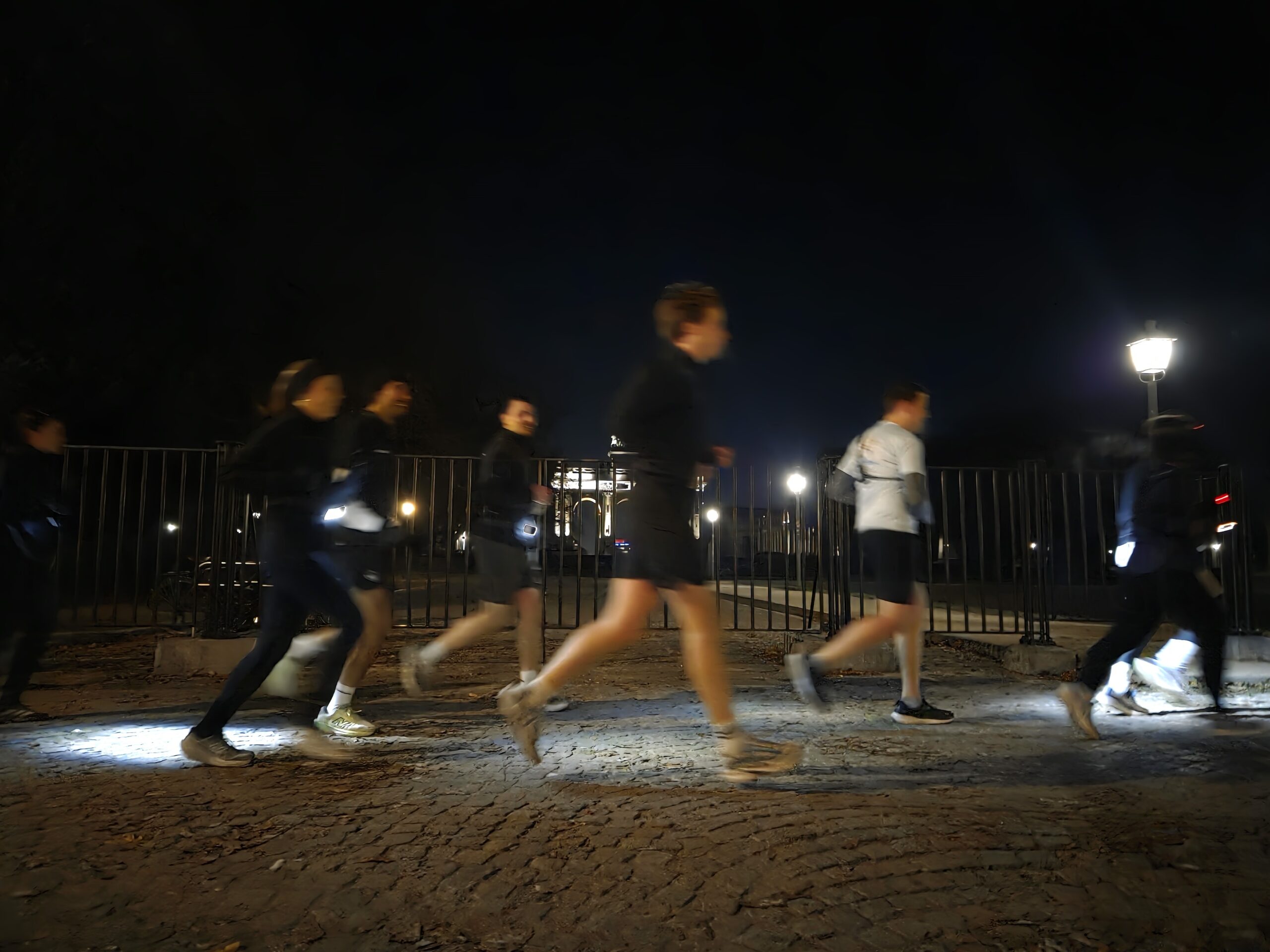
Credit: Brussels Runnification.
Their proposals focus on limiting when and how the track is lit. Pinto suggested lighting only the track, on a timer: “My personal suggestion would be until 22:30 or 23:00, and maybe turn it on at six in the morning. We don’t want it to be lit up like it’s Christmas the whole year. There has to be a balance.”
Galera Hauer pointed to low-impact technology. “There are advanced technologies. You can have low lights at the level of the track, even lights that work with sensors. It’s not a black-and-white issue. There are solutions.”
Brodkom said lighting could be limited to the after-work window. “In winter, it’s already almost dark at 17:30, which is when people leave the office,” he said, arguing that the authorities can accommodate evening exercise while respecting the park’s natural environment.
No changes planned
Beliris obtained the urban planning permit for the park’s redevelopment earlier this year. Asked whether the project could still be modified to preserve the current 356 metres, they said no change is planned.
The project has completed the planning procedure, and the works will follow the permit as issued.
Beliris said it communicated about the project throughout its development, through its website, the media and posters on site, and that the design office carried out an in-depth analysis of how the park is used.
It explained the shorter track as a trade-off. One of the project’s main goals is to restore the listed park in line with its historic composition. That means re-establishing a line of trees along the sports area to recover the park’s original symmetry, which would allow about 40 additional trees to be planted.
“The reduction in the length of the track therefore results from seeking a balance between sporting uses, greenery in the park and the preservation of its heritage,” Beliris said.
In exchange, the centre of the track would get two multifunctional synthetic-grass areas, measuring roughly 53 and 36 metres long and about 30 metres wide, for activities such as yoga and slacklining.
The bends would host spaces for other athletic disciplines, fitness equipment and street workout, though the exact equipment has yet to be confirmed.
Nearby, new multisport pitches would host ball sports including football, basketball, volleyball and badminton, alongside pétanque courts.
Running club organisers say nobody asked them. “I don’t think any of us have been consulted or asked what we think, whether the track should be reduced or what should be improved,” Galera Hauer said.
“If you have an athletics track and it’s one of the few in the city that are free to access for everybody, you should definitely consult the interested parties before making a decision.”
Asked whether Beliris would meet runners and park users and revisit parts of the project after the protest and petitions, it said it understands the sportspeople’s attachment to the track and that the project seeks to reconcile the needs of different park users with heritage and environmental requirements.
But with the project now authorised, no new consultation aimed at revising the planned layout is envisaged at this stage, they stressed.
The run club organisers plan to submit a joint position to the relevant authorities, including Beliris and Brussels Environment, which manages the park.
For de Araujo Reis, Tuesday’s turnout showed runners are ready to defend a facility they see as essential. “If civil society does not mobilise, we get nowhere."
