
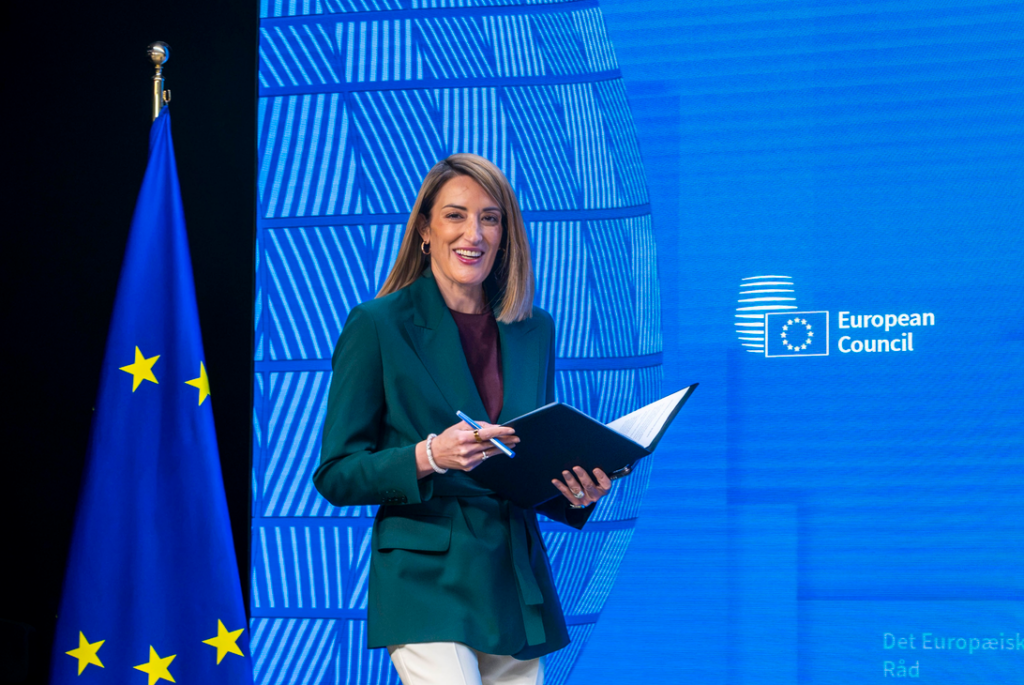
European Parliament President Roberta Metsola has urged EU leaders to reach a swift agreement on the bloc’s next long-term budget, saying it should be “focused, effective and simple.”
Speaking at the European Council on Thursday, Metsola stated that the Parliament wanted a deal “as soon as possible” on the next Multiannual Financial Framework (MFF) — the EU’s seven-year spending plan — and warned that reaching majorities in the Parliament can be difficult.
She said EU leaders had put “revised figures on the table” and that there were “areas where we agree and areas where we still have work to do.”
She described the MFF as “an investment framework” rather than a national budget and said that “by some estimates, for every euro we put in, Europeans get three euros back.”
Dispute over cuts and funding priorities
Metsola said the European Parliament had set “competitiveness and defence” as “twin priorities” for the current term, adding that she welcomed agreement that these should drive the next MFF.
She added that it was difficult to reconcile “a further 22 billion euro cut” to the Competitiveness Fund — “taking it down to 52.5 billion euros below the Commission’s proposal” — with the shared level of ambition.
Metsola also said the proposal cut cohesion funding by 46.2 billion euros “from current MFF prices”, describing cohesion spending in terms of visible projects such as renovating schools, modernising hospitals and upgrading roads.
She pointed to a precedent from last year, saying institutions had “found a way to ring-fence part of the funding for agriculture”, and said Parliament was ready to work with leaders on a way forward.
Metsola said the Parliament shared the view that the next budget must provide “stable, long-term support for Ukraine.”
On financing, she said new “own resources” — EU-level revenue sources — were needed to “fix the gap that exists”, while acknowledging pressure on national budgets.
On timing, Metsola said the Parliament had adopted most of its sectoral positions this week, with the rest to follow in coming weeks, and called on leaders to agree the Council’s negotiating position — “whether that’s today or in December” — so talks between institutions can begin.
