
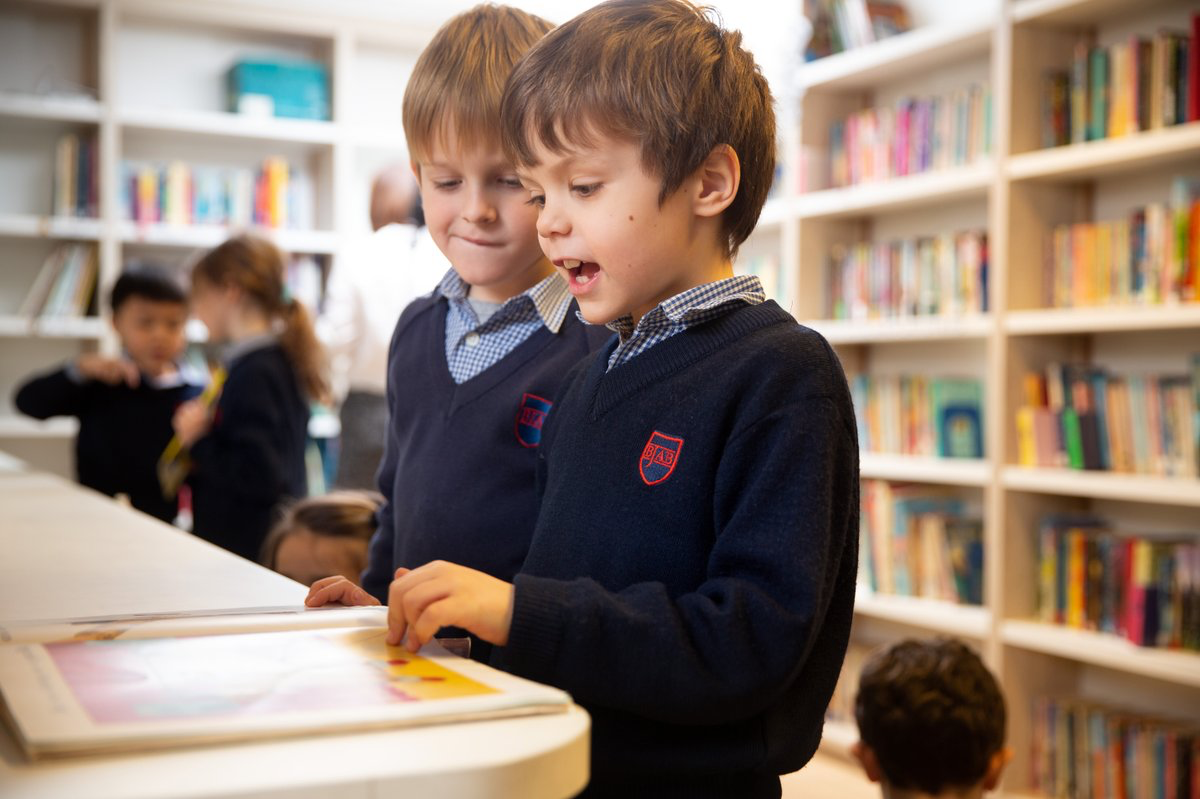
Located in the diplomatic quarter of Brussels, British Junior Academy of Brussels (BJAB) has developed a reputation for high academic standards and a strong family ethos. Since its foundation in 1992, the school has grown from one building to three, offering English education from pre-kindergarten to year 8.
With expansion to year 9 on the way, their new Headteacher Francis Retter looks to develop a cutting-edge secondary school curriculum with a focus on preparing students for the 21stcentury. He explains his vision for BJAB’s place in the fast-evolving international school community.
Q: What sets BJAB apart from other international schools?
In my initial interview I spoke about a ‘self-confidence lightly worn’ - a stunning inspection report, showcasing high academic standards, but a website that was refreshingly honest and modest, with a warm family atmosphere and personal touch, driven by a super-supportive owner family. Education is changing at a rapid pace, but what hasn’t changed is the key role in ’knowing the whole child,’ a concept that is supported by educational research as essential. BJAB does this exceptionally well.
Q: How do you foresee preserving the school ethos through the expansion?
The future of the school is really exciting. We are expanding organically, opening our first year 9 in September 2023, which will then grow up to age 18. Our steering committee is busy looking at the whole range of issues connected with this. As a secondary specialist, I consider it a great privilege to be responsible for adding a full secondary experience to the BJAB offering.
As we develop our secondary provision, we will be mindful of ensuring that we stay true to BJAB’s core values that have served the school so well, whilst ensuring that we build a future-proof secondary school, in alignment with our excellent junior provision. I am fortunate that I am able to build on the expertise of those already here who helped launch year 7 and 8 two years ago.
Q: As education evolves, how do you continue to foster innovation in teaching?
The essential point is the quality of the staff. We only appoint staff who have been trained and have experience of the British system. At interview we are keen to get to know potential teachers very well – it is essential that they show that they can inspire, that they can reflect and that they are team players.
It is such an exciting time to be an educationalist. In my view we are currently seeing the biggest changes in education since the advent of the National Curriculum in the 1980s. How we teach is changing, at all stages. Knowledge remains important of course, but knowledge needs to be integrated with skills for the 21st century. The only certainties are change and development, due to AI and greater interconnectivity and the fact that we are preparing children to do jobs that in many cases have not been invented yet. Our commitment to computing, coding and STEAM are testament to this.
Q: When did you know you wanted to become a Headteacher?
I knew from an early stage as a teacher that I wanted to make a difference to childrens’ lives and at each stage I have enjoyed doing so. In each role I have had, I have seen that the scope of change possibly grows as you develop in your career. However I have always chosen to work in small and medium sized schools – I like to know everyone in an organisation and think that the relationships with colleagues, parents and children are crucial. The atmosphere is crucial – I have never found that community in a larger school.

Q: Why is an international education worth it?
We live in a global world and our pupils will be living, working and thriving in a highly connected, digitally advanced society when they leave school. Our aim is to help them develop into globally competent citizens – what better place to do this than in Brussels, a great world city and European hub, with over 30 nationalities at our school.
When pupils leave BJAB, they will be extraordinarily prepared for their next steps, whether that is in further education or in their careers. The school logo ‘Education for Life’ could not be more appropriate – and very soon this will apply to school leavers at 18 as we expand the secondary offering. They take with them high academic standards, which is very important, but also a sense of their role in the world. At secondary level, this development of character education is crucial.
To learn more about BJAB and arrange a tour of the school, visit bjab.org or call them on 02 732 53 76.
