
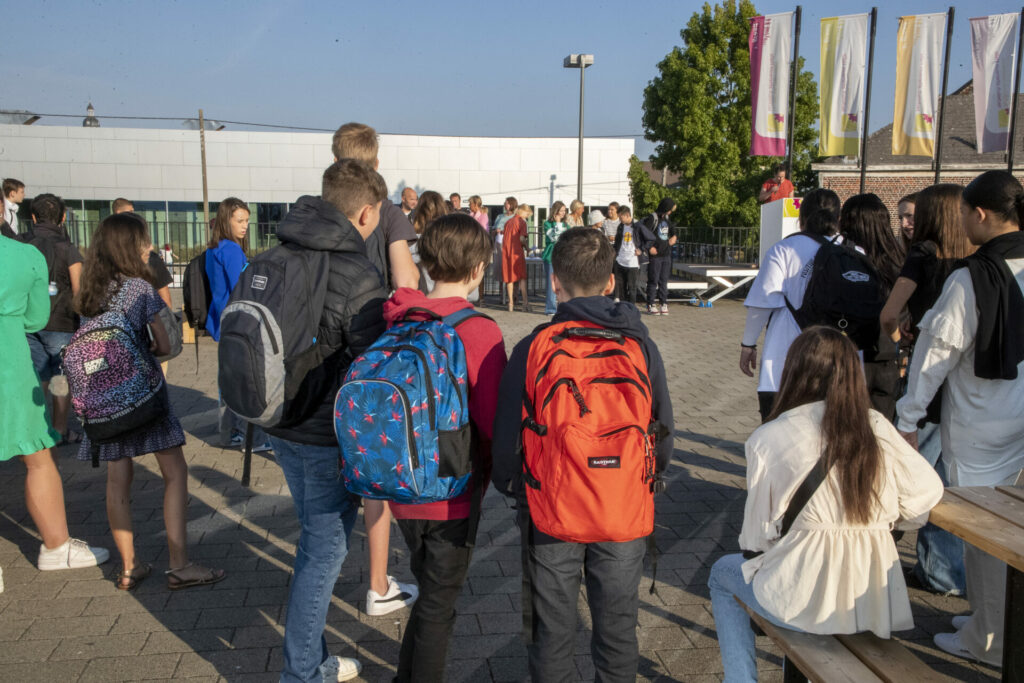
The transition from one school level to another causes apprehension and stress for most children but also for parents, according to Belgian paediatrician Dr Barbara Abramowicz.
“The transition from primary to secondary is generally recognised as a vulnerable transition because the gap is more marked between these two levels of education,” she says. “Indeed, for six years, children have been accustomed to operating according to rules and a lifestyle to which they are well adapted. They feel secure with their teachers and have a stable schedule.”
“They can't wait to leave primary school to imitate the grown-ups but at the same time, they are afraid to abandon their safe haven,” she adds. “This transition is a sudden change in social status, and in a few months, they go from a status of big fish to a status of little fish.”
According to Dr Abramowicz, the prestige of being sixth graders suddenly vanishes as soon as students enter high school. For a young person, it is the transition that presents the highest risk of difficulties, since it comes at the very moment when they are experiencing major developmental changes due to another transition, that of childhood to adolescence.
Adapting to new social realities
The transition to secondary school requires the child to adapt to new academic and social realities as well as changes in functioning and procedures. This includes changes in pedagogy, assessment and the subjects taught, but also a new network of friends, new relationships with teachers, new school, new schedules, and new rules of life.
Related News
- Brussels to reimburse teacher training to tackle sector shortages
- Erasmus students cancel Belgian semester due to lack of affordable accommodation
“For most young people, the insecurity they may experience disguises their separation anxiety,” says Dr. Abramowicz. “Indeed, each step that the child takes towards autonomy and maturity arouses the anxiety of being alone.”
“Many parents become less involved in their children's studies as they grow up,” she adds. “Supporting the young person is always necessary, while promoting their autonomy.”
Various reasons for anxiety
While the transition may cause some difficulties, for the vast majority of young people, this transition can be carried out without major difficulties. However, it is important to identify and support young people who are experiencing difficulties during this period, as a poorly managed transition can increase the risk of the student dropping out of school later.
Certain characteristics present from the beginning of the school career predict the risk of dropping out of school among Grade 1 secondary school students: belonging to a household of low socio-economic status, a higher level of anxiety in kindergarten, an average or low performance already in primary school or a teenager who has learning disabilities.
