
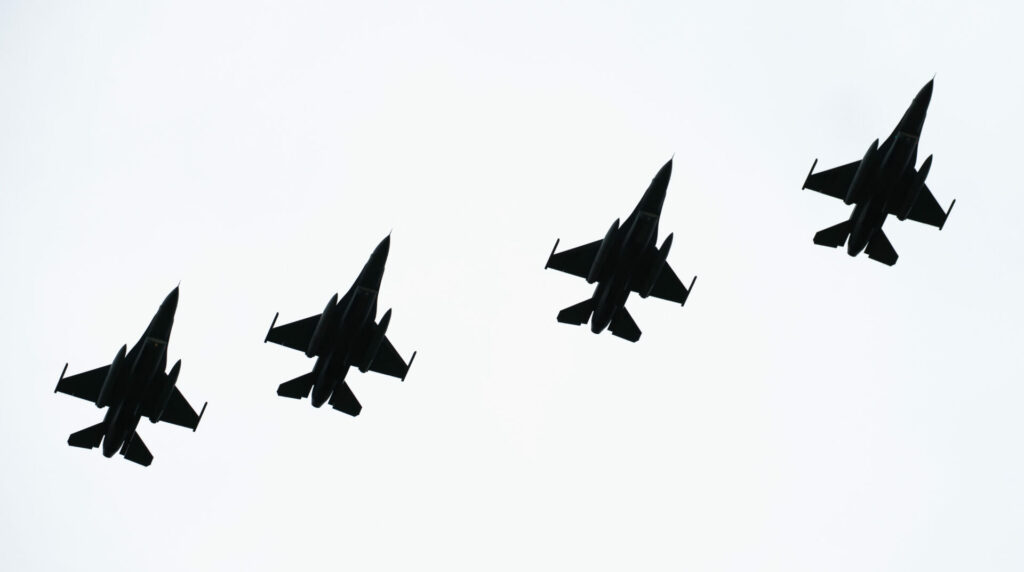
NATO will be holding its annual and long-planned nuclear deterrence exercises, including on Belgian soil, amid Russian nuclear threats over its war in Ukraine.
Earlier this week, its Secretary-General Jens Stoltenberg confirmed during a pre-ministerial press conference that NATO would indeed be carrying out its annual exercise, dubbed "Steadfast Noon," which will involve 14 of its members.
“This is routine training which happens every year to keep our deterrence safe, secure and effective,” he told reporters in the days following the escalation of Russian President Vladimir Putin's threats to use nuclear weapons against NATO.
The training is an annual routine event, meaning this is not a direct response to the threats, however, Stoltenberg referred to Russia's warnings in his statement.
"President Putin’s veiled nuclear threats are dangerous and irresponsible. Russia knows that a nuclear war cannot be won and must never be fought," he said.
He stressed that the purpose of NATO’s nuclear deterrence has "always been to preserve peace, prevent coercion and deter aggression." On Thursday, he will chair a regular meeting of the Nuclear Planning Group, which discusses specific policy issues associated with nuclear forces.
Belgium's role in the exercise
On Belgian soil, fighter planes from at least 10 NATO countries will practise deploying and throwing off nuclear weapons from the air base in Kleine Brogel near the Dutch border, VRT NWS reports. Belgian F-16 fighter aircraft are also taking part, alongside some 50 to 60 other aircrafts.
The highly secretive training, which is done with dummies, not real nuclear weapons, is carried out every year to test and optimise the preparedness of the European nuclear partners within NATO. Other procedures such as air-to-air refuelling will also be practised.
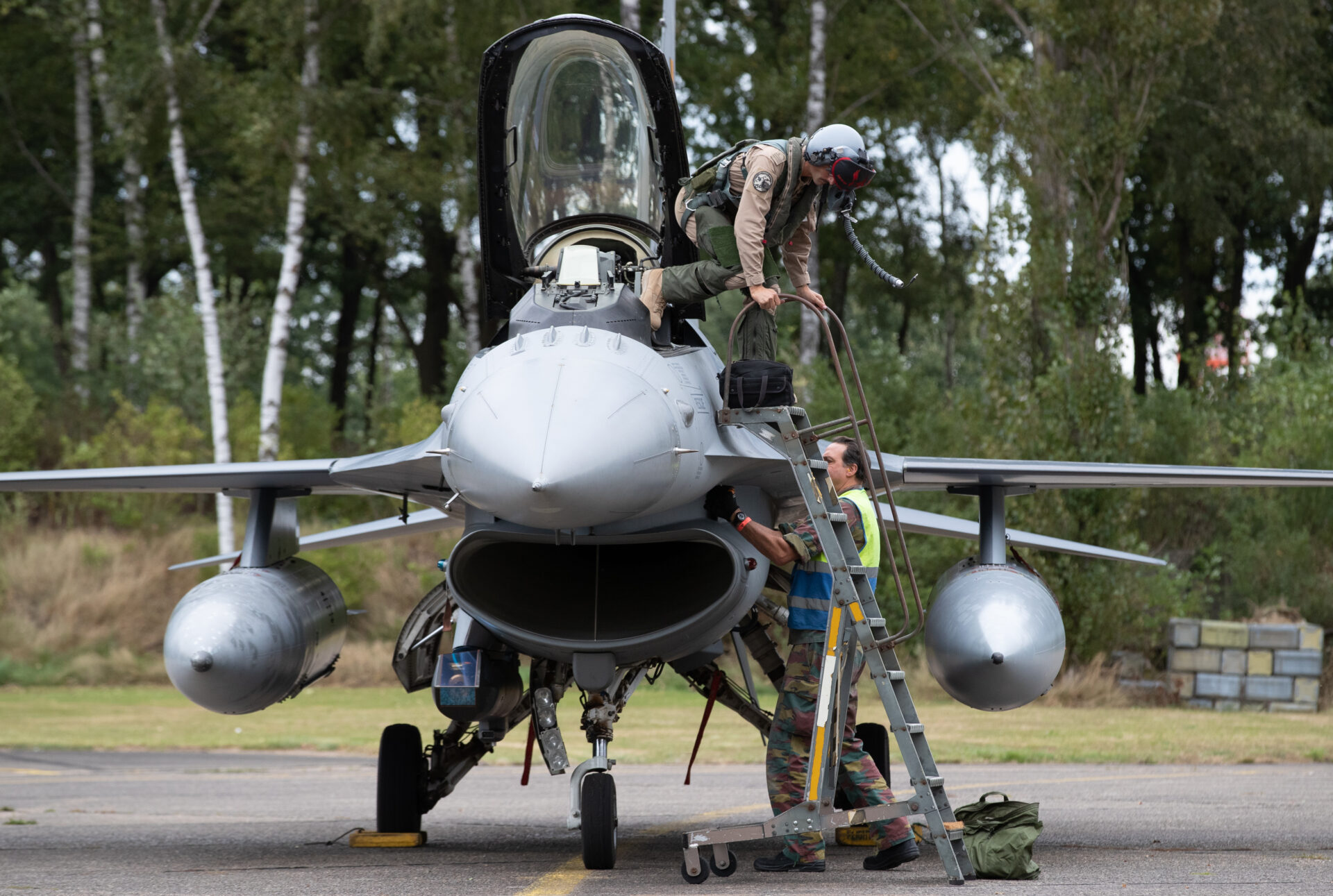
Pilot of an F16 fighter jet getting out of his aircraft at the military air base in Kleine-Brogel. Credit: Belga/ Benoit Doppagne
Belgium is one of the few allies that has actively participated in nuclear deterrence exercises since the 1950s.
During the training, deferring possible attacks on key military targets in the country itself, such as on the port of Antwerp, is also rehearsed.
Russia’s nuclear forces
Russia owns almost 6,000 nuclear warheads, while the United States has 5,428. Together they own approximately 90% of all nuclear warheads in the world, figures from the Federation of American Scientists showed.
According to the country's nuclear doctrine, a nuclear strike would be considered after “aggression against the Russian Federation with conventional weapons when the very existence of the state is threatened."
NATO itself does not possess any nuclear weapons, however, its three nuclear member states — the US, the United Kingdom and France — do.
One report from independent policy institute Chatham House stated that Russia’s nuclear threats are being made with the intent of "instilling fear in European countries" and "keeping NATO from actively being involved in the conflict' by inciting fears that such weapons will be used in Europe.
Related News
- European Political Community summit: What went down?
- Belgian F-16s to carry out new NATO mission from Estonian base
The nature of his threats, ambigious and vague, are a crucial aspect of nuclear deterrence strategies, as it "leaves room for doubt about where the red lines might lie" and what Russia might be prepared to do.
Stoltenberg noted that, while NATO has not seen "any changes in Russia’s posture," NATO remains vigilant and will closely monitor Russia’s nuclear forces.
