
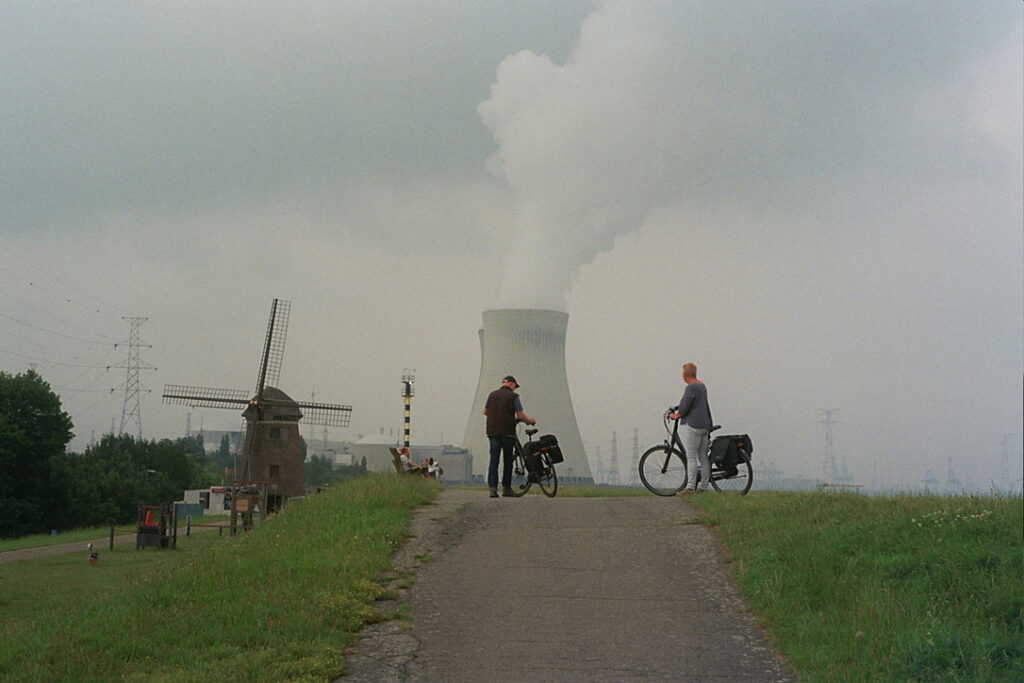
The president of the Flemish liberal Open VLD party Egbert Lachaert is not ruling out a push from the Federal Government to force nuclear operator Engie to extend the lifespan of the Doel 4 and Tihange 3 reactors if negotiations do not yield the desired result.
Since spring, Prime Minister Alexander De Croo and Energy Minister Tinne Van der Straeten have been negotiating with Engie to extend Doel 4 and Tihange 3 by ten years – until 2035. This is intended to guarantee energy security in Belgium and comes in light of the energy crisis that has engulfed Europe.
A negotiating framework was already agreed on last summer, which should lead to an agreement by the end of this year. However, if that agreement does not materialise, the government can ensure through law that Engie keeps the reactors open, Lachaert told LN24 on Thursday.
"It is an option. We have already done it with other reactors. Engie then went to the Constitutional Court and was proven wrong," he said. "However, reaching an agreement is obviously preferable. That is better because otherwise, we will have procedures that could take years. We need each other."
In the Chamber on Wednesday, Van der Straeten also said that an agreement with the nuclear operator remained the preferred option. "A negotiation should not be a cut-throat boxing match. The stakes are too high for that."
In last week's budget drafting, the Government decided to have transmission system operator Elia and federal energy regulator CREG study how to ensure the security of supply in Belgium until 2030. Lachaert explained that "additional nuclear power is also part of that exercise should problems arise."
Related News
- 'Stop government talks with Engie over nuclear extension,' says PS leader
- Doel 3: Shutdown confirmed for Friday despite politicians' pleas
- Government to discuss postponing closure of Doel 3 nuclear reactor
For the Flemish and Francophone liberal parties (Open VLD and MR) and the Flemish Christian-democrats CD&V party, that means that besides Tihange 3 and Doel 4, other nuclear reactors could also stay open longer than planned.
"It is simple: we will do everything we can to ensure our energy supply. That may mean keeping more than two plants open if necessary. Elia's analysis should clarify this," Lachaert said. "If that means two, it means two. If it means four, it means four. All options are open."
