

People don’t usually give a lot of thought to water: it flows from our tap for nearly nothing, seems to be in endless supply, and, oh yes, it doesn’t taste all that good in Brussels (that’s due to added chloride).
Yet, at PepsiCo, we spend a lot of time minding water, as we couldn’t produce our snacks or beverages without it. It irrigates the crops we use, like the potatoes for our crisps; it is, of course, a key ingredient in our beverages; and it is essential towards ensuring we meet the highest product safety and quality standards in our factories. It goes without saying that we rely on clean, sustainable water supplies and have a large interest in water protection and conservation.
While here in Brussels, and this part of the world in general, water supply and safety may not be a huge concern (the chloride does a great job at disinfecting our Brussels drinking water), globally, more than two billion people lack access to safely managed drinking water services, partly due to climate change. It is projected that at current rates of consumption there will be a 56% gap between global water supply and demand by 2030. It’s clear that doing nothing is not an option. So, what do we do at PepsiCo?
The goals we set ourselves
A little over a year ago, we launched pep+ (“PepsiCo Positive”), our strategic end to end business transformation which puts sustainability and human capital at the centre of how we operate. Water stewardship has long been one of our sustainability priorities, and it's an important part of building a Positive Value Chain – one of the three pillars of pep+ (the others being Positive Agriculture and Positive Choices -focused on improving our product). As one of the first companies of our size to acknowledge water as a human right, we have a vision to become net water positive: by 2030, we want to reduce absolute water use and replenish back into the local watershed more than 100% of the water we use. This 2030 agenda includes a specific focus on agriculture, our operations, and our community.
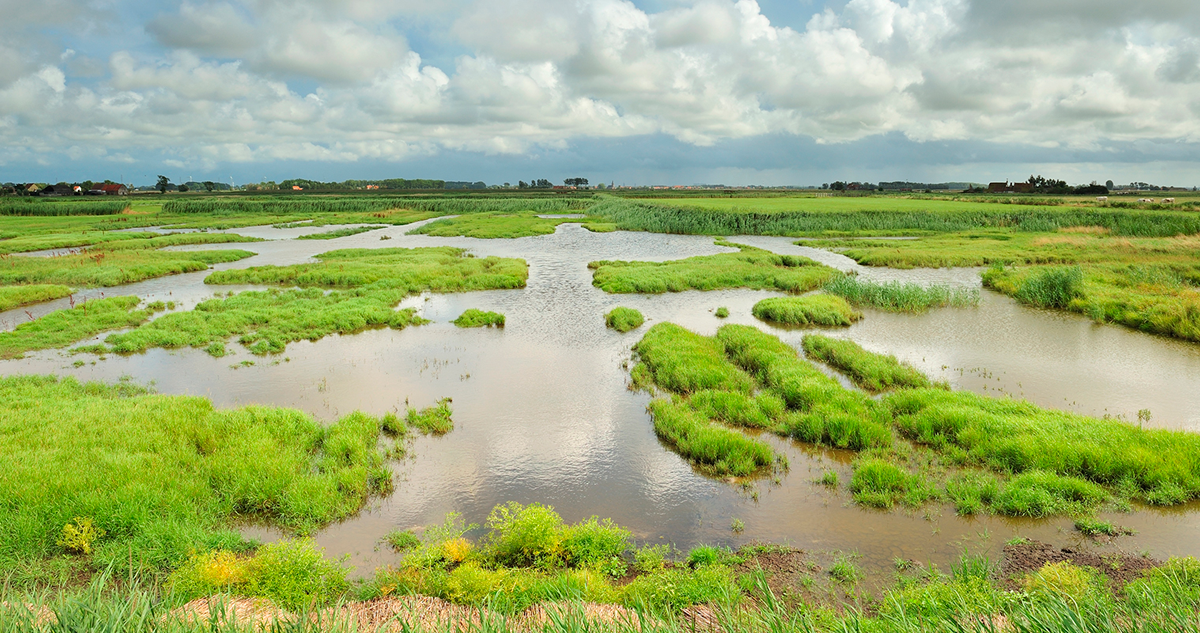
As an agri-food company, we work with thousands of farmers, who grow large amounts of crops for us, sometimes in high water-risk watersheds. We want the health of these watersheds to be protected and improved and set ourselves a goal of a 15% increase in water-use efficiency by 2025, measured against a 2015 baseline. We want to do better than our peers, and have set “best-in-class” or “world-class” goals for water-use efficiency by 2030, covering more than 1,000 factories in high-risk and lower-risk watersheds. Also by 2030, in high water-risk areas, we want to replenish more than 100% of the water that we use back into the local watershed. And finally, we will adopt the Alliance for Water Stewardship Standard in all high water-risk company owned facilities by 2025.
We don’t just look at our farmers’ and our own use of water: water is a fundamental human right, and the fact that billions of people have been left with limited access to it for decades is a problem of global importance that must be addressed rapidly. Today, 2 billion people— about 1 in 4— lack access to safely managed drinking water services. Water insecurity puts communities at risk, increasing negative health outcomes, decreasing food availability, and, in the worst cases, driving communities out from their homes. That’s why we’ve set ourselves a goal of providing access to safe water for 100 million people by 2030.
(c) PepsiCo
How are we doing?
Now, having ambitious goals is one thing, but how are we doing in delivering against them?
Between 2015 and 2020, we improved direct agriculture water-use efficiency in our high water-risk regions by 14%. As the science evolves, we continue to improve the integrity and efficiency of our data collection, processing, and reporting system.
We work towards our water-use efficiency targets by helping our farmers to access more efficient irrigation equipment, support best practices for scheduling and maintenance, and switch from flood irrigation to more efficient methods, such as drip irrigation. In our own snacks and drinks factories and those of our manufacturing partners, we use less freshwater and re-use as much treating process water as possible.
(c) PepsiCo
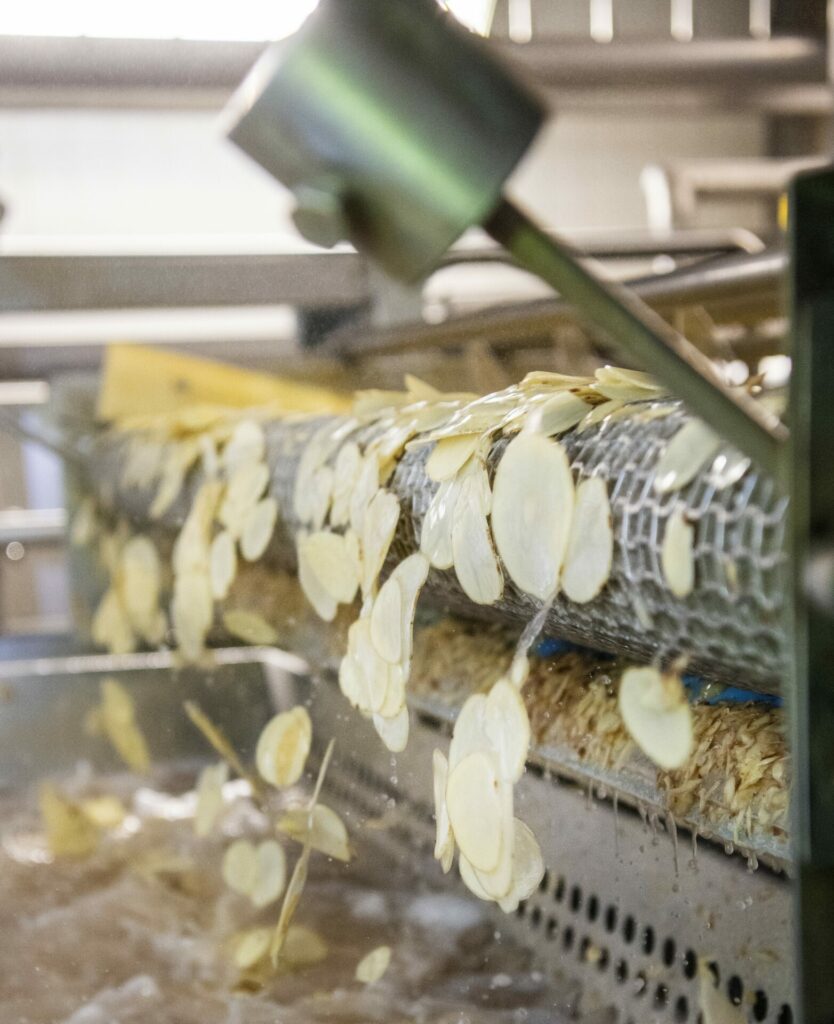
Last year, we recorded an 18% improvement at our high water risk locations compared to 2015, and we replenished more than 6.1 billion litres of water, or 34% of the water used in our own factories in high risk watersheds. At the end of last year, we had 31 factories in the process of adopting the Alliance for Water Stewardship Standard, and three factories having completed adoption of the standard. At our factory in Veurne, for example, we will reduce the use of treated and tap water by a factor 9 by 2030; we will do so by doubling the on-site water filtration capacity, reusing waste water and rain water (collecting water that could fill 11 Olympic-sized swimming pools per year from our own roofs), and reusing condensed water from potatoes; this alone will save approximately 120,000 litres of water per day by 2028.
Over the last 15 years, PepsiCo and our charitable arm the PepsiCo Foundation have helped more than 68 million people gain access to safe water, putting us two-thirds of the way to our 100 million goal. We do so by providing hands-on assistance, like building sanitation facilities and community water systems, providing loans to families to build water infrastructure in their homes, supporting local water entrepreneurs, installing community water access points and helping to rehabilitate natural springs
What more is needed?
We are a large company so we can make and impact and we are aware of our responsibility. Yet, bringing about long-term and permanent improvements to at-risk watersheds requires scale, partnerships and joint engagement. Our farmers are obviously key to success, both in terms of achieving our goals and providing us with the necessary data points to assess how we’re doing. We also work with non-profit organizations, research institutions, and regulators. The latter can help us by ensuring regulation on issues such as discharge parameters is up to date in order to enable the use of sustainable technology to reduce water use and increase reuse in factories. Only with legislators’ support can we achieve our ambitious targets on water use reduction.

Opinion by Mathijs Peters, Director Corporate Affairs EU & International Organizations, PepsiCo Europe
