
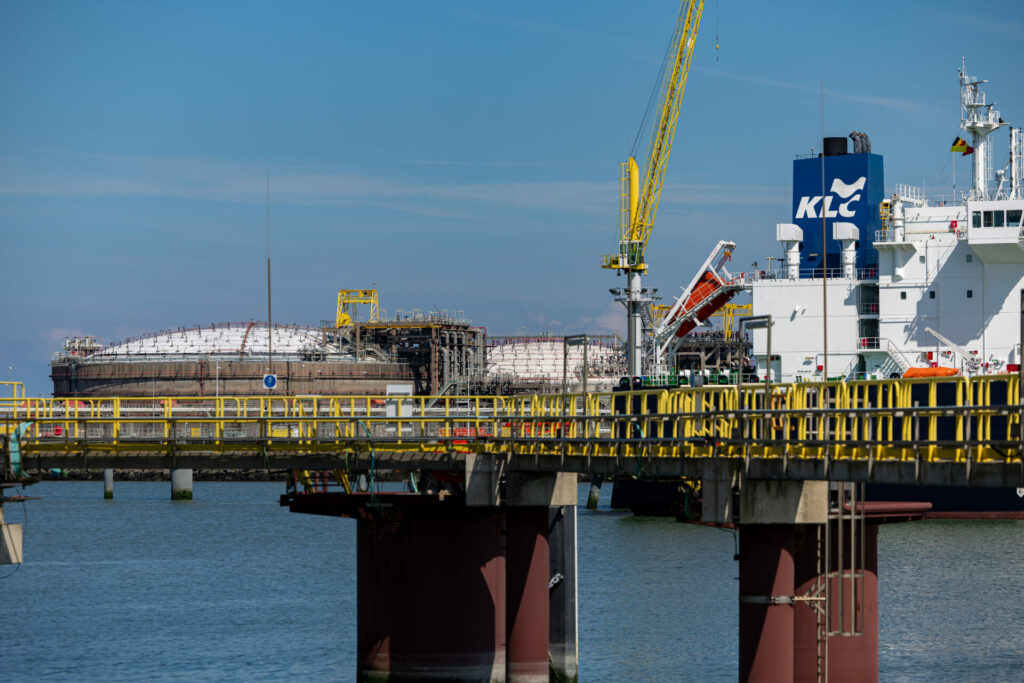
Belying its leaders' repeated claims that Europe must achieve "energy independence" from Russia, the EU is now importing a record amount of Russian liquefied natural gas (LNG).
According to recent analyses by Politico and Montel, Europe’s imports of Russian LNG over the first nine months of this year increased 46% relative to the year before, from 11.3 to 16.5 billion cubic metres (bcm).
Data collected by Statista similarly indicates that Europe imported a monthly record of 20.5 bcm Russian LNG in June — approximately 80% more compared to February, when Russia launched its full-scale invasion of Ukraine.
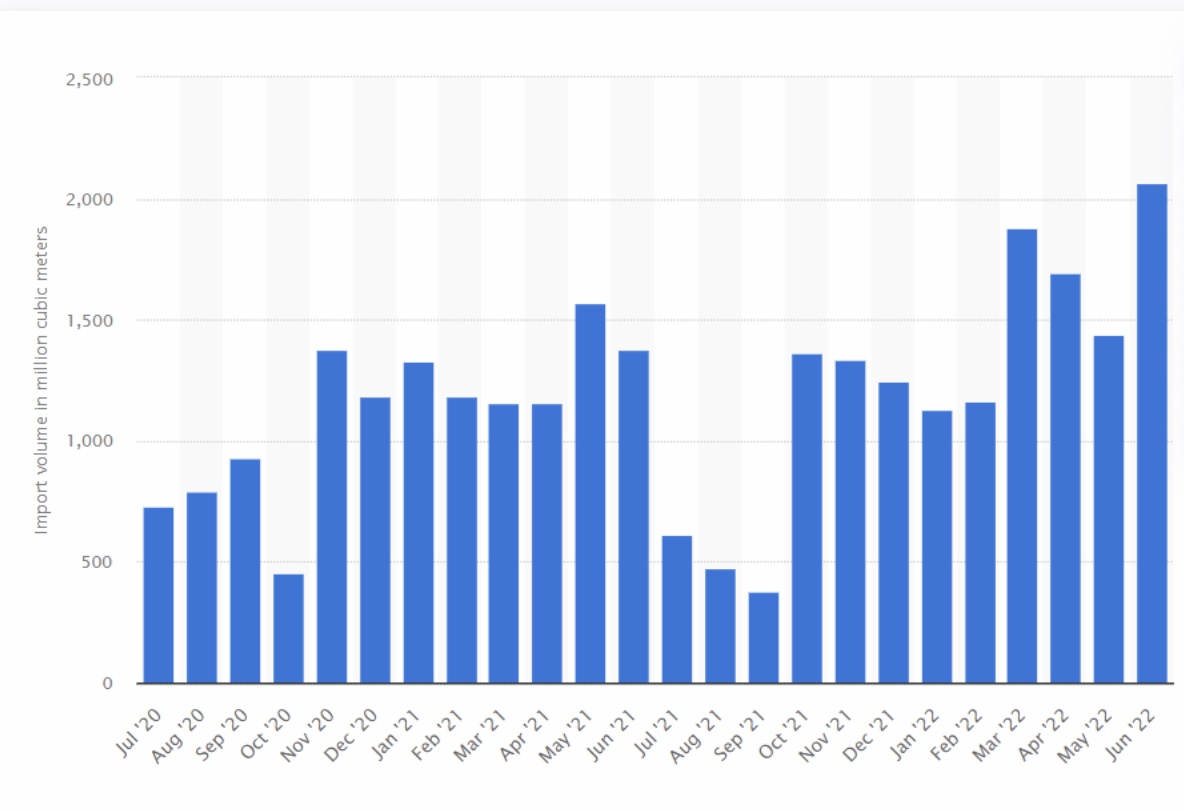
Monthly imports of liquefied natural gas (LNG) from Russia to the European Union from July 2020 to June 2022 (in million cubic metres). Credit: Statista
The EU also remains by far the world's biggest importer of Russian fossil fuels. According to the Center for Research on Energy and Clean Air, the EU imported more than half (54%) of total Russian fossil fuel exports from February 24 to August 24 this year, at a total cost of €85 billion, or almost €470 million a day.
Other data from Statista, which spans a broader a period of time from the invasion until mid-October, indicates that just three EU countries — namely Italy, Netherlands and Germany — collectively imported more Russian fossil fuels than China, the second biggest importer of Russian fossil fuels after the EU.

Value of fossil fuel exports from Russia from February 24 to October 17, 2022, by country and type (in billion euros). Credit: Statista
According to Montel, approximately a third of the EU-imported Russian LNG goes to France and a quarter to Spain, while Netherlands and Belgium also receive "significant volumes".
Only two countries in Europe — the U.K. and Lithuania — have completely ceased importing Russian LNG since Russia's invasion.
Related News
- LNG carriers idle at sea waiting for higher prices
- Average energy bills this year cost up to €6,000 – up 95% on 2021
Although European imports of Russian pipeline gas have admittedly almost halved (from 105 bcm to 54 bcm) over the first nine months of this year, questions must still be asked as to why the EU is continuing to increase its imports of Russian LNG.
Not only is LNG typically significantly more expensive than gas delivered via pipeline, but the increase in Russian LNG imports flagrantly contravenes EU Commission President's Ursula von der Leyen's repeated exhortations for Europe to "become independent of Russian oil, coal, and gas" as a means of achieving "energy security".
Further deepening the blatant discrepancy between word and deed, many analysts expect European imports of Russian LNG to remain at its current elevated level for the forseeable future.
"I don’t expect the EU to ban either Russian LNG imports or Russian-piped gas imports because of tight [gas] supply in the longer term," said Refinitiv analyst Yuriy Onyshkiv.
"Hence, I expect European buyers to keep purchasing Russian LNG."
