
At the end of October, the Walloon government approved a plan called "Food Wallonia" aimed at accelerating the transition to sustainable food by 2025. This plan is composed of 19 actions focused on financial assistance, awareness and regulation.
The food plan is an initiative designed by Sustainable Development Minister Céline Tellier, Agriculture Minister Willy Borsus, and Employment and Social Economy Minister Christie Morreale.
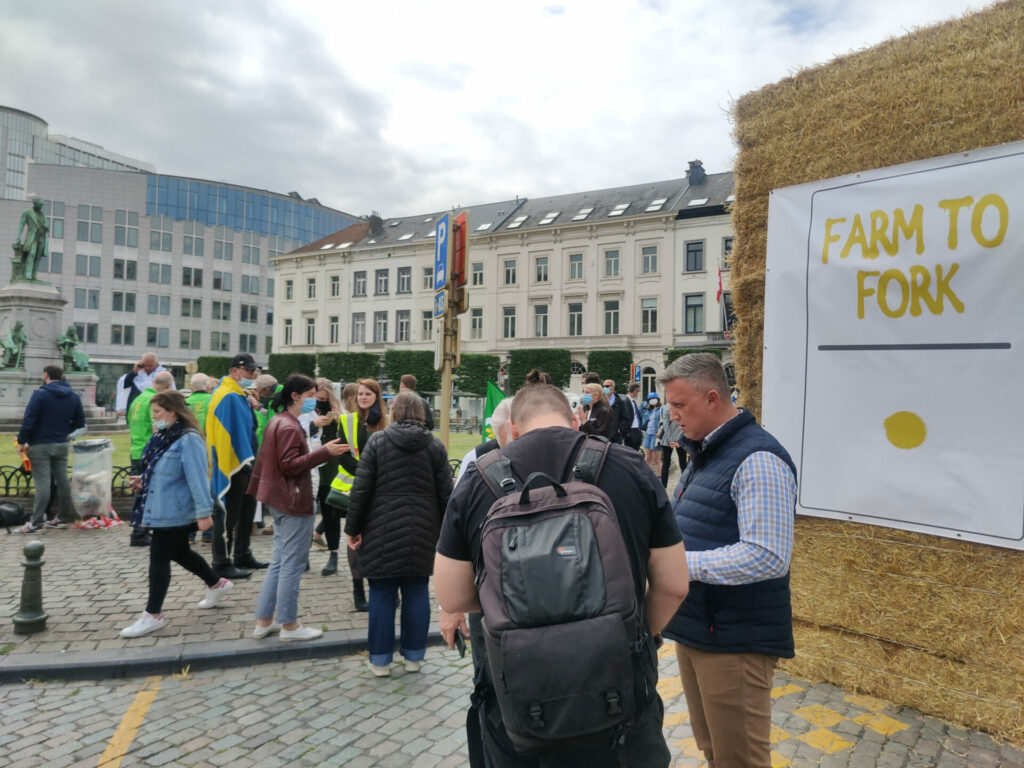
'Food Wallonia' is in line with the European "Farm to Fork" strategy, which aims to make food healthier and more sustainable in the European Union. It also complements the "Manger Demain" ("Eat Tomorrow") strategy, which laid the foundations for the Walloon government's vision for sustainable food.
Access to agricultural land
Through its 19 measures, the plan aims, among other things, to improve access to qualitative food in communities and/or households in precarious situations, in particular through cooking workshops, free soup in schools and a financial boost to sustainable canteens. The Walloon government also intends to facilitate access to agricultural land as a factor of production contributing to a sustainable food system.
More broadly, it will be "to support the entire production, processing and distribution chain, from farm to fork, to better value local products, better distribute them, better remunerate producers and support the reduction of chemical inputs, via the development of processing and logistics infrastructures, the support of farmers, processors and other actors in the chain, through the development of new products," the ministers stressed.
Related News
- COP27: Animal welfare organisation launches campaign to transform the global food system
- Walloon projects point to a future of biomass as an energy source
In particular, the government intends to structure the offer of support, training and business testing and to upgrade the food professions in order to promote the attractiveness of the sector and job creation in connection with a sustainable food system.
Finally, the plan aims to develop the leverage effect of public procurement to increase demand for products and services from a sustainable food system.
"If there is an essential and central need, it is that of food,” said Tellier. “However, our food security is extremely dependent on geopolitics and global markets. To offer Walloons healthy and qualitative food, we must support and encourage all food relocation actions and ensure coordination and coherence between the various measures in place."
