
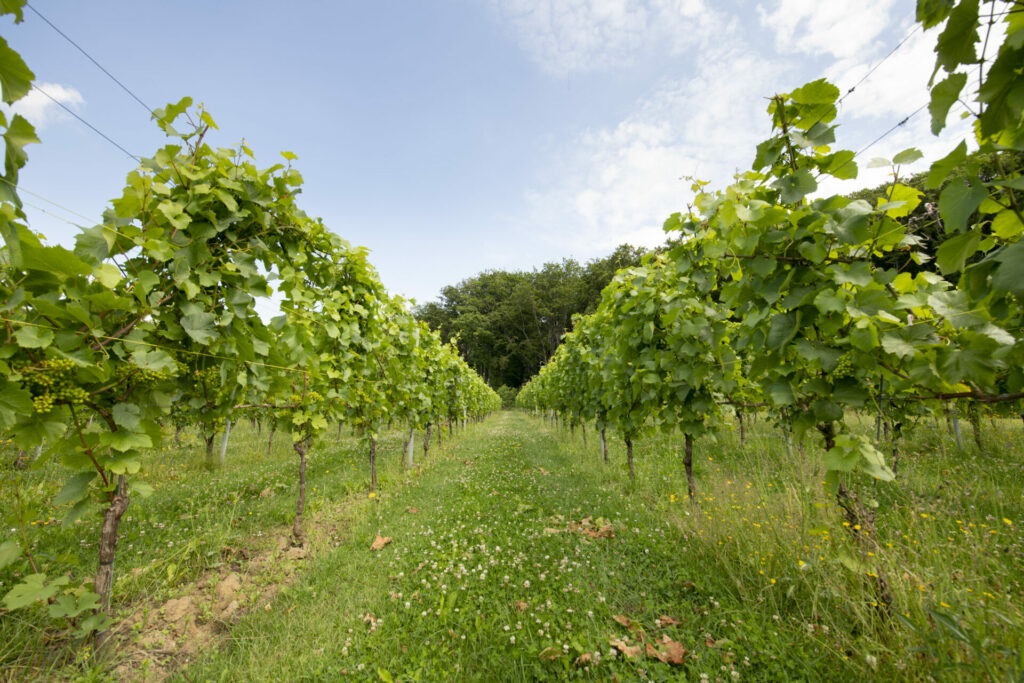
The wider effect that global warming has on viticulture is well-known, as vineyards struggle each year with drought and rising temperatures see grapes grow further north. Yet the effect of climate change on the taste of wine is harder to explain, though connoisseurs are noticing that their favourite tipples no longer taste the same as they once did.
"By 2050, climate change will have changed not only the production conditions of wines but also their taste characteristics and therefore their markets," INRAE (the French public research institute for the sustainable development of agriculture, food and the environment) wrote in a 2021 report on the strategy of the wine industry in the face of climate change.
“With the increase in average temperatures between 2°C and 5°C, the vines bloom faster, the grapes reach maturity earlier depending on the terroir in the case of drought episodes, the alcoholic degree increases... In addition, the acidity of the grapes is lower at harvest time while the harvest starts earlier.”
Increased alcohol levels
The latest study issued by the wine auction site iDealwine in October this year stated that 30% of wine enthusiasts consider wines to be "richer and more opulent", a perception linked to the increase in alcohol content.
"It was discovered that some regions of Languedoc-Roussillon produced wines whose alcohol content had increased between 2°C and 2.5°C since 1984,” Serge Zaka, a doctor in agroclimatology, told RTBF. “However, the grape variety has remained the same. This is a consequence of drought: the berries do not fill with water optimally, which has the effect of concentrating the sugar. During winemaking, sugars are transformed into alcohol. Since there are more, it also increases the alcohol level."
Those with fine palates, which were 25% of consumers polled, also noticed that the wines could have more over ripeness or stewed notes. According to iDealwine, this peculiarity is one of the characteristics of "hot" vintages.
Only 8% of respondents said they found their wines more unbalanced.
Won't stop drinking wine
Through this study, it is clear that global warming will not inevitably distract consumers from drinking wine. For 26% of respondents, the verdict is clear: the quality of their wines has improved. For their part, 39% believe that their elixirs have indeed evolved but that does not prevent them from finding vintages they appreciate.
Moreover, the strategies undertaken by winegrowers to deal with climate change are not putting off consumers. More than three-quarters of wine lovers polled (77%) prefer the cultivation of ancient and indigenous grape varieties while 49% are interested in winemaking in amphorae. As for the increase in the alcoholic percentage, only 18% of wine lovers believe that they will change their habits because their chosen wines will pack a more powerful punch.
Faced with the consequences of global warming on their favourite drink, consumers are also preparing for price increases and scarcity. 32.5% accept a price increase of up to 10%, 36% have decided to build up a stock in order to anticipate any increase, "the latter being largely due to the severe amputation of crops in connection with climate change," said iDealwine.
Related News
- 13 Belgian wines awarded five stars in wine guide
- Wine production: Could Belgium become the new Bordeaux?
In addition, 20% of respondents plan to buy more organic wines.
Finally, more surprisingly, consumers could prefer certain vineyards to adapt to the evolution of terroirs. Becoming aware of the consequences of climate change, 26% of respondents said they wanted to focus first on Burgundy, the Loire Valley (18%) and the Rhône Valley (13%). These announced future habits are, however, to be qualified because 44% of wine lovers already flit from one vineyard to another, tasting diverse and varied wines without remaining faithful to a single terroir.
