
From next weekend, Chinese residents will again be allowed to travel abroad despite the fact that China is currently facing a huge wave of Covid-19 infections.
As this confluence of events is worrying for authorities across the world, a number of countries – including the US, Japan, the UK and most recently France – are requiring negative tests from travellers coming from China.
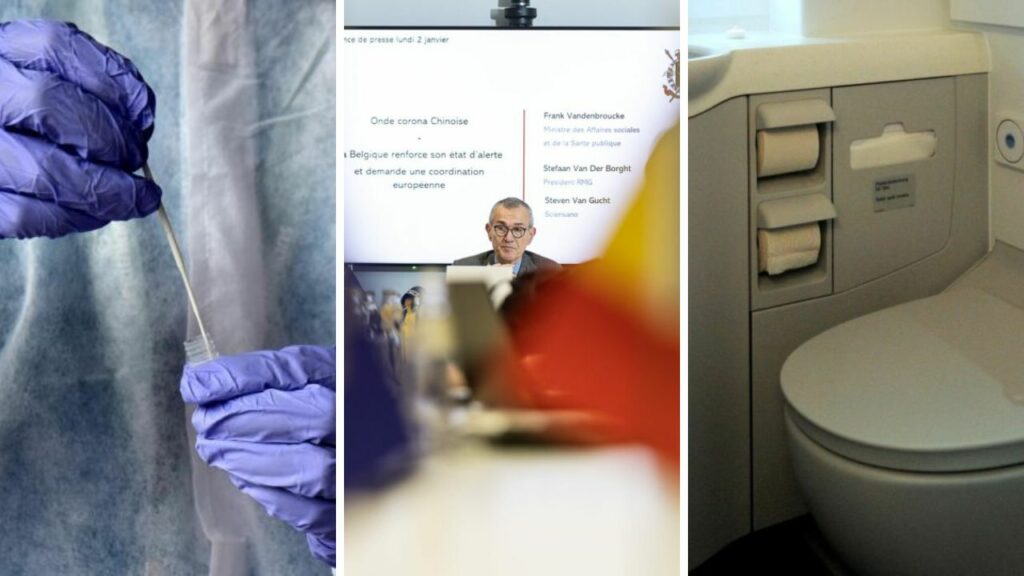
Instead, Belgium is going to use a new technique to combat the possible spread of Covid-19 variants by testing the excrement and wastewater of airline passengers on direct flights coming from the country.
"What is happening today in China is dramatic. Many people there become seriously ill and die: that should worry us," Federal Health Minister Frank Vandenbroucke said during a press conference on Monday. "But what is happening in China does not immediately put us at great risk here and now, thanks to the fact that we have vaccinated en masse."
While testing people's excrement for Covid-19 variants may seem like a strange measure to take, several studies confirm that the virus can indeed be detected in faeces. Although these kinds of tests are a lot less practical than traditional PCR tests, they are said to be a lot more reliable.
The faeces of infected persons contain traces of the virus about two to five days before those people show symptoms. Australian science agency CSIRO tested wastewater samples from the toilets of 37 Australian government repatriation flights from Covid-19 hotspots, including India, France, the UK, South Africa, Canada and Germany.
The study found that wastewater from 24 of the 37 flights (65%) contained traces of the virus, even though all passengers tested negative for the virus 48 hours before departure.
"The advantage of those tests on wastewater is that you can test a large group of people without taking a sample from everyone individually. There can be a lot of virus in stool," Elke Wollants of the Rega-Institute in Leuven. "So the concentrations of Covid-19 variants in stool will be high enough to do analysis on that."
However, several elements can negatively affect the results, such as cross-contamination between two consecutive flights, or too many chemical components in toilets, said Wollants. "And that is a big disadvantage. If they add too many chemical components to disinfect, it could destroy a lot of information."
Thoughts? Let @Maajtee know.
Belgium in Brief is a free daily roundup of the top stories to get you through your coffee break conversations. To receive it straight to your inbox every day, sign up below:
1. 'Something is wrong with Belgium,' says police union chief after NYE violence
During the New Year’s celebration in Brussels, Belgian police carried out 160 arrests within the Brussels region alone. In some areas, troublemakers targeted police officers and paramedics with fireworks. For Vincent Gilles, President of the SLFP police union, this situation is "unacceptable." Read more.
2. Belgium to test excrement of airline passengers from China for Covid-19 variants
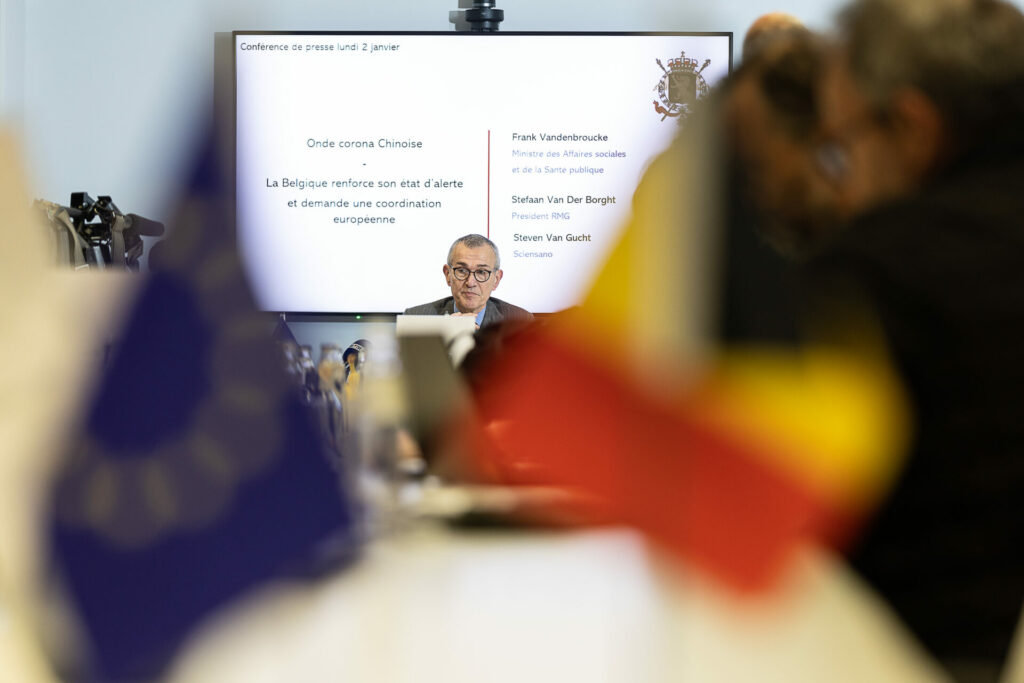
Belgium will soon start testing the wastewater from flights coming from China to gather more information on the possible spread of new Covid-19 variants, announced Federal Health Minister Frank Vandenbroucke on Monday. Read more.
3. Flemish separatists N-VA blame language law for delays in judicial process
The Flemish right-wing separatist party N-VA has called on an amendment to the language law, as it claims the current system results in months of delays – as it allows people in Flanders who break the law to request a language change during the trial. Read more.
4. Federal Government seeking to ban non-reusable packaging in fast food chains
The Belgian Environment Minister Zakia Khattabi has proposed a ban on single-use packaging and containers for food sold at fast-food establishments. With the government planning on enforcing the ban as early as 1 January 2024, the proposal has triggered mixed reactions from industry giants such as Comeos, Burger King and McDonald's. Read more.
5. Air traffic in Europe reaches 83% of pre-pandemic levels
European air traffic returned to 83% of its 2019 levels last year, a “solid” rebound pushed mostly by low-cost carriers and holiday destinations in southern Europe, air traffic monitoring group Eurocontrol. Read more.
6. Netherlands bans flavoured e-cigarettes, Belgium also tightens rules
While the Netherlands has banned e-cigarettes with flavours since the start of this year, a transition period to withdraw them from the market will be allowed until October. In Belgium, legislation on vaping will soon be tightened as well. Read more.
7. Hidden Belgium: The statue of Vesalius
A statue of Vesalius stands in the middle of the Place des Barricades in Brussels. But the famous doctor was born a few kilometres to the west in a street in the Marolles (now vanished) called Ruelle de l’Enfer, or Hell Lane. Read more.
