
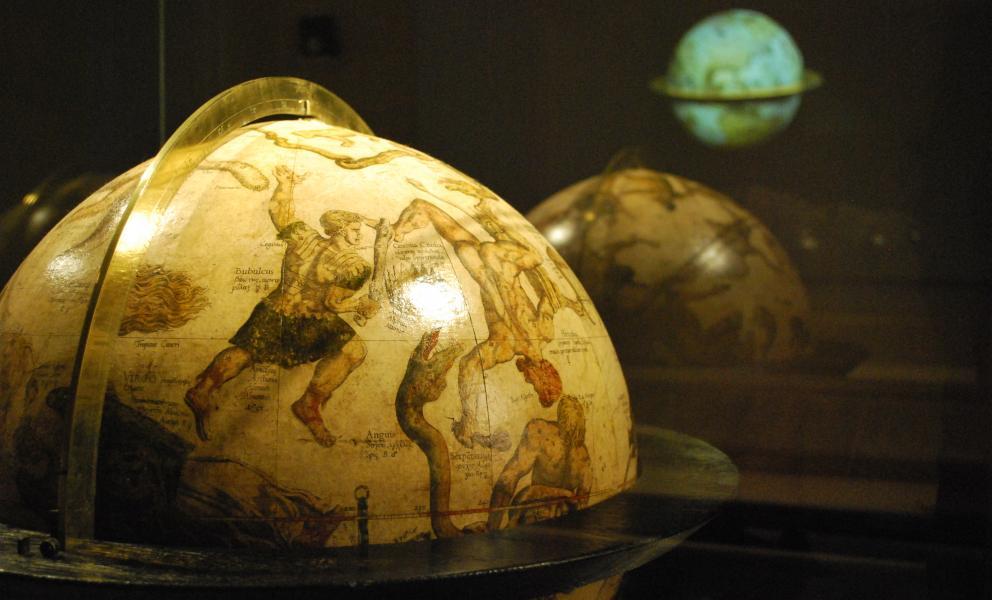
The Mercator Museum in Sint-Niklaas sits in a quiet park with a bust of the geographer shaded by old trees. It’s a fascinating museum with darkened rooms filled with historic maps, antique globes and scientific equipment.
The collection goes all the way back to the world maps of Ptolemy and the baffling mediaeval maps that somehow guided pilgrims across Europe. But the main focus is on the Flemish cartographer Gerard Mercator, who shaped the modern view of the world.
Born Gerard de Cremer in the small river port of Rupelmonde, near Antwerp, he adopted the more scholarly Latin name Mercator. A skilled engraver and mathematician, he designed beautiful globes and created his first world map at the age of 25.
Mercator’s aim was to aid maritime navigation along the world’s trade routes by converting the globe into a flat map. The Mercator projection, as it was called, has been used for more than 400 years to create navigation charts, school atlases and even Google maps.
Derek Blyth’s hidden secret of the day: Derek Blyth is the author of the bestselling “The 500 Hidden Secrets of Belgium”. He picks out one of his favourite hidden secrets for The Brussels Times every day.
