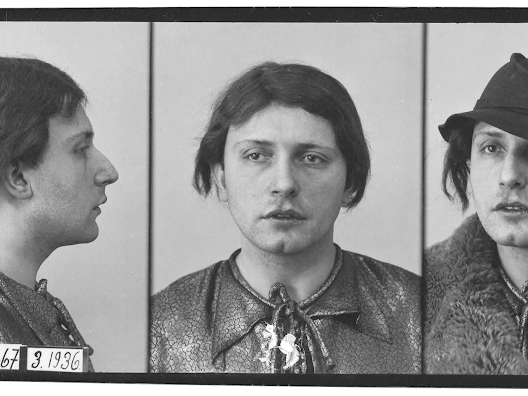
There is a new exhibition at Kazerne Dossin in Mechelen in which you will learn about the persecution of homosexuals and lesbians during the second world war.
What was it like to be homosexual or lesbian during World War II?
Was the legislation the same under the Nazis in the Netherlands, France, Germany or Belgium?
What happened after the war?
Find out the answers to these and many other questions in this new exhibition which draws on various documents, many of which have never been presented in Belgium. This exhibition has been created by the Shoah Memorial in Paris and completed by Kazerne Dossin and was produced under the scientific direction of the historian Florence Tamagne.
It aims to answer several questions regarding the persecution of homosexual women and men under the Nazi regime in a broader geographical framework – even though the emphasis is on Belgium, Germany, France and the Netherlands – and over a longer period of time.
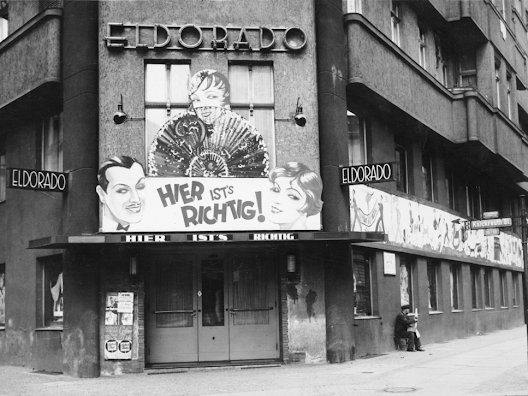
Exterior view of the Eldorado cabaret, Berlin, 1932 © Coll. Bundesarchiv. Bild 183-1983-0121-500
Homosexual women and men met different fates. Some elected to go in exile, while others led a double life. In Germany, approximately 50,000 of the 100,000 homosexuals who had been identified by the authorities were convicted: between 5,000 and 15,000 were sent to concentration camps, where the majority died, even though their fate varied significantly depending on the camp to which they were sent and the date of their internment.
Lesbians, meanwhile, remained outside the scope of the law, except in certain territories, such as Austria. Some were deported, having been labelled ‘antisocial’ or ‘communists’.
Starting with an evocation of the early homosexual movements at the end of the 19th century until the 1930s, the exhibition delves deeper into the persecution of homosexuals, mainly under the Nazi regime and in a European context. It then goes on to present an overview of repression in other countries. Finally, it touches upon the issues of remembrance and recognition since the end of the World War II and in more recent times.
More information and tickets here.
This exhibition was created and developed by the Mémorial de la Shoah (the Holocaust Museum in Paris, France) under the scientific supervision of Florence Tamagne. It was first presented in Paris in 2021. The content relating to Belgium and the Netherlands was developed and added by Kazerne Dossin.
