
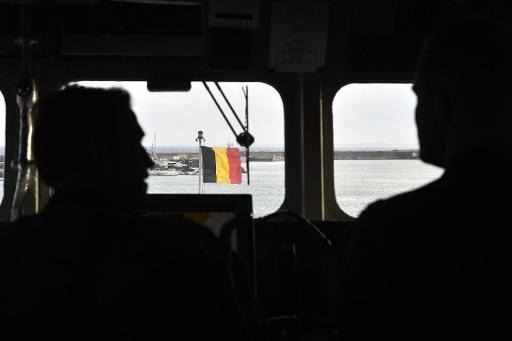
Belgium and Vietnam agreed on an action plan to combat human trafficking last year, however, many victims of this trade remain trapped in Belgium, which is why the countries are looking to strengthen ties.
A report published in 2022 highlighted that since the 2019 lorry tragedy that resulted in the death of 39 Vietnamese people, human trafficking from the country is still rife. They are lured with false promises of work and prosperity, but in most cases, end up in particularly harrowing situations of exploitation.
Many of these victims are transported to the United Kingdom, which is usually the final destination of the route, or are trapped in Belgium, which finds itself on the major human trafficking route.
Here, they often work irregularly to pay debts to their people smugglers, referred to in the report as "debt bondage," rendering victims "very vulnerable and in a position of strong dependence on their exploiters."
Prevention over cure
At the start of April, Belgium's State Secretary for Asylum and Migration Nicole de Moor met with various ministers to further strengthen cooperation to prevent the smuggling of people, but more specifically to her political agenda, improve the return policy of Vietnamese people staying in Belgium irregularly.
Last year, 78 Vietnamese people were recorded as staying irregularly in Belgium, however, the actual figure is likely much higher, according to police, as Vietnamese victims often remain under the radar. A total of 17 people were returned back to Vietnam, but de Moor wants this figure to go up by further improving the return cooperation policy.
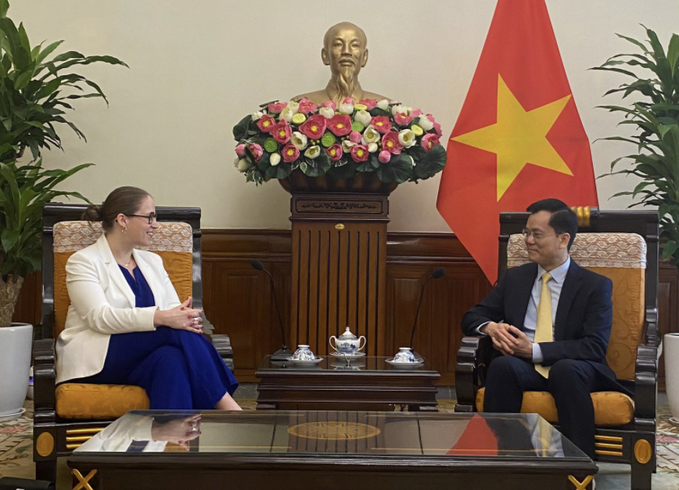
Nicole De Moor with Vice-Minister of Foreign Affairs Ha Kim Ngo during her visit to Vietnam. Credit: De Moor's cabinet
It was agreed that the Belgian Immigration Services will provide digital fingerprints of Vietnamese people who are stopped, to enable faster identification of possible victims, and to "eventually send people back to their country of origin."
Belgium will also support the Vietnamese immigration service with training, including for detecting forged travel documents.
However, de Moor also recognised that tackling the issue at its root was also necessary in this framework. "First of all, we have to make sure that people no longer become victims of human trafficking," de Moor noted.
She acknowledged efforts in Vietnam around the protection and reintegration of victims, such as the Vietnamese Centre for Women and Development, which provides a safe home and support for trafficking victims and helps them with reintegration.
"Reintegration is the capstone of a good return policy. If people realise that they are not left to fend for themselves in their country of origin, but are guided towards integration, this also lowers the threshold to return," de Moor said.
