
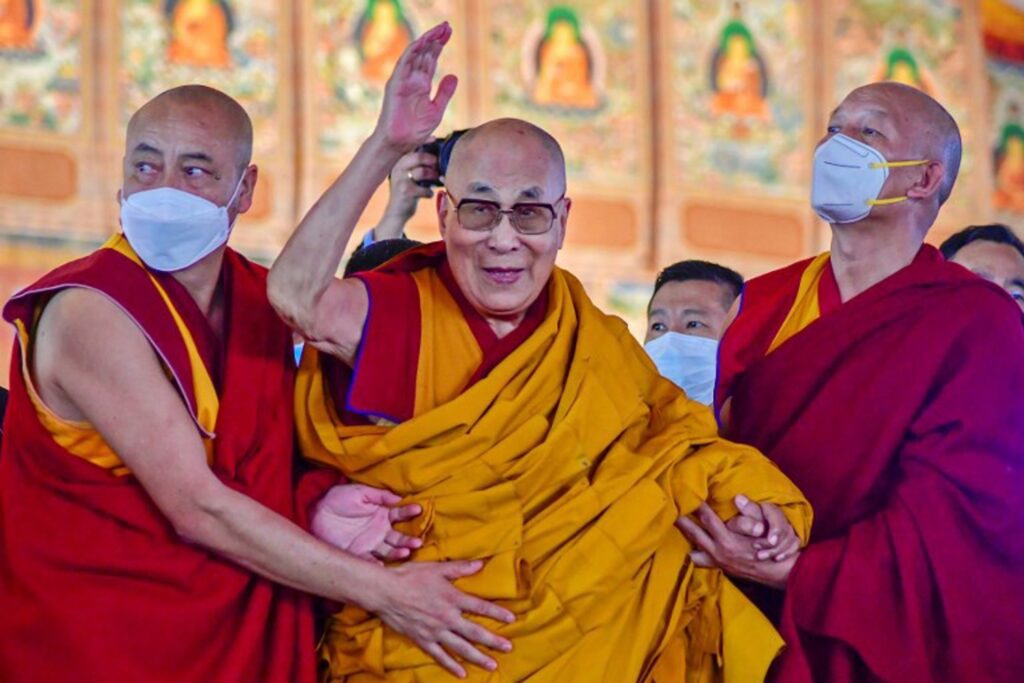
The Tibetan spiritual leader the Dalai Lama apologised on Monday to a little boy for asking him to “suck his tongue” a few weeks ago at an audience, a video of which emerged on social networks in a flurry.
“His Holiness wishes to apologise to the boy and his family, as well as his many friends around the world, for any pain his words may have caused,” said a statement posted on the Dalai Lama's official Twitter account.
“His Holiness often teases people he meets in an innocent and playful way, even in public and in front of cameras. He regrets this incident.”
In a video of the incident, which has gone viral, the 87-year-old Dalai Lama sticks his tongue out at the obviously bemused child just after asking him, “Can you suck my tongue?”, triggering hilarity from the gathering.
The video was shot on February 28, during a Dalai Lama audience in McLeod Ganj, a suburb of Dharamsala in northern India, where he has lived in exile since the failed 1951 Tibetan uprising against Chinese rule.
Related News
- Hefty fines: Why is dancing banned in Germany today?
- Buddhism becomes eighth recognised religion in Belgium
Internet users have called his attitude “disgusting”, “repulsive” and “absolutely unhealthy”. In 2019, the Dalai Lama apologised for saying that if a woman were to succeed him, she would have to be “attractive”.
The Dalai Lama is the universal embodiment of the Tibetan autonomy movement but the international aura he enjoyed when he received the Nobel Peace Prize in 1989 has withered and the deluge of invitations to him from leaders, celebrities and stars around the world has greatly diminished.
Beijing accuses him of trying to divide China and regularly refers to him as a “wolf in a monk’s robe.”
Succession by reincarnation
Tenzin Gyatso, the current Dalai Lama, was born in Tibet in 1935 when the country effectively was an independent country, trying to preserve its status against the neighbouring countries, incl. British India. He was selected by reincarnation at the age of 3 to become the future spiritual leader of Tibet.
Dalai Lama was awarded the Nobel Peace Prize in 1989. He has stated that he wishes nothing more than a dialogue with China about the preservation of the Tibetan identity and environment in an autonomous Tibet within the framework of a united China.
As previously reported, the institution of reincarnation has become anchored in the belief in rebirth. Normally a living Dalai Lama would recognize himself in a small boy and teach him to become his successor. The recognition of a reincarnation could also take place, through different traditional procedures, after a Dalai Lama had passed away.
Dalai Lama states that at the age of ninety he will consult the high Lamas of the Tibetan Buddhist traditions, the Tibetan public and other concerned people who follow Tibetan Buddhism to reevaluate whether the institution of the Dalai Lama should continue or not.
Dalai Lama and the Tibetan Buddhist leadership in exile oppose reincarnation through illegitimate and bureaucratic methods, foreign to Tibetan tradition and custom. China is of the opinion that the reincarnation procedure is a matter of its sovereignty.
