
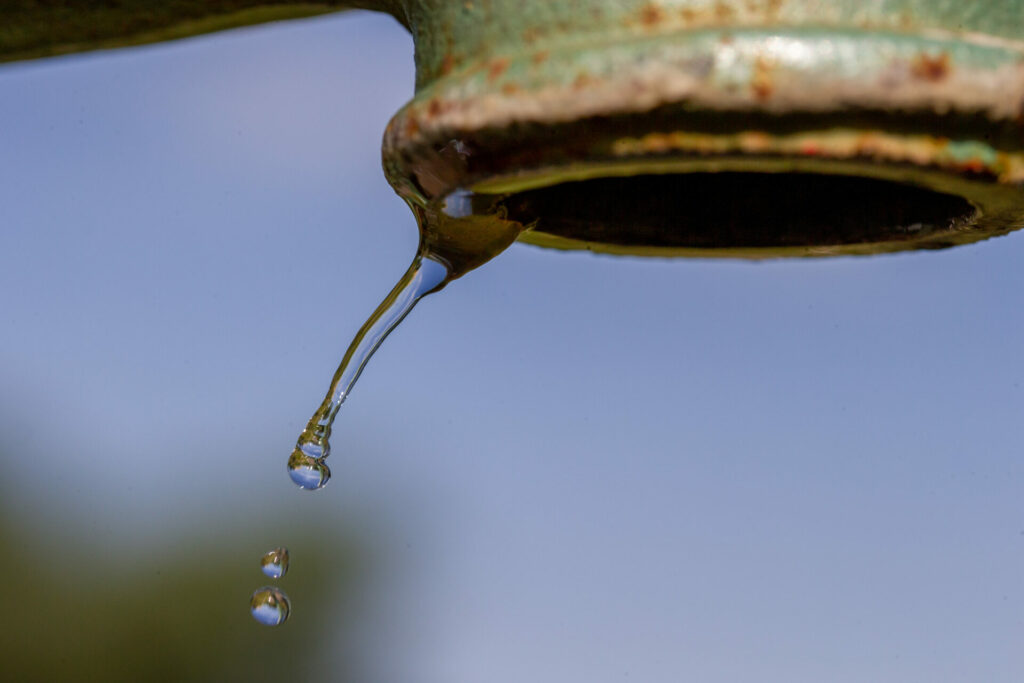
A study conducted by researchers from Uppsala University (Sweden), Vrije Universiteit Amsterdam (Netherlands), and the University of Manchester (UK) has established a link between the overconsumption of water resources by global elites and water shortages across the world. The paper notably predicts that shortages are set to become even more serious in the future.
"Over the past two decades, more than 80 metropolitan cities across the world have faced severe water shortages due to droughts and unsustainable water use. Future projections are even more alarming since urban water crises are expected to escalate and most heavily affect those who are socially, economically and politically disadvantaged," the paper, published in the Nature Sustainability journal on 10 April, prefaced.
The paper theorises, using the example of the economically polarised South African city of Cape Town, that "unsustainable water use by the elite can exacerbate urban water crises at least as much as climate change or population growth." In this city, the "elite" (upper-middle incomes) account for 14% of residents, against 61.5% of the working class population, dubbed "informal dwellers."
Elite over-exploitation
"[The elite] usually live in spacious houses with gardens and swimming pools and consume unsustainable levels of water, while informal dwellers do not have taps or toilets inside their premises. On average, the model estimates that the elite and upper-middle-income households can reach a water consumption of respectively 2,161 litres per household per day."
On the other hand, lower-income households consume just over a tenth of this amount. In a city where the supply of clean water is under great stress, this amounts to serious overconsumption by some of the wealthiest members of society. The wealthy collectively use 51% of water stocks, while a poorer majority are limited to just over 27%.
Not only are the wealthiest in this context overconsuming water resources, but they are also undertaking efforts to privatise water resources, especially underground ones.
"Privileged groups have access to private water sources in addition to the public water supply… By unsustainably using public water, well-to-do Capetonians directly affect the amount of water available in the city’s reservoirs. Concurrently, when employing private boreholes, these privileged groups could eventually deplete the groundwater sources of the area," the paper noted.

Credit: Boamaeric/Wikimedia Commons
After a period of drought, privileged groups tend to improve their level of water security, while low-income groups become increasingly water insecure, the paper noted. Rich households are not affected by water bill increases and continue to depend on private water sources.
If Cape Town carries on as it does now, with no efforts to reduce consumption, the consequences are predicted to be dire. The effects of this overconsumption of water resources may ultimately prove more harmful than the effects of global warming.
"With respect to Cape Town, we conclude that if every social group had used a similar amount of water and limited the water used for amenities, the city could have averted some of the worst effects of Day Zero," the Swedish-led researchers noted. Only increasing water supply was also proven to be counterproductive as it only "expands the water footprint of cities while perpetuating unequal levels of consumption."
Related News
- Belgium facing water shortages as 'dry season' begins with no reserves
- The world is ill prepared for disasters, scientists warn
The study also raises questions about the privatisation of water resources, a practice which it laments is now common, especially in the same areas where there are issues related to the access and overuse of water.
But how does this study apply beyond the context of South Africa, a society deeply affected by racial, societal, and economic inequalities? Researchers say that the findings may prove useful for further recommendations for countries across the world, especially where there are inequalities in access to water resources.
"Current policies aimed at tackling drought and urban water crises focus mostly on building resilient cities through additional, as well as more effective, water infrastructure and technologies, alongside water price. Yet such techno-managerial solutions are insufficient to address future water crises because they overlook some of the root causes," the study concluded.
