
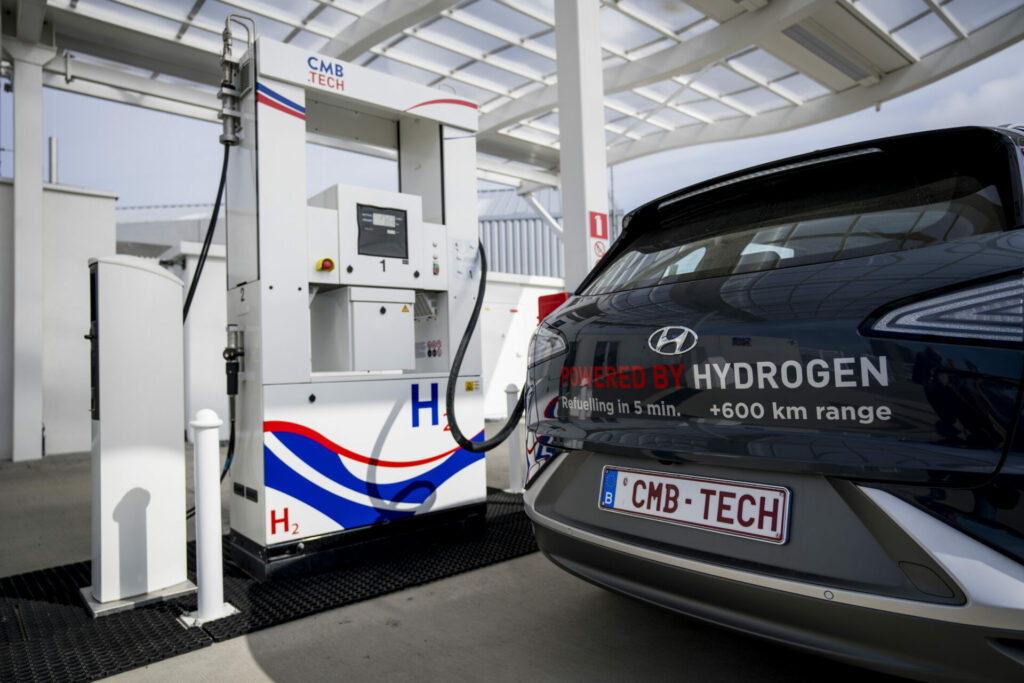
By 2035, it is expected that auto manufacturers will no longer sell cars with traditional combustion engines in Europe with electric vehicles expected to step up and fill the void.
But while electric cars have been seen for many years as the obvious way forward, it is not the only way to replace all engines running on gasoline, diesel or gas. Though electricity is the easiest and most available solution right now, hydrogen power continues to interest manufacturers, with several making prototypes.
However, with early forecasts placing the cheapest hydrogen-powered car at around €74,000, can it really be seen as an alternative?
Additionally, the few hydrogen filling stations that are in operation are also very costly. As of March 2023, a kilo of H2 was selling for €18 – it takes about 1.5 kg to travel 100 km. The result is a cost at least twice that of gasoline or diesel. A large tank can store about 6 kg of hydrogen for a theoretical range of 500 km. But in reality, the range achievable is much less.
Balancing the pros and cons
But the technology wouldn’t be considered if it didn’t have any advantages. For one, it is being promoted as a possibly more environmentally-friendly alternative to fossil fuels, though this depends entirely on the way it is produced and would require huge green infrastructure and production investment to realise.
Manufacturers of fossil-fuelled vehicles boast that refuelling takes about as long as with traditional fuel and therefore takes much less time than putting an electric vehicle on charge.
However it is important to note that rather than plugging directly into the grid to charge an electric vehicle, the fuel relies on an electrolysis plant to transform water into hydrogen and oxygen.
Related News
- Combustion engine ban formally approved by the EU
- Green hydrogen plant to open in Ghent in early 2025
The extra steps needed to produce hydrogen could give it a total energy consumption level close to that of turning crude oil into petrol or diesel. Additionally, if we need all the electricity used in hydrogen production to be green, the share of renewable or nuclear power will have to greatly increase.
The development of this sector implies sufficient local production of electricity in addition to increasing the number of hydrogen production, storage and distribution sites. And all this, of course, at reasonable and competitive prices. While the hydrogen alternative remains one car manufacturers will continue to explore, it is unlikely that we will see a viable sector before 2035 when combustion engines reach their end.
