

A total of 383 people including 184 from international organisations and 199 from 45 countries observed the preparation and holding of the referendum. They expressed their opinions about the activeness of the population, the organisation of the entire process and importantly, the New Constitution of Uzbekistan.
Here we would like to provide some grounds for updating the Constitution.
Firstly, the constitutional reforms underway are significant in that they are aimed at enshrining the principle of "person - society - state" as a constitutional norm. This is important considering the overall change of accountability of the state bodies. Implementation of the principle into practice should serve to change the longtime paradigm. One of the core principles is "Public bodies should serve the people, not the people to the public bodies." Secondly, ensuring the irreversibility of reforms is one of the main goals of constitutional reforms. Because building a people-friendly state, and ensuring human rights, interests and dignity, require creating a new constitutional and legal space to guarantee further reforms.
Almost all previous amendments and additions to the Constitution were mainly related to public administration and administrative reforms. More than half of the norms included in the new Constitution aim to strengthen the guarantees and mechanisms for protecting human rights and freedoms.
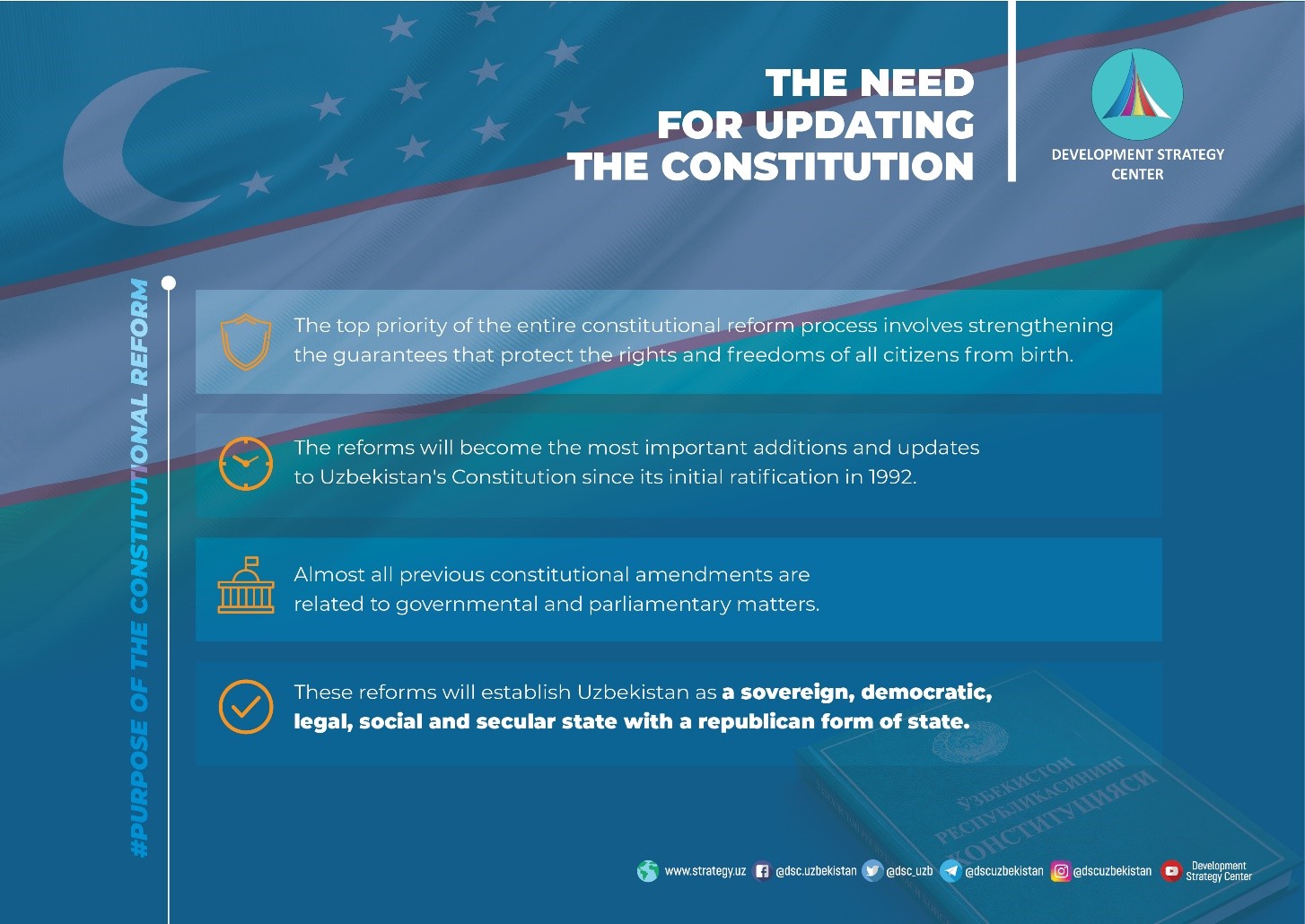
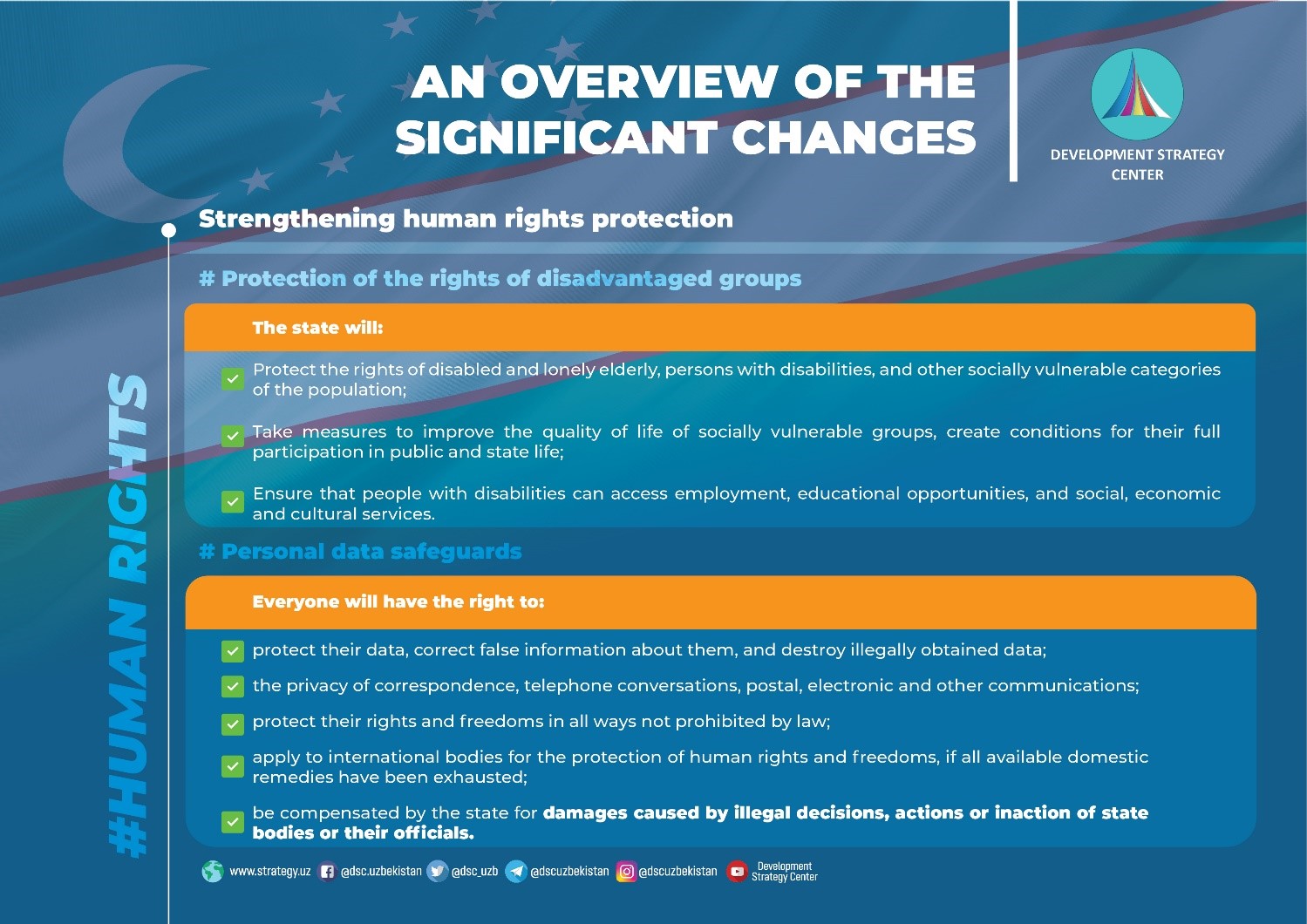
In particular, the most important of them, the concept of the social state is being introduced in the new Constitution. Such a state model is aimed at the fair distribution of material wealth per the principles of social justice to achieve decent living standards for every citizen, reduce social inequalities, and help people in need. To implement this, Uzbekistan has already launched several important initiatives which need further constitutional guarantees. For example, poverty reduction was defined as the priority policy of the state, payment of full pension amount to all working pensioners was resumed, and the activity of "Monocenters" was established. Additionally, the systems of the "Iron Register", "Women's Register", and "Youth Register" were implemented to create a list of the most vulnerable people who are in need and organise social protection more systematically.
The number of higher education institutions has more than doubled - the coverage rate has increased from 9% to 40% within the last six years. Private medical organisations have increased from 3,800 to 6,500. In this regard, the newly revised Constitution includes several articles based on social justice and solidarity.
For example, pension amount, allowances and other types of social assistance defined by the Law cannot exceed the officially designated minimum consumption expenditures. No one can be deprived of housing without a court decision. In addition, the Basic Law stipulates that the state should create conditions for the full use of social, economic and cultural facilities and services by persons with disabilities, assist them in their employment and education, and provide them with the opportunity to obtain the necessary information without hindrance. Also, to strengthen the labour rights of citizens is vital in ensuring that wages are worthy of their labour, as well as in raising the population's living standards and providing the principle of social justice in the country.
Very importantly, from now on, it will be forbidden to refuse to hire and fire women, or reduce their wages because they are pregnant or have a child. Prohibiting the discrimination of women's rights in the field of labour in our Basic Law is the basis for making changes and additions to the relevant laws aimed at implementing the constitutional norm.
Enshrining the prohibition of forced labour at the level of the Constitution serves as a legal basis for improving the working conditions of all workers and, most importantly, makes it possible to legalise informal labour relations. After all, many citizens working in this field are forced to work in conditions of exploitation without having paid time off. This should improve Uzbekistan's image in international rankings.
Also, the Basic Law will ensure access to education, health care and cultural values. Uzbekistan's citizens' right to receive the guaranteed volume of medical care at the state's expense is being strengthened, which is essential because the state supports coverage of its citizens with free medical care, regardless of their financial status.
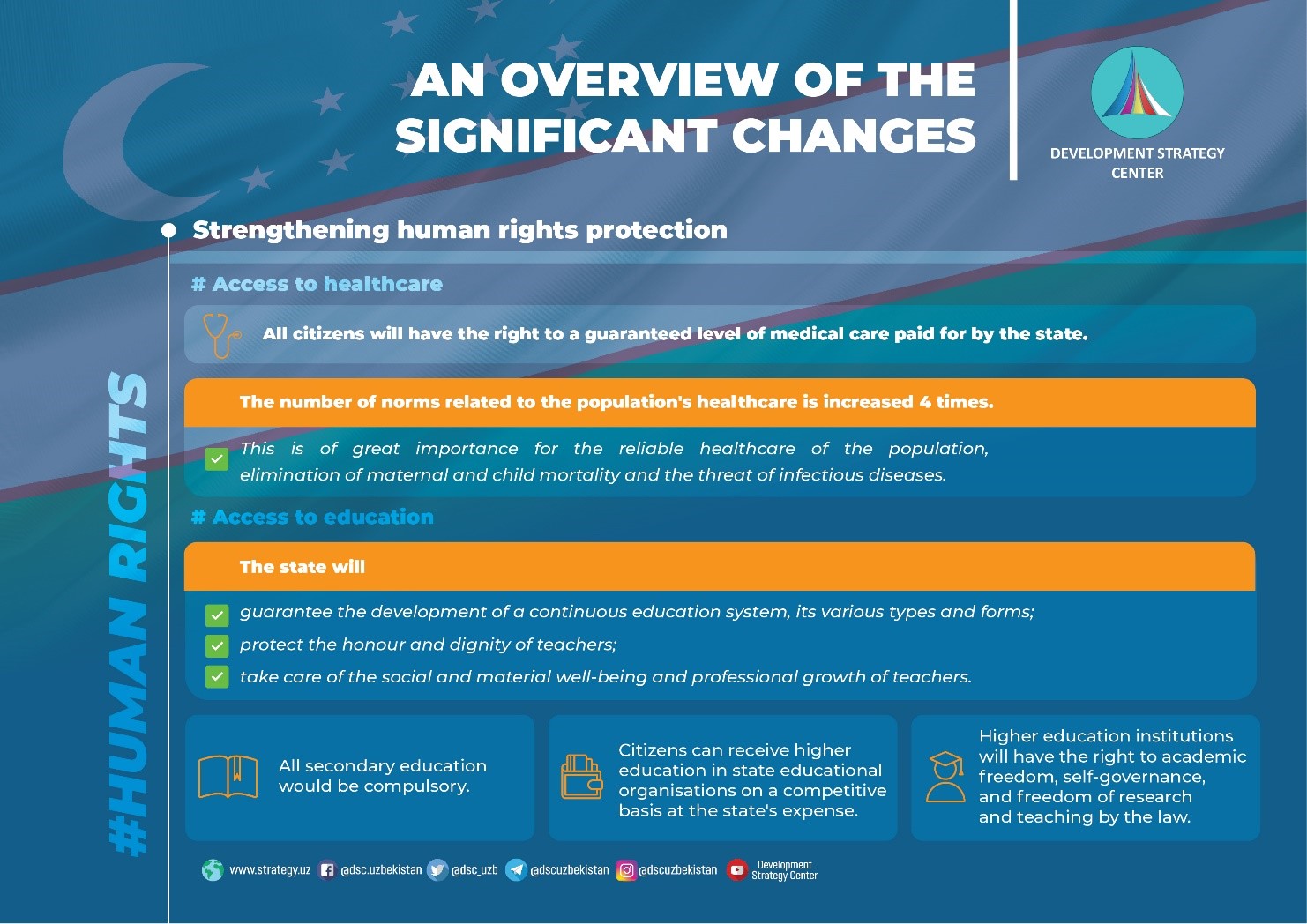
A separate article on the status and place of the teacher in society is being introduced. This will create an opportunity to strengthen the social position of more than 685,000 pedagogues, strengthen their state support and ensure their professional growth.
Overall, we believe changes to the new Constitution of Uzbekistan should further support the social well-being and increase the accountability of state bodies.
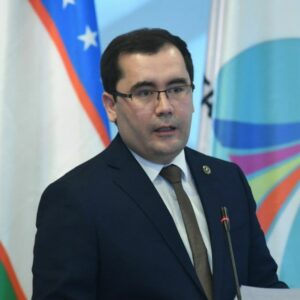
Eldor Tulyakov
Opinion by Eldor Tulyakov, Executive Director, Development Strategy Centre of Uzbekistan
Promoted by Uzbekistan Embassy in Brussels
