
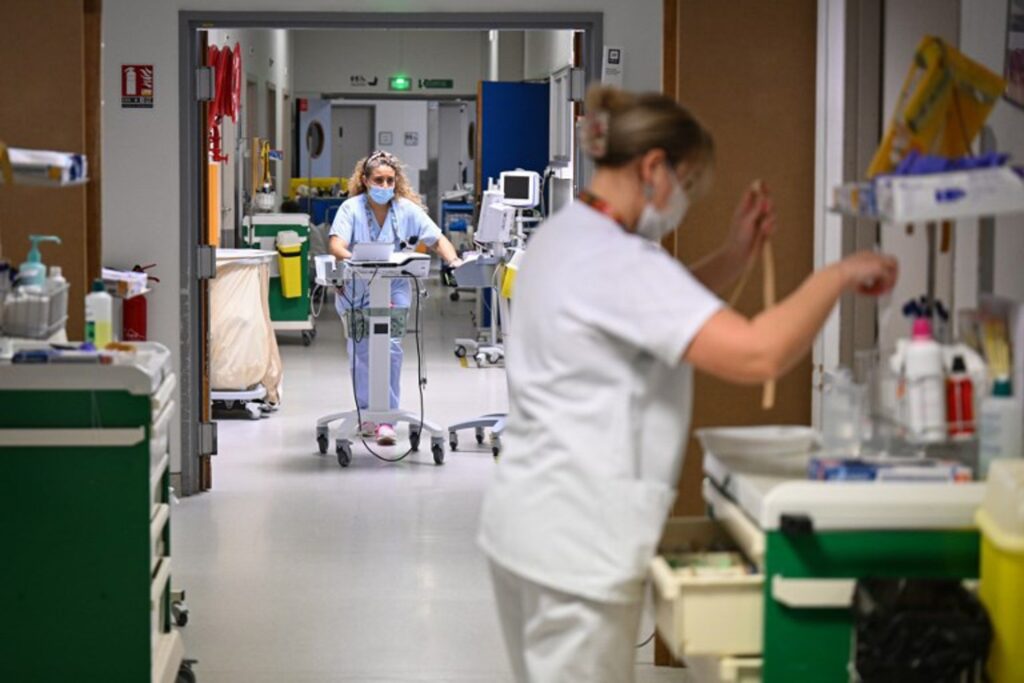
The Belgian Hematology Society (BHS) sounded the alarm about the working conditions of nurses on Friday, on the occasion of International Nurses’ Day.
The medical society points to unequal pay scales and a growing shortage of nurses in haematology units. In response, haematology nurses are calling for their profession to be better remunerated.
"The current working conditions of the nursing profession are continuously deteriorating," the BHS said in their statement. "So far our appeals have gone unanswered!"
Official job classifications do not recognise the specialisation of haematology nurses in the same way as emergency medicine or intensive care, who are better compensated. The nurses who care for patients with blood diseases must have “a high level of theoretical and practical expertise in a constantly evolving field of medicine”.
At the Haute Ecole de la Province de Liège (HEPL), for example, fifth-year enrolments for the haematology specialisation have decreased by more than 70% between 2018 and 2022.
The BHS said that the low wages of haematology nurses are pushing students away from the field, which has made it harder to recruit competent profiles. As the society puts it, hospitals are "haemorrhaging nursing staff".
Haematology units across the country do not have enough caregivers. Those who are present become exhausted and it becomes difficult to replace them. Faced with this shortage, hospitals are forced to close beds.
At the Liège University Hospital (CHU Liège) seven beds out of 32 have been shut down, and at CHU Namur, there is enough staff for 21 out of 27 beds.
At the same time, the number of patients is increasing, due to the wider availability of effective treatments that prolong the quality and length of life.
“This situation leads to under-par care for patients, with the risk, in the short term, of not being able to treat them at all,” said Professor Marc André, president of the BHS and haematology department head at the CHU-UCL Namur.
Related News
- Majority of young people don't get 'suspicious spots' checked
- British High Court cuts short 'illegal' nurse strike
- Flemish hospitals to bring in nurses from India
Faced with this problem, the BHS is asking the government to revise the Institute for Job Classification's (IFIC) scale system for haematology nurses, as well as to make nursing jobs more attractive, in order to fix the current staff shortage.
Cristina Baiana, Chair of the BHS Nursing Committee, has been a haematology nurse for 29 years. "It is obvious that we would like a revaluation of our work", she said. "But I want to stay positive. It's a very good job, which we do above all for the patients. It's also a constantly evolving field, and that's what keeps us going."
