
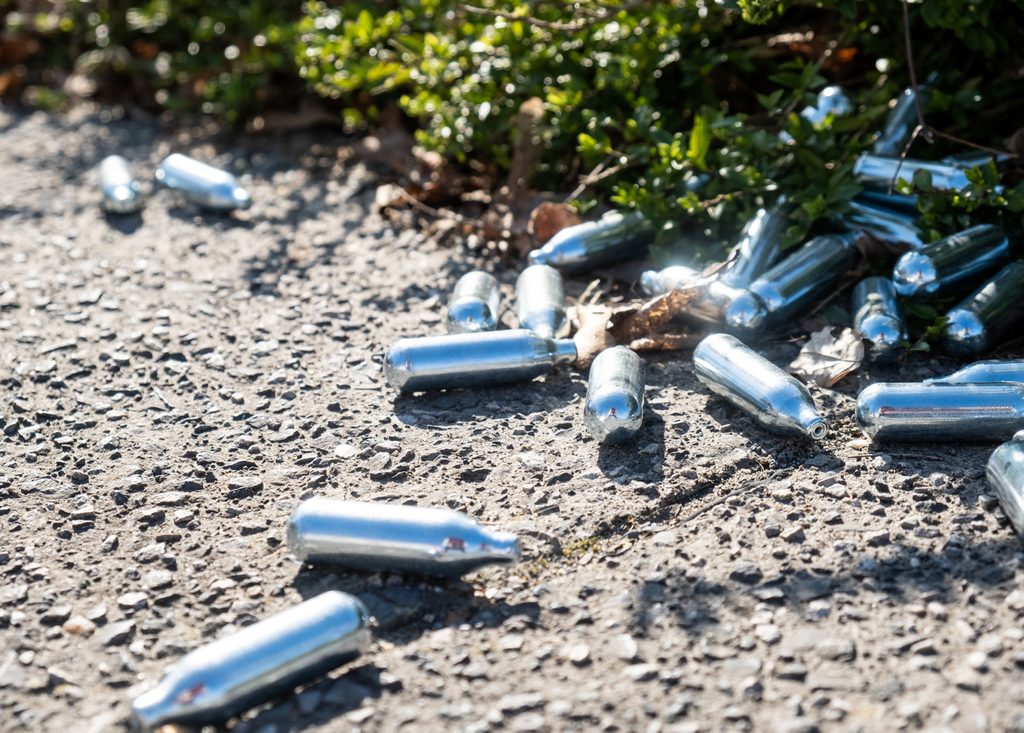
The processing of cylinders containing nitrous oxide (more commonly known as laughing gas) is increasingly causing problematic explosions in waste incinerators in Brussels. Additionally, use via larger containers presents health risks, Safe Brussels announced on Monday.
An exploratory survey of professionals in the cleaning, prevention and safety sectors has revealed an evolution in the recreational use of laughing gas in public spaces. This has led to increased risks, calling for more control of the illegal sale of nitrous oxide and more targeted awareness and prevention among high-risk groups, said the Safe Brussels observatory, which coordinates prevention and safety in the Brussels-Capital Region.
The use of nitrous oxide, perceived as harmless despite known health risks, has changed in several ways, analysts pointed out: larger containers have seemingly replaced smaller cartridges. Large bottles, allowing cheaper and collective consumption, are found in discreet places without social control or near festive places.
"As for the evolution of the scale of the phenomenon, the opinions of those interviewed are divided. Some indicate that recently, more and more nitrous oxide waste is being recovered," the analysts stated, adding that the results must be "interpreted with caution due to the limitations of this survey."
Related News
- 'Laughing gas' capsules cause explosions in waste incinerators
- Laughing gas: Nitrous oxide poisoning cases on the rise in Europe
- No laughing matter: sale of nitrous oxide banned to minors
In addition to the greater risks associated with the use of large nitrous oxide cylinders than with small cartridges, the survey points to the problem of abandoned waste, particularly from containers that are not completely empty. These end up in the household waste circuit and cause explosions in the incinerators of the region's only incinerator, resulting in necessary shutdowns and repairs.
"Strict regulation of psychoactive substances and its enforcement is always necessary, but it must be accompanied by prevention, harm reduction and support measures," Safe Brussels concluded. "Such an integrated approach is needed to structurally tackle both the use, including problematic use, and supply."
