
Promoted by Uzbekistan Embassy in Brussels
What is a social state?
A social state is a model of a state whose policy is aimed at redistributing material goods, income and wealth in accordance with the principles of social justice in order for each citizen to achieve a decent quality and standard of living, smoothing social differences and helping those in need. The concept of "social state" was first used in 1850 by Lorenz von Stein (although in a slightly different way).
Mention of the social state is contained in the constitutions and other supreme legislative acts of many countries. It is believed that it was the implementation of the ideas of the welfare state that ensured the well-being of Western countries after the Second World War. However, by the beginning of the eighties of the last century, their enthusiasm for the ideas of the social state began to wane, as liberal approaches of Reaganomics and Thatcherism prevailed in politics.
If we analyze the trends of social policy in Uzbekistan, especially those carried out in recent years, it becomes obvious that, firstly, the idea of a social state and social justice is close to the people of Uzbekistan in ideological terms, and, secondly, the social policy of the country in recent years has been formed precisely in the paradigm of the ideas of a social state, that is, the process of its formation has been underway.
Social trends in Uzbekistan
Uzbekistan has always had a strong social policy. During all the years of Independence in Uzbekistan, unlike many other countries, the need for a strong social policy has not been questioned. Why not? Since ancient times there has been a postulate that people should help each other, and the poor and weak should receive support from neighbours and society. Therefore, the concept of social justice and the social state is an important part of our national mindset. But previously, the state's ability to implement a strong social policy was limited, owing to insufficient economic growth rates and since tax revenues to the budget were not enough to ensure adequate spending for social purposes. In recent years, due to the ongoing reforms, the economy has been growing dynamically, which made it possible to allocate more funds for solving social problems.
According to a survey conducted by the Center of Economic Research and Reforms (CERR), by the end of 2022, the poverty rate decreased by 3% compared to the previous year and amounted to 14.1% (in 2021 it was 17%).
In compliance with the constitutional status
In Uzbekistan in recent years, all the necessary prerequisites have appeared for the creation of a social state and the consolidation of this status in the Constitution. Moreover, this status should not just be fixed in words, but confirmed in practice by both the social policy pursued by the state and the achievements already reached in all areas of social life, otherwise it will not inspire confidence either in the country or abroad. And what has been achieved in recent years already allows us to consolidate this status in the Constitution.
The President's Address to the Oliy Majlis (Parliament) and the people of Uzbekistan on December 20 last year set a goal to build a New Uzbekistan based on the principle of a "social state", to create equal opportunities for people to realize their potential and the necessary conditions for a decent life and poverty reduction. The President proposed to reflect the duties of the state in the Constitution: to provide housing, strengthen the economic and spiritual foundations of the family, create conditions for the full development of children, support people with disabilities, protect human health and the environment.
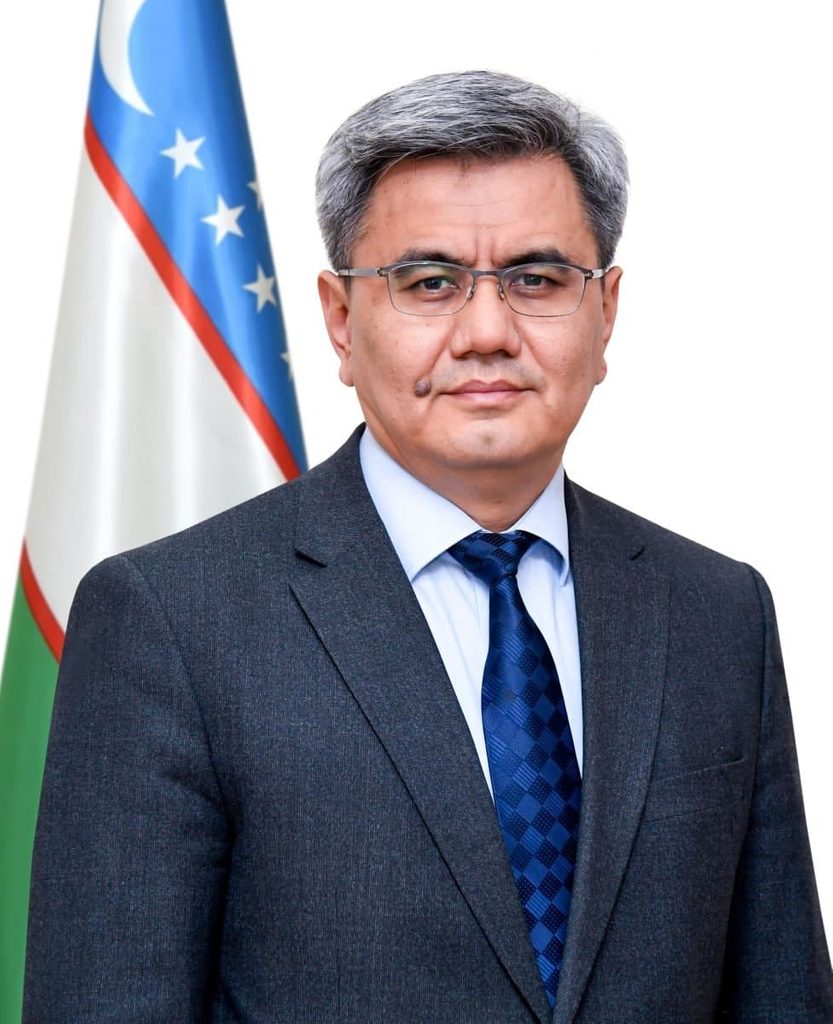
Obid Khakimov, Director of the CERR
State and private property
Since the economy is the basis and prevails over politics, let us focus in more detail on the economic aspects of the new Constitution, which significantly strengthens the constitutional mechanisms that ensure the development of market relations, the protection of private property, entrepreneurship, and the social orientation of the market economy.
In the economic part of the current Constitution, adopted in 1992, the following was rather vaguely stated "the basis of the economy of Uzbekistan, aimed at the development of market relations, is property in its various forms. The state guarantees freedom of economic activity, entrepreneurship and labor and legal protection of all forms of ownership. Private property, along with other forms of ownership, is inviolable and protected by the state." As can be seen from the wording, they are of a general nature and do not specifically define the functions and responsibilities of the state on the listed issues. So, the economy is only "aimed at the development of market relations," and it is unclear what the functions of the state are and what constitutional guarantees are available. In the new wording submitted to the referendum, all these issues are clearly outlined.
Expanding the freedom of entrepreneurial activity
Moreover, in the updated Constitution, the block of issues directly related to the economic sphere has been significantly expanded. It reflects the importance of a favorable investment and business climate for normal economic development and the responsibility of the state for its formation ("the state provides a favorable investment and business climate"). The rights and freedoms of entrepreneurial activity have been expanded ("entrepreneurs, in accordance with the law, have the right to carry out any activity and independently choose its directions"), which was not reflected in the current Constitution.
Moreover, at the same time, constitutional guarantees are given for the removal of any barriers that hinder entrepreneurial activity in our country ("the integrated economic space, free stock movement, services, labor resources and financial resources are guaranteed on the territory of the Republic of Uzbekistan").
Private ownership of land
Also, one of the most significant achievements of the updated Constitution is the constitutional consolidation of the right of private ownership of land. Article 68 of the new edition establishes the norm that "land may be privately owned on the terms and in the manner prescribed by law and ensuring its rational use and protection as national wealth."
The economic significance of this norm is very important, since land becomes an element of economic relations and it can be actively used as an operational tool of commercial relations in the real estate market, when obtaining a loan, as collateral, and so on, which contributes to the growth of capitalization of the relevant markets related to land relations, and ultimately the growth of the economy as a whole. In addition, the introduction of this norm makes it possible at the constitutional level to consolidate the right of ownership of citizens and business entities to land, which in turn will serve as a reliable protection and guarantee of the rights of owners, as well as consolidate their obligations to careful attitude to the land.
Conclusion
In conclusion, as world experience shows, poor countries with underdeveloped and modernized economies cannot afford to pursue a sufficiently strong social policy. Countries with dynamically developing economies can afford it. But the dynamic development of the economy, in turn, requires trained personnel, that is, improving the quality of the human capital of the population. And there is no way to do it without a strong social policy.
Uzbekistan right now, after six years of dynamic reforms, is in the same situation as the developed countries in the post-war period. A dynamically developing economy generates enough income to strengthen social protection, but without improving the quality of human capital, further economic growth will be increasingly problematic, since the economy is already experiencing a shortage of qualified personnel. Therefore, it is now becoming the highest priority to direct the necessary efforts and resources to solving social issues, strengthening social protection, improving the quality of healthcare and education, training personnel for an increasingly complex modernized economy not only today, but also tomorrow.
In other words, based on global development trends, Uzbekistan's transition to a model of a social state at the constitutional level is very relevant and timely at the very moment of its dynamic development.
Opinion by Obid Khakimov Director of the Center for Economic Research and Reforms under the Administration of the Republic of Uzbekistan
The Center for Economic Research and Reforms (CERR) under the Administration of the President of the Republic of Uzbekistan is both a research center and an Accelerator of socio-economic reforms. CERR provides comments and advice on suggestions for socio-economic programming and policies by the Ministries to solve the main development issues in a swift, operational and efficient way. CERR is in the Central Asian Top-10 by the «Global Go To Think Tank Index Report 2020» (USA)
