
BRUSSELS BEHIND THE SCENES
Weekly analysis with Sam Morgan
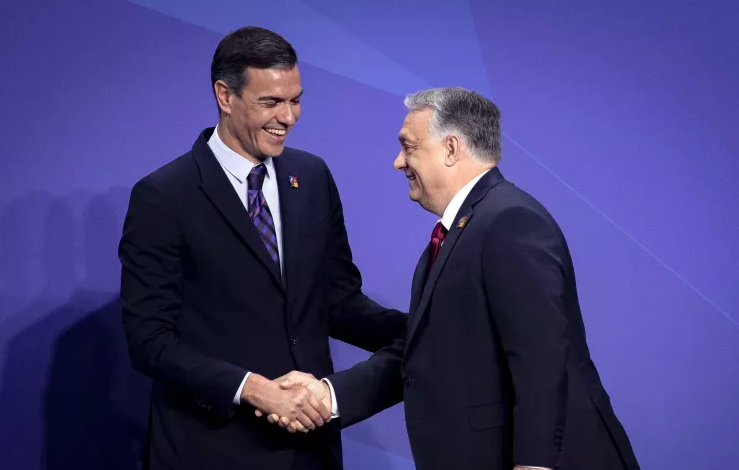
Spain and Hungary will chair the EU’s presidency over the course of the next 18 months. But there are serious doubts about both countries’ ability to do the job that well. Does it even matter?
When Spain’s ruling socialists were dealt a bloodier nose than expected after last weekend’s regional elections, Prime Minister Pedro Sanchez shocked us all by calling a snap vote for the end of July.
That is right at the start of Spain’s stint in charge of chairing European Council meetings, potentially throwing a spanner in the works.
At the same time, Hungary’s continuing drift towards illiberalism has prompted calls from MEPs that it be stripped of its duties before next year’s presidency.
But what do both these developments mean for the way the EU goes about its business? And is the very concept of a rotating presidency obsolete in this day and age?
BRUSSELS BEHIND THE SCENES includes weekly analysis not found anywhere else, as Sam Morgan helps you make sense of what is happening in Brussels. If you want to receive Brussels Behind the Scenes straight to your inbox every week, subscribe to the newsletter here.
Sweden will hand over the reins of the EU presidency to Spain at the end of June, when ministers and officials from the Iberian nation will then chair and organise meetings, informal gatherings and behind-closed-doors negotiations.
It is a six-month-long window that allows the host nation to drag ministers and journalists to informal meetings held at various different venues, host at least one big summit in-country and, most importantly, set the agenda for meetings.
At the end of the year, Spain makes way for Belgium and in July 2024, Hungary has its second shot at the job. Budapest first held the presidency in 2011, eight years after joining the EU.
Spain’s presidency will be heavily disrupted by a snap poll called by Pedro Sanchez earlier this week, as all of July will be largely written off because of campaigning, and depending on who wins and in what fashion, the months after will also be impacted.
The opinion in Brussels about how significant that disruption will be is somewhat split. Some EU-watchers are worried that it tarnishes Spain’s presidency before it even gets started, jeopardising the chances of reaching crucial agreements on still-open legislative files.
Others are less pessimistic and point to the fact that Spain has been preparing its presidency for well over six months and many of the officials who will run it will stay in place regardless of which party triumphs in July.
It is likely then that the early elections won’t have a disastrous impact on Spain’s presidency but that it may affect the voracity with which the chairing nation tries to reach those important legislative deals.
Issues like electricity market design and the energy performance of buildings directive may have been priorities for Sanchez’s administration but if a different political force takes power then those priorities may shift. We will have to see.
Take Sweden: the change of government shortly before its presidency began did not change the content of its programme too much but topics like migration reform have barely featured as a result of the lack of political will. Spain will probably follow this pattern.
The EPP Group, always sniffing around for a chance to score political points, has suggested that Spain should not present its priorities until after the election. That is an attempt to rob Sanchez of a stage to play the statesman ahead of the election, where the EPP hopes its candidate will triumph as predicted.
More radical thinkers have suggested that Belgium should switch places with Spain, bringing forward its stint by six months, allowing the Spanish to avoid the clash and actually allowing Belgium to do the same, as it will hold federal elections next June.
That is a rather unlikely, even impossible proposal as the amount of preparation needed to get ready for a presidency is quite substantial. Even though Belgium has started planning its showcase event, there is not enough time to get it done.
Spain would probably not welcome the move either, as EU elections next June mean that the months ahead of those bloc-wide polls will be a period of legislative limbo. The July-December period is a premium slot.
Belgium’s January-June window will probably be a bit of a damp squib, in much the same way that Croatia’s debut as presidency-holder was completely wrecked by the Covid pandemic.
The rotating presidency is an archaic concept though, let’s face it. More of a marketing exercise than anything tangibly beneficial to European democracy, it is 99% symbolic and, for journalists, quite difficult to write about.
Your Behind the Scenes columnist rolled his own eyes every time the story requires ‘rotating presidency’ due to lack of alternative. Maybe it should just be ditched altogether to rule out any of these issues.
What to do about Hungary?
MEPs voted on Thursday in favour of a non-binding resolution that questions Hungary’s 2024 chairing of the presidency and urges the Council to come up with a solution, threatening “appropriate measures” if it is ignored.
It is easy to see why the Parliament has done this. Hungary has frustrated EU attempts to present a unified front against the Kremlin, has been the subject of the Article 7 process since 2018 and has been kept at arm’s length from billions in Covid recovery funding.
Even Germany’s Europe minister told reporters earlier in the week that she had “doubts” about Hungary’s capacity to lead a successful presidency. That statement is far from supportive but it is also not an outright condemnation of Budapest.
Stripping Hungary of its presidency is not impossible under EU law. The infamous Article 7 procedure says that member states can vote in favour of measures that “include” revoking voting rights. One could argue that the presidency would also be fair game.
But it is hard to imagine, even impossible to imagine anything coming of this. MEPs have zero power to dictate what the Council gets up to and as the stalled Article 7 procedure shows, turkeys are not going to vote for Christmas.
The most that MEPs can threaten to do is limit their interactions with Hungary’s presidency and even frustrate progress at meetings if given the chance. This will of course just feed all the ‘drain the Brussels swamp’ narratives, making the problem worse.
Besides, Hungary’s stint will start in July and last until December 2024, just as EU leaders are deciding who should lead the Council proper and the Commission. It may well take a couple of months to settle on the right candidates.
That means that Orban’s people will be in charge at a rather inconsequential time, limiting the potential damage that Hungary’s policies can do to the EU’s agenda. Better to get it over with then and wait another decade until the next one.
After all, Orban won’t be in charge then will he? Hungary might not even be in the EU by the time its next shot at running the presidency comes around. Just let them have it and wait for the 2025 holder to take over and right the ship.
Oh wait, Poland is next…
BRUSSELS BEHIND THE SCENES includes weekly analysis not found anywhere else, as Sam Morgan helps you make sense of what is happening in Brussels. If you want to receive Brussels Behind the Scenes straight to your inbox every week, subscribe to the newsletter here.
