
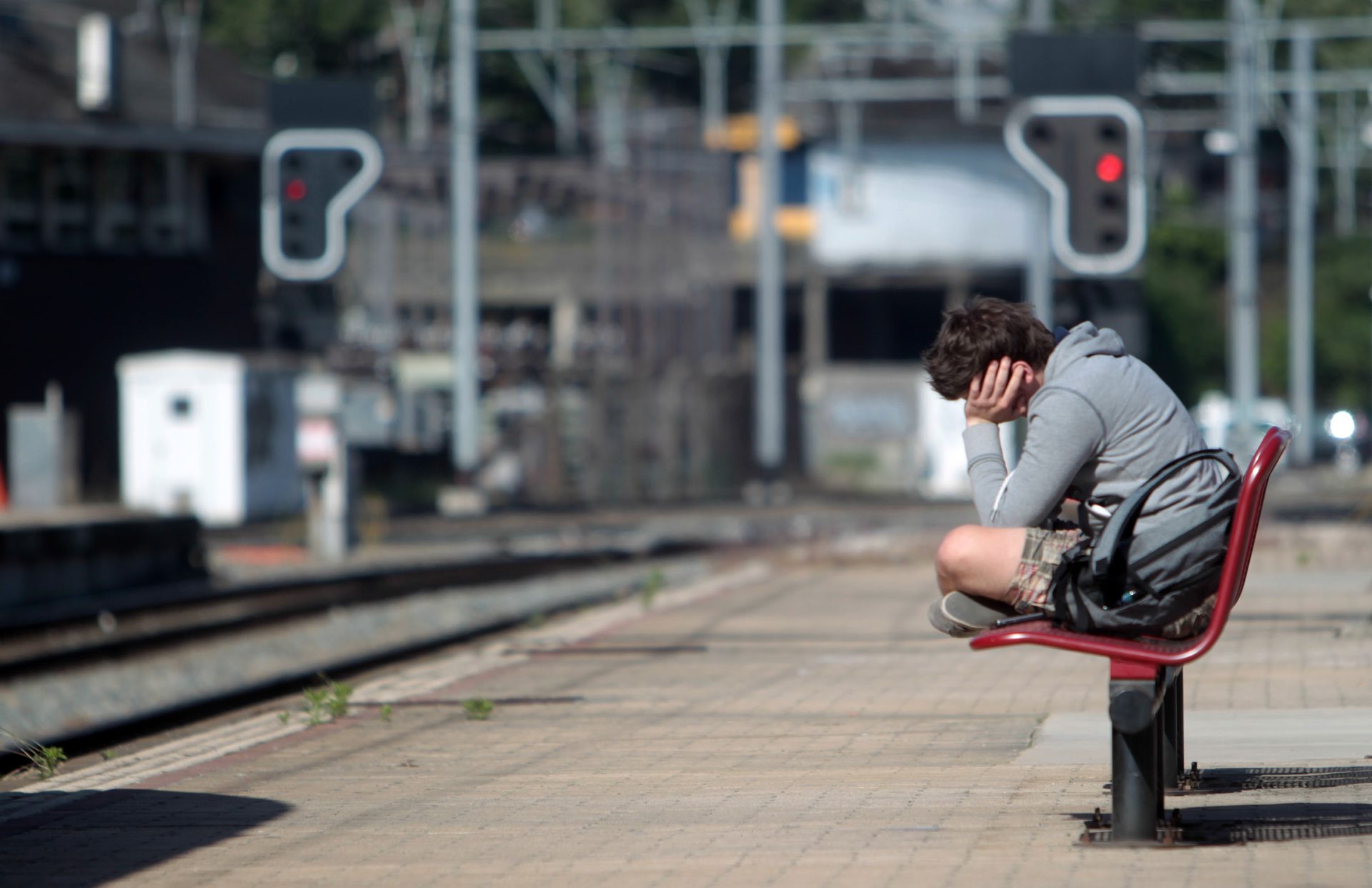
Adolescence is a difficult period of life at the best of times but with increasing pressures, insecurity, anxiety and crises, young people today face a very different world to that in which their parent grew up in.
Psychiatrist and psychoanalyst Philippe van Meerbeeck, Professor Emeritus at the Faculty of Medicine of UCLouvain, recently spoke to RTBF about his new book ‘Teens in Search of Meaning: From Yesterday to Today’, in which he focuses more specifically on the questions posed by adolescents in a world in crisis dominated by digital tools.
In the book, van Meerbeeck says that pubertal signs appear earlier and earlier in young people these days, so adolescence begins earlier and earlier in their lives.
Usually, he says, this ends with the advent of independence, when the teenager can leave home and start their own lives. However, during the pandemic, teenagers were forced to stay in their rooms for two years, without outside contact except via digital screens. Everything from distance learning, to experiencing social networks, and playing video games was done alone on a screen. The effects, he says, have been horribly complicated and misjudged.
Shock therapy
“I worked full-time during the pandemic,” he told RTBF. “I was assailed by young people who were discouraged, depressed, isolated, uncomfortable in their own skin... The backdrop of today's world is characterised by a multi-crisis: Covid has been joined by the climate challenge and the war in Ukraine.”
“It's very complicated, especially in a world where no one believes in progress or a better world anymore,” he added in the interview. “That is a bit worrying. It doesn't make you want to grow. Teens are also searching for meaning in a world dominated by fake news.”
De Meerbeeck says that it is important to measure the extent of the problems caused by the current technological revolution if we are to find solutions. “Digital technology brings its share of questions: where is the freedom? Where is the truth? And where is the ability to develop your destiny in a world when you are always ahead of algorithms that somewhere know you better than yourself? That is the reality of young people.”
Related News
- Negative trend continues: More youngsters feeling lonely, nervous and unhappy
- Despite years of trauma, refugee minors show resilience and remarkable positivity
- Flemish teenagers report increased unwanted sexual behaviour
“We must reflect with them on how to live in this totally new world that we know little about,” he told RTBF. “The modalities of identification and psychic construction that worked until the end of the twentieth century no longer work at all. So what can be done? I think that as adults we must first take the time to understand today's world but also to learn from history.”
De Meerbeeck believes that listening to our young people is essential if we want to avoid an epidemic of suicides. It is the responsibility of all, young and old alike, to watch for the signs, especially when a lot of their lives are lived online where they can fall victim to cyberbullying and abuse.
“I have sometimes been invited to schools after the suicide of a young person,” he said in the interview. “I tell young people that if they see someone who is being abused, they should come to their rescue. Ditto for teachers, who must be even more attentive than before because the phenomenon is amplified by social networks.”
