
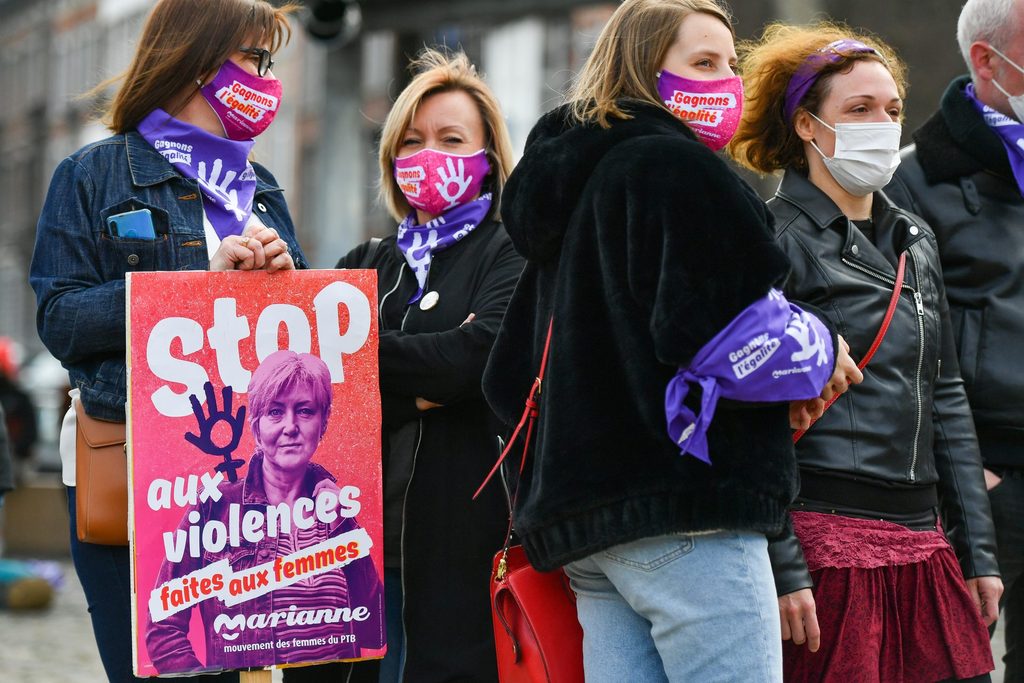
Despite notable campaigns for women’s rights such as the MeToo movement making headlines, the UN announced on Monday that there has been no progress in reducing prejudice against women worldwide, in the past ten years.
The organisation lamented that sexist attitudes remain “entrenched” in global societies and that social norms based on gender bias are widespread among both men and women. The United Nations Development Programme (UNDP) report found that nearly 90% of the world population has at least one sexist prejudice.
The UNDP has updated its Gender Social Norms Index (GSNI) using data from the World Values Survey, a global research project that covers 80 countries and includes 85% of the world's population.
This index shows no improvement in prejudice against women “despite major global and local campaigns for women’s rights” such as MeToo.
Entrenched social norms
The report found that nearly half the world’s population (49%) still believes that men make better political leaders than women; only 27% believe that gender equality is essential for democracy and that women have the same rights as men. Nearly half (46%) are of the view that men have more right to a job and almost as many (43%) believe that men make better business leaders.
Alarmingly, a quarter of those surveyed think it justifiable for a man to beat his wife and 28% believe that university is more important for men.
“The lack of progress on gender social norms is unfolding against a human development crisis: the global Human Development Index (HDI) declined in 2020 for the first time on record – and again the following year. Everyone stands to gain from ensuring freedom and agency for women,” said Pedro Conceição, head of UNDP’s Human Development Report Office.
This stagnation comes against a backdrop of declining human development in general, linked in particular to the Covid-19 pandemic. The HDI measures three dimensions of well-being: health, knowledge and standard of living.
How to improve things
The UNDP report emphasised that governments play a crucial role in shifting gender social roles through tools like parental leave policies, which change perceptions around care or labour market reforms, which can change prejudices around women's employment.
Equal access for women to education has been a long-standing focus of such policies but developed countries are reaching a point where better education for women does not necessarily translate into economic opportunity, the report points out.
In 59 countries women have higher levels of education than men, but a significant gap in average income persists. This difference in revenue can be linked to "deep-rooted social norms and gender stereotypes."
Related News
- Gender pay gap in Belgium falls to 8%
- Belgian employer convicted for firing woman after abortion
- Paternity leave extension to improve gender equality falling short in Belgium
“An important place to start is recognizing the economic value of unpaid care work. This can be a very effective way of challenging gender norms around how care work is viewed,” said Raquel Lagunas, Director of UNDP’s Gender Team.
“In countries with the highest levels of gender biases against women, it is estimated that women spend over six times as much time as men on unpaid care work.”
