
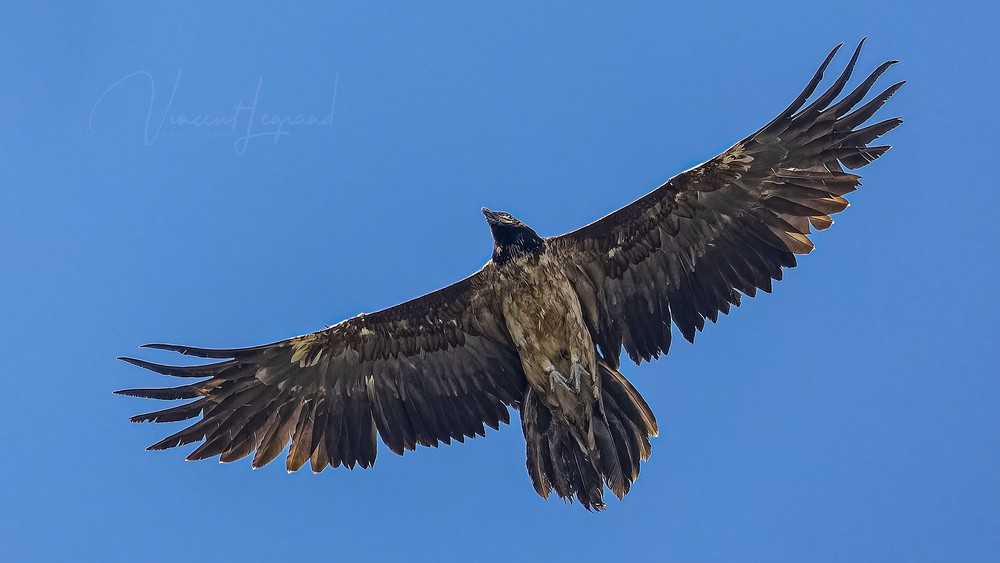
A southern "tsunami" of rare birds has arrived in Belgium in recent days as a result of the warm weather, causing animals usually not seen in this part of the world to be spotted by bird watchers.
On Thursday last week, a group of 24 griffon vultures, enormous scavenger birds with a wingspan of around 2.5 metres, were seen over the Heuvelland, in West Flanders. This type is known for eating the bones of carcasses.
On Friday, a very rare sighting was made on the southern edge of Brussels, where a bearded vulture, a bird so unique it is hardly spotted in the high mountains where it usually lives, was seen soaring above land.
Several dwarf eagles, grey kites, a short-toed eagle, and a red-legged falcon were also seen scattered across Belgium, as were a lot of smaller birds from the south. In the Netherlands, a very rare imperial eagle was spotted, nature organisation Natuurpunt reported.
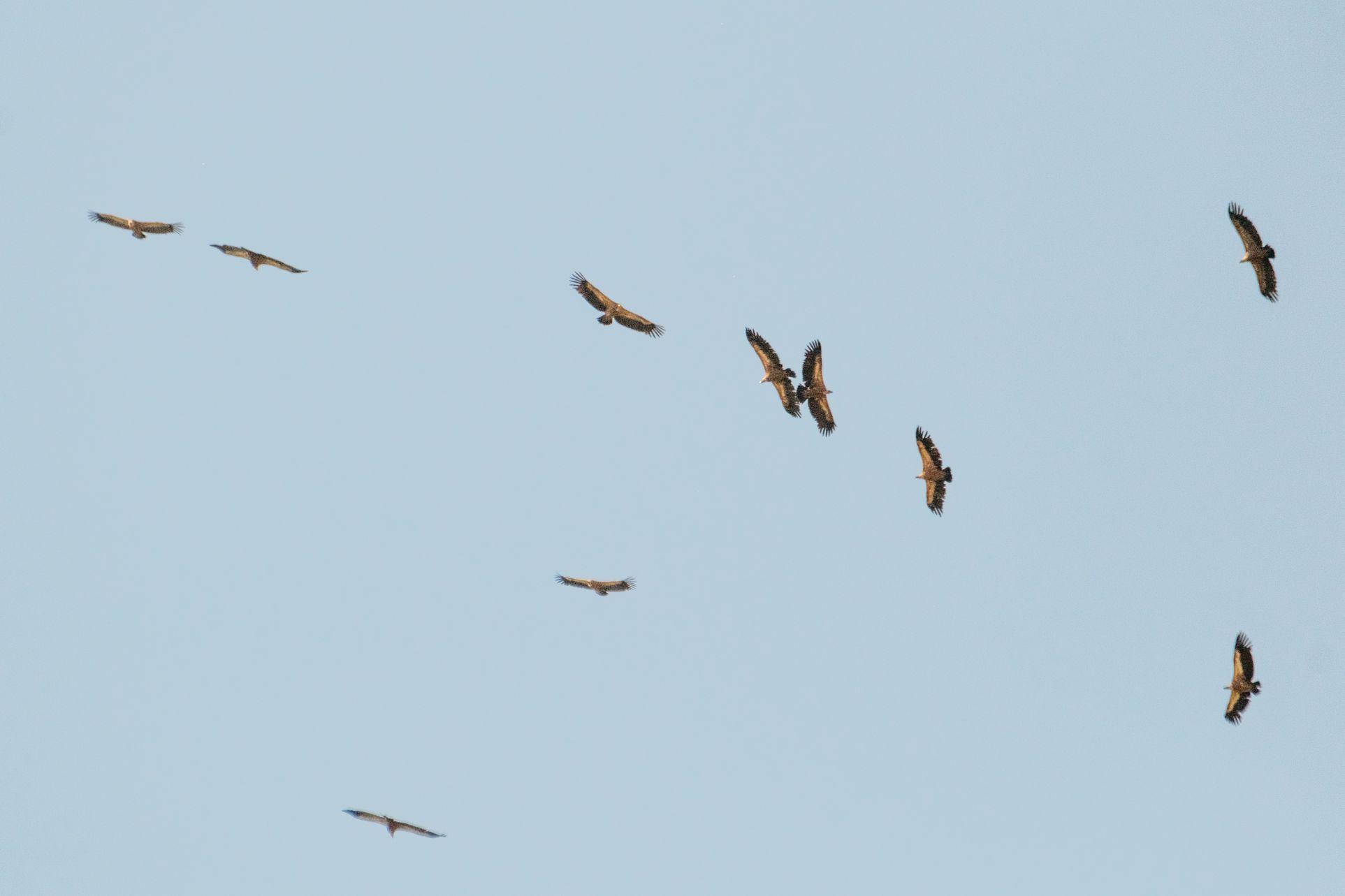
A group of griffon vultures. Credit: Niko Deleu/ Natuurpunt
The unprecedented numbers of southern bird species in Belgium and the Netherlands can be explained by the combination of the warm weather after a long period of cold, accompanied by thermals – warm upward air currents – and a south-easterly wind.
Large birds of prey use thermal bubbles, created in places where the earth warms fastest, to gain height and glide further without much energy, helping them move over great distances.
"We have seen in the past that such a sudden influx of heat and thermals has brought large birds of prey from the south to us. Often these are young birds that leave the parental territory and set off on a 'thermal excursion' in search of a habitat of their own. But last weekend saw a further increase," Bastiaan De Ketelaere of Natuurpunt's Nature Academy (Natuuracademie) said.
Related News
- 'Over 200 years ago': New wolf spotted in West Flanders
- Humpback whale visits the Belgian coast for a week
Many of the birds will in all likelihood descend back south soon because they cannot find suitable nesting grounds or enough food in Belgium. "Although these birds of prey are currently far from their breeding grounds, it can be assumed that most of them will easily fly back south on their own."
However, one creature, a bearded vulture spotted in the Netherlands, will not fly back south, as the bird was killed by a collision with a wind turbine in Zeewolde.
Natuurpunt has a free data platform for birdwatchers to log these remarkable sightings in near real-time.
