
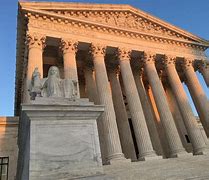
The nine-member US Supreme Court, dominated by conservatives, on Thursday put an end to affirmative action programmes at universities.
The court's six conservative justices ruled, against the advice of its three progressives, that campus admissions procedures based on applicants’ skin colour or ethnicity are unconstitutional. Too many universities "have concluded, wrongly, that the touchstone of an individual's identity is not challenges bested, skills built, or lessons learned but the colour of his skin,"Justice John Roberts wrote on behalf of the majority. US constitutional history "does not tolerate that choice," he said.
The complainant, the ‘Students for Fair Admissions’ collective, considered it unlawful for institutions, such as Harvard and the University of North Carolina (UNC), to include the skin colour of prospective students in the admissions process.
In 1964, then-President Lyndon B. Johnson issued Executive Order 11246. With it, he required all institutions receiving federal government funding to get more non-whites on board through positive discrimination, which resulted in racial quotas, among other things.
The Supreme Court has ruled against quotas several times since 1978, but has always allowed universities to take racial and other criteria into account. Until now, the Court considered efforts to increase diversity on campuses legitimate, even if it meant violating the principle of equality among all US citizens.
The Court's decision reverses decades of immense progress, Justice Sonia Sotomayor wrote on behalf of progressives. It affirms an artificial rule of indifference to skin colour as a constitutional principle in a profoundly segregated society, where race has always mattered and will continue to matter, she continued.
Harvard said it would abide by the ruling and that, in the coming period, it would see how it can preserve its essential values in line with the court’s decision.
The US president said he “strongly disagrees” with the decision. He spoke of “a great disappointment” and called on universities not to abandon their efforts to create a diverse student population. Biden also said the conservative-dominated Supreme Court was “not a normal court.”
Republicans welcomed the decision. Former President Donald Trump said it was “a great day for America.” US House Speaker Kevin McCarthy said students could now compete based on equal standards and individual merit. This makes the university admissions process fairer and ensures equality under the law, he commented on Twitter.
Fundamental rights specialist Jogchum Vrielink (KU Leuven and UC Louvain Saint-Louis) believes the implications of the ruling could be far-reaching. “Most contemporary affirmative-action programmes in the context of higher education are based on past criteria, so it seems these can no longer apply,” he said in a comment to Belga News Agency.
“What is still possible in terms of affirmative action actually seems very little: the review is so strict that any deviation from total formal equality seems a violation of the Constitution,” Vrielink added.
“It is suspected that this will lead to much less effective admissions of black and Latino persons, at least in the most sought-after courses/universities, and also to fewer enrolments, out of the fear/assumption that one has less chance anyway,” he noted.
