
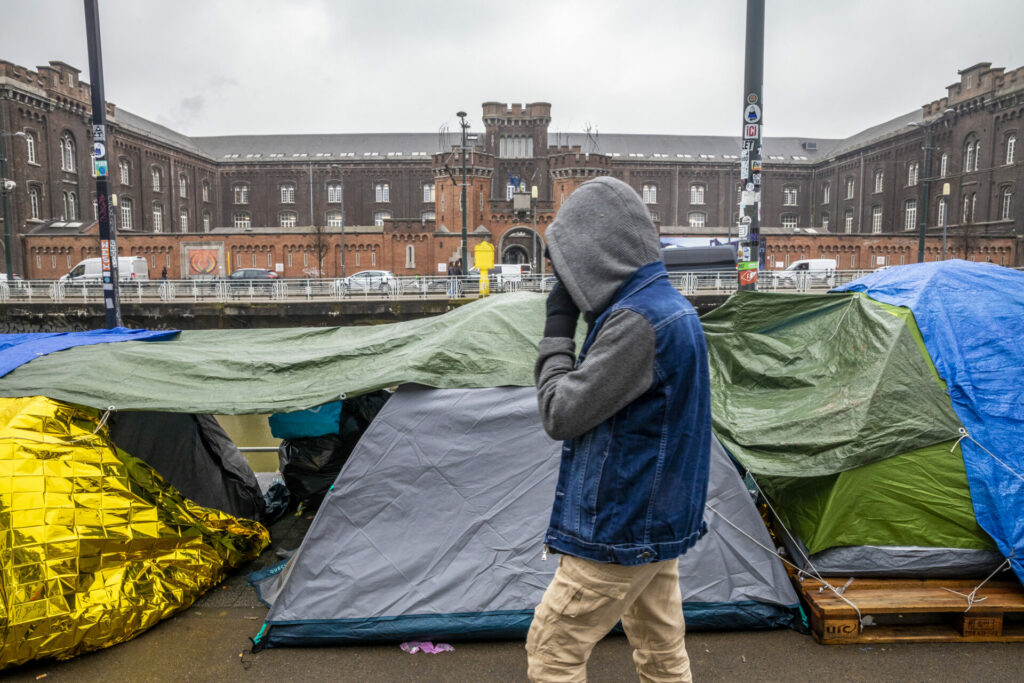
From January to June 2023, Belgium received 15,339 applications for international protection, according to figures released on Wednesday by Sophie Van Balberghe, Commissioner-General for Refugees and Stateless Persons (CGRA).
In 2022, Belgium received 36,871 applications. Typically, a large number of applications are submitted during the summer months, suggesting that the number of applications will be higher throughout 2023. Three countries account for more than half of the applications submitted since the start of the year: Afghanistan (6,156), Syria (1,454) and Palestine (1,396).
Van Balberghe admitted that her department remains under pressure despite staff numbers growing to 569 full-time equivalents (FTEs) on 30 June, compared with 520 FTEs on 31 December 2022.
The workload at the end of June stood at 23,000 cases, compared with a ‘normal’ workload of around 6,500. The way in which cases are processed is being reviewed. A test phase is underway with the aim of reducing processing times. Officers will initially work on a case basis before the starting traditional interviews. The Commissioner-General also wants to work increasingly on the basis of electronic files.
Related News
- Netherlands: Immigration policy brings down coalition government
- How to volunteer in Brussels as an English speaker
In the first six months of this year, the CGRA took decisions on an average of 2,456 people per month, an increase of just under 18% compared with 2022. The Commissioner-General therefore intends to continue the effort.
In addition, the list of so-called “safe” countries has been updated. The Royal Decree defining this list was published in the national monitor on Monday.
The following countries appear on it: Albania, Bosnia-Herzegovina, Northern Macedonia, Kosovo, Serbia, Montenegro and India. Georgia has been removed from the list. For nationals of a country on the list of safe countries of origin, there is a presumption that international protection will not be required.
