
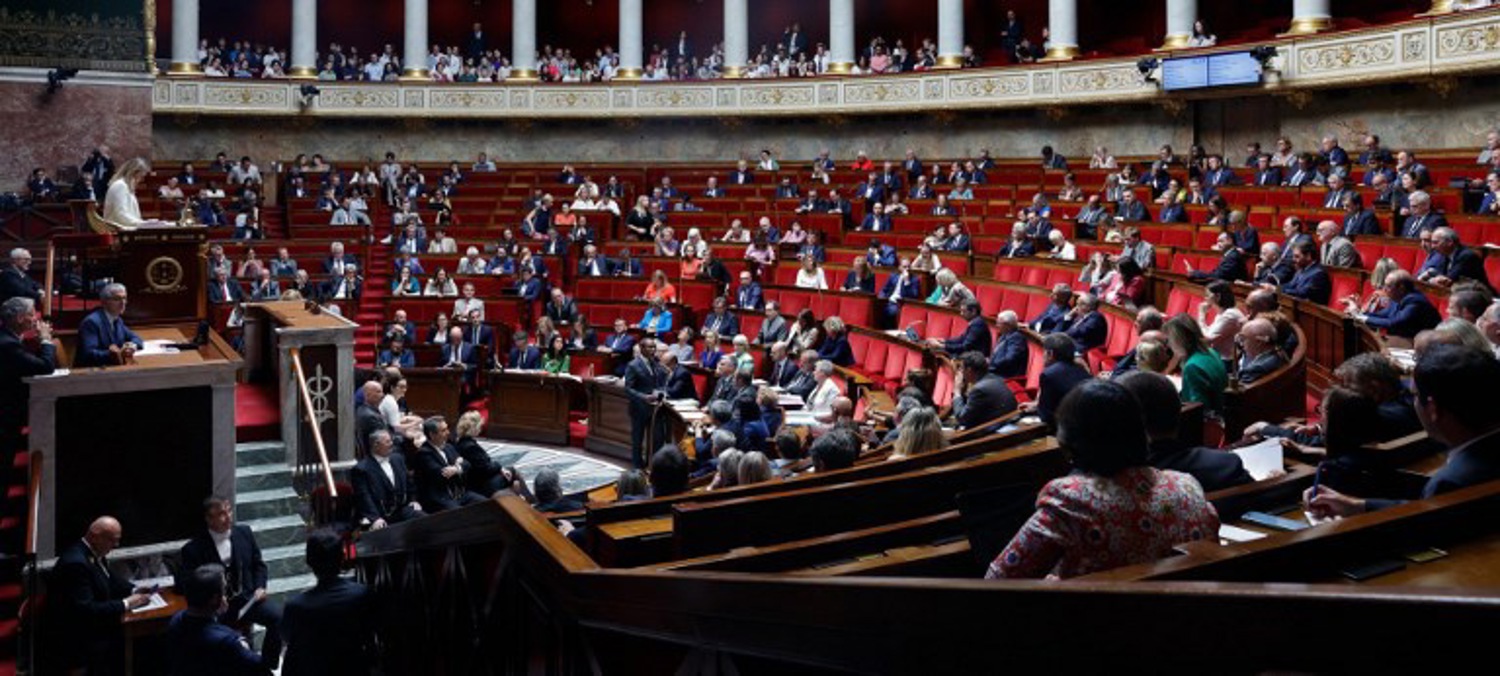
France’s parliament unanimously adopted a framework law on Thursday to facilitate the restitution by French public collections of cultural property looted from Jews during Germany’s Nazi era.
The law will enable “concrete acts of justice,” according to the Minister of Culture.
The National Assembly and Senate both unanimously approved the “historic and highly symbolic” text, according to Senate rapporteur Béatrice Gosselin. All members of parliament gave the vote a standing ovation.
The law is aimed at re-establishing a general framework for removing works from museums and returning them to their rightful owners or claimants, without having to resort to legislation on a case-by-case basis.
Rightful claimants will be able to reach an amicable agreement on terms of reparation other than restitution.
According to the text, the property concerned was stolen between 30 January 1933 and 8 May 1945.
A hundred thousand works are thought to have been seized in France during the Second World War, according to the ministry.
Some 60,000 items found in Germany at the Liberation were returned to France. Another 45,000 were quickly returned, and around 2,200 works were entrusted to the National Museums Recovery (MNR) register.
The rest were sold by France’s property administration service in the early 1950s, and many works returned to the market.
However, unlike ‘MNR’ works of art, the State can only initiate the restitution of works included in public collections by passing legislation to derogate from the principle of the inalienability of collections.
The framework law enshrines a derogation from this principle for looted property. However, the State will have to consult a special commission.
