
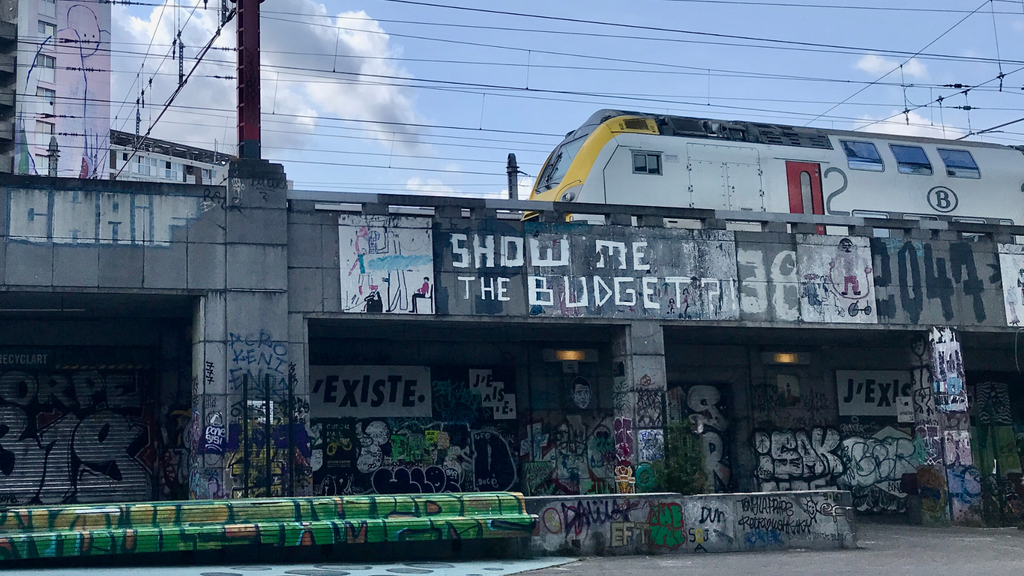
A proposal made by Flemish separatist N-VA party to regionalise Belgium's rail networks has been dismissed by Mobility Minister Georges Gilkinet (Ecolo) as "nonsense in economic and mobility terms".
The bill was tabled by the Flemish governing party two weeks ago and argues that dividing the national network between regions will bring savings to Flanders. Yet Gilkinet was scathing in his response, rejecting the idea both in terms of financial benefits and for the overall damage it would do to mobility in Belgium.
Imagining the regional acronyms, he joked about a disjointed system that would be painful to navigate: "To do Namur-Brussels, we would have to travel with the SNCW, then switch to the NMVS and end up with the SNCBxl?"
Gilkinet stressed that the priority must be efficient connections across the country rather than building regional divides into infrastructure. He emphasised that this is the wish of businesses and passengers and called for increased cooperation to improve both national and regional mobility.
Related News
- Belgium one step closer to 'combi-ticket' for all public transport
- Brussels, Mons, Paris: SNCB plans new train route
- Belgium in Brief: Sowing division through celebration
To illustrate the importance of a strong national rail service the minister explained how improvements to lines in Wallonia will "obviously help rural mobility but it's just as important for the port of Antwerp, whose goods destined for southern Europe are loaded onto trains and cross the whole of Wallonia."
The N-VA proposal, first posited by MP Tomas Roggeman, runs counter to the Federal Government’s rail plans. Gilkinet took the occasion to repeat the government's 2040 "vision for rail", which makes provision for 10-year contracts and refinancing for SNCB and Infrabel. He suggested that the scope of the plan's ambition – which would make Belgium more cohesive through the power of rail – is aggravating to the N-VA party, which has increasingly been endorsing policies that would divide the country among regional administrators.
N-VA sought to justify its proposal by arguing that residents of Wallonia and Flanders have different travel habits. Stations are busier in Flanders as people there use the rail network more, the nationalists argue. But these arguments are largely unsubstantiated and fail to account for various other factors that affect passenger rail trends.
