
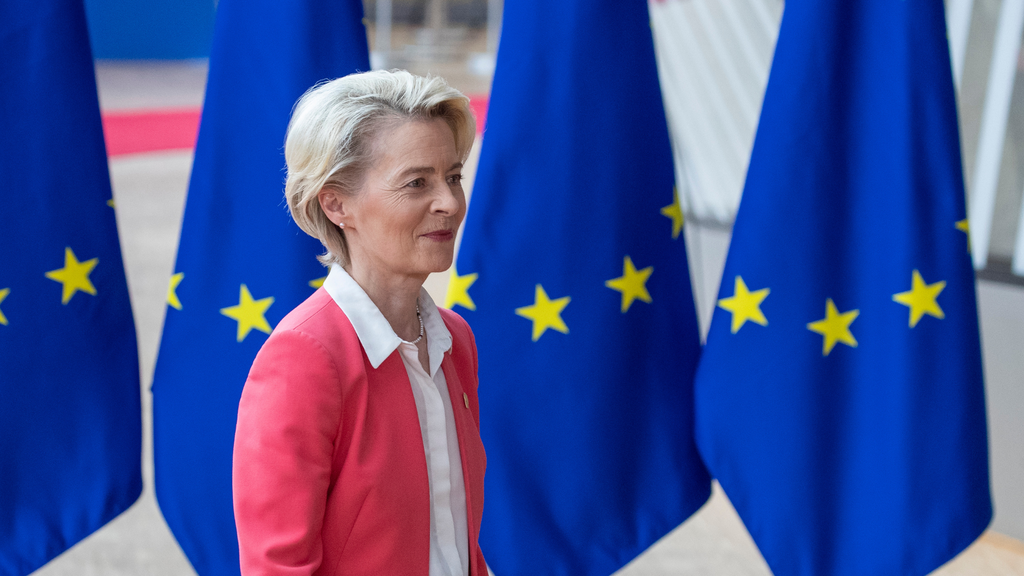
The European Commission released a 'results pack' on Monday to showcase the work of 13 research projects working within the context of President Ursula von der Leyen's 'European Year of Skills', announced in 2022.
"Project results so far attest to the importance of investing in the workforce as a vehicle for reinforcing Europe's position in the world," the Commission announced.
A persistent workforce skills gap
In Ursula von der Leyen's 2022 State of the Union address, she proclaimed that 2023 would be the 'European Year of Skills' to address a persistent workforce skills gap and staff shortage reported by 77% of EU companies in 2019.
The announcement of the thematic year came after a series of conflicts created a challenging societal and economic landscape in Europe, including the Covid pandemic, the war in Ukraine, the resulting energy crisis and political unrest.
The European Year of Skills officially began on 9 May 2023 and will run for a year, supporting European projects to develop skills which correspond to people's training and are relevant to societal needs. It also aligns with the Commission's priorities of becoming the first climate-neutral continent and empowering new generations with digital technology.
Related News
- EU starts checking Internet giants' compliance with Digital Services Act on Friday
- EU must be ready to enlarge by 2030, says Charles Michel
13 projects for a more inclusive and resilient Europe
The results pack released on Monday highlights research projects functioning within the framework of the European Year of Skills, with the overall goal of creating more inclusive and resilient societies and economies.
Some of the projects' results include BEYOND4.0 finding that successful digital transformation relies on the integration of both digital skills and non-digital skills such as problem-solving; a HECAT tool that empowers job seekers to make informed decisions while finding employment; CHAMELEONS' new educational model to help doctoral students improve their learning and career prospects; MIRNet's establishment of the Migration and Integration Research Centre in Estonia; and MIMY to help non-EU nationals integrate into society and find employment.
