
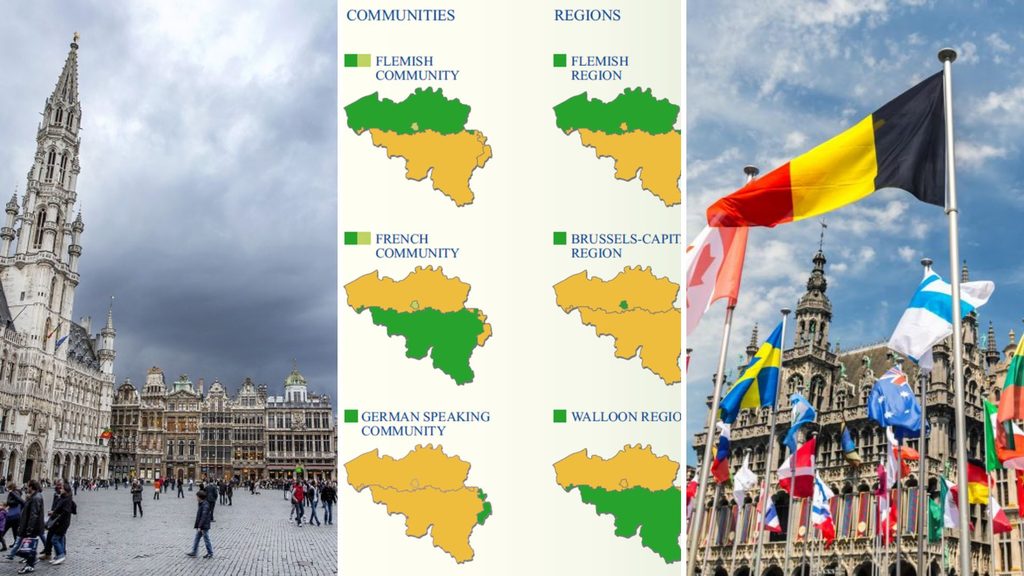
Belgium's language divide is a topic of endless intrigue for foreigners and for locals, debate. When contested on the regional level, the Wallonia/Flanders argument becomes more pernicious, often stoking separatist sentiment before arriving at a shared resolve to address matters in the Federal Government.
Whilst the distinction between regions is weaponised in political spheres to push an us-versus-them mentality, Brussels sits on the linguistic faultline like an awkward partner eager not to bend either way but quietly insist on its independence. The arrangement is full of contradictions: the capital is nominally Francophone but the Flanders Government is located in Brussels (Wallonia's government sits in Namur).
Not content with this division of power in what is, after all, not a very big country, Belgium has individual language communities that oversee the "soft" issues of education, health and welfare, culture, languages and sports (more on that here). Though these might seem less susceptible to partisan prodding, they come with their own complexities that even spark disputes in their own linguistic camps.
To impartial observers it's classic Belgitude, an organisational structure that resists comprehension and (so long as you're not deciding on your child's school or whether to play football in French, Flemish or German) can be overlooked in our daily goings-on. And then comes along a community holiday and expressions of French or Flemish culture are visible in Brussels.
27 September is the day for the Francophone community, though festivities in Brussels will be most felt on Friday with a free concert on the Grand Place. More celebration than promotional campaign, details of the debate will be lost on most spectators, no doubt most of them tourists unaware of the underlying associations.
Indeed, in a famously polyglot city where three-quarters of residents aren't even of Belgian origin, it's easier just to laugh and sing along, if you can.
Lost in translation? Let @Orlando_tbt know.
Belgium in Brief is a free daily roundup of the top stories to get you through your coffee break conversations. To receive it straight to your inbox every day, sign up below:
1. Sexual abuse: Catholic Church under fire for keeping data of 'de-baptised' people
The Belgian Catholic Church will have to answer before a litigation chamber of the Data Protection Authority for its retention of names and details of people who chose to remove themselves from the baptismal register – known in Dutch as being de-baptised. Read more.
2. Dutch-speakers are the 'driving force' behind changes in Brussels, says Smet
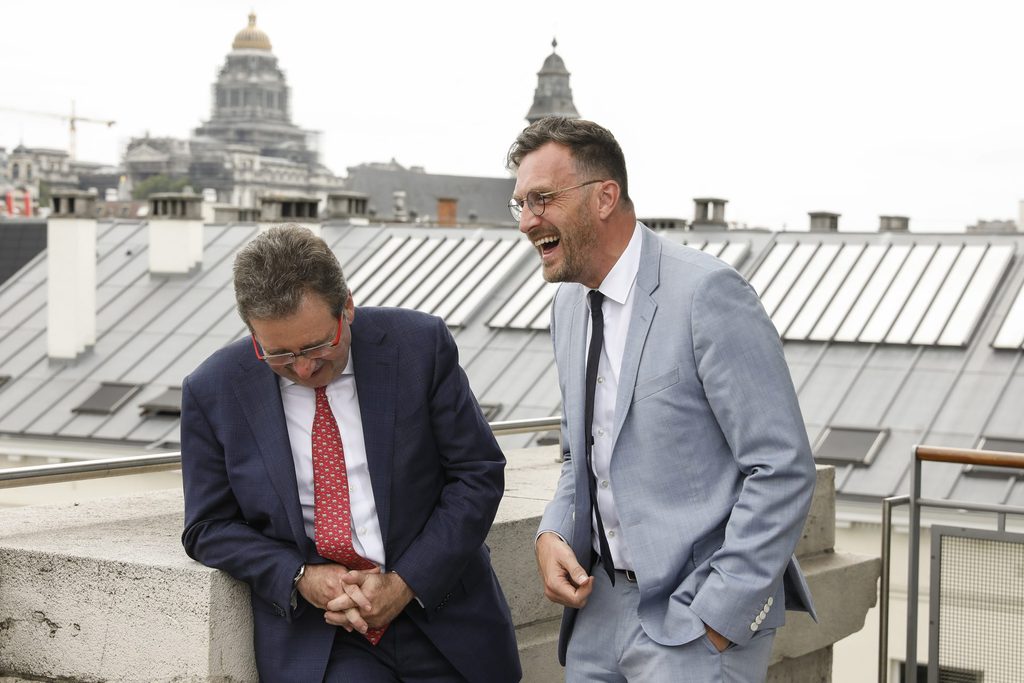
Three months after his resignation, former Brussels State Secretary for Urbanism Pascal Smet is looking ahead to the future of the Belgian capital. Read more.
3. Maison Hannon to fund museum restorations with NFTs
The Maison Hannon Art Nouveau museum will be funding part of the restoration of its winter gardens through the sale of non-fungible tokens (NFTs). Read more.
4. Agreement reached to continue works on metro line 3, project delayed by five years
After work near the Gare du Midi being at a standstill for a year and a half, an agreement has been reached to resume work on metro line 3. However, there will be a five-year delay on the project. Read more.
5. 'Small is Beautiful': Tiny art exhibition comes to Brussels next month
The miniature art exhibition 'Small is Beautiful' will open in Brussels' Grand Place at the end of October, bringing endearing pocked-sized artwork to the Belgian capital for the first time. Read more.
6. Property prices stay high despite significant drop in sales
The cooling seen in Belgium's property market has continued throughout the first half of this year – driven largely by higher interest rates. But despite the fall in sales, house and flat prices are continuing to rise. Read more.
7. Hidden Belgium: Jef Aérosol street art
The French street artist Jef Aérosol has been creating stencil graffiti since the 1980s. His work regularly crops up in the back streets of Brussels, including the wall of the record store Arlequin at Rue du Chêne 7. Read more.
