
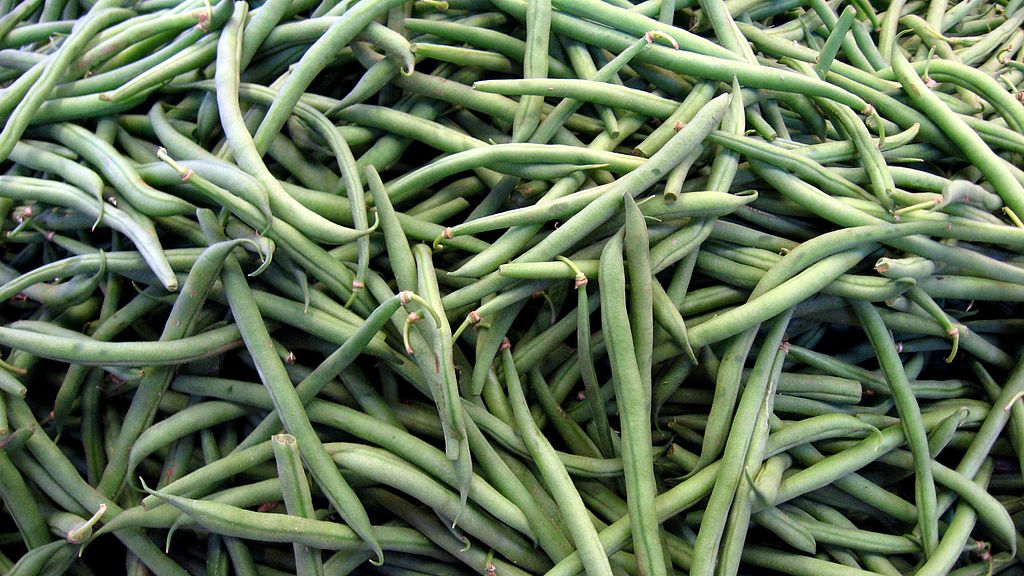
Green beans are making headlines for being remarkably affordable, thanks to a bountiful harvest.
Farmers have seen an exceptional yield of green beans this year, reaping a staggering 30 tons per hectare, nearly three times the usual 13-ton yield. This abundance has translated into significantly lower prices for green beans, setting them apart from their golden-hued counterpart, the yellow butter bean, which commands a price tag up to three times higher.
Curious consumers have voiced their concerns about the stark price difference between green and butter beans. While butter beans retail at supermarkets like Colruyt for €6 to €7 per kilo, their green counterparts can be found for as little as €1.69 per kilo. It's a puzzling price gap for products that seem quite similar at first glance.
"This is undoubtedly a bean year, especially for green beans," Luc Vanoirbeek from the Federation of Belgian Horticultural Cooperatives (VBT) told VRT News. "A typical harvest yields around 13,000 kilos of beans per hectare. However, this year, the farmers have enjoyed an unprecedented bonanza, harvesting up to 30,000 kilos per hectare. This surge in supply has filled store shelves with large packages of green beans at extremely budget-friendly prices."
The remarkable harvest can be attributed to the warm and humid late summer conditions. The only downside of this success story is that in some cases, the farmers have been unable to keep up with the rapid pace of harvest. This led to beans being left hanging, unpicked. Some farmers even extended an invitation to the public to come and pick beans for their own consumption, as they struggled to find buyers for their surplus produce.
Harvest differences
But why do yellow butter beans, which typically boast a heftier price tag, not follow the same trend as their green counterparts? At up to €7 per kilo, butter beans appear far more expensive, given that green beans cost a mere €2 or less.
VBT explains, "Butter beans are naturally more expensive than green beans due to their smaller scale of cultivation and more intensive farming methods. This year, the harvest of butter beans was normal, so there's no surplus to influence prices. Consequently, the price gap between green and butter beans has widened significantly."
Additionally, the cultivation of butter beans is notably more challenging compared to that of green beans. Butter beans are delicate and must be hand-picked to prevent damage, unlike green beans, which are harvested by machines. Furthermore, butter beans thrive only under ideal weather conditions – not too hot, with just the right balance of rain and minimal wind. Even the yield per butter bean plant is considerably smaller than that of their green counterparts.
The VBT also points out that, in Belgium, the majority of green beans grown are intended for the freezer, and frozen food companies predominantly prefer green beans over butter beans, contributing to the latter's higher price.
