
Canada's Federal Court on Tuesday approved the largest compensation settlement in the country’s history - $23.4 billion (€15.8 billion) - for aboriginal people discriminated against by the child welfare system, and their families.
The case was based on the Canadian government’s underfunding of services for aboriginal children compared with those for non-aboriginal kids. While they represent fewer than 8% of children under 14 in Canada, aboriginal kids made up more than half of those placed in the child welfare system, according to a 2016 census.
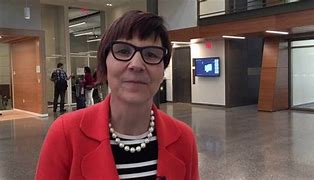
On Tuesday, after years of proceedings initiated by aboriginal activist Cindy Blackstock, the Federal Court approved an agreement to compensate some 300,000 aboriginal children and their families, victims of a chronic lack of public services.
I’m “thinking of all the victims and looking forward to seeing comprehensive supports throughout the process,” Ms. Blackstock, executive director of the First Nations Child and Family Caring Society, reacted on X (ex-Twitter).
The settlement comes 16 years after she filed a complaint with the Canadian Human Rights Tribunal in 2007 to denounce racial discrimination against aboriginal children.
In addition to the $23.4 billion in compensation, the settlement also provides for investments of $20 billion (€13.75 billion) to reform the system, according to a Canadian government spokeswoman.
Since the spring of 2021, more than a thousand unmarked graves have been found on the sites of former Catholic residential schools for aboriginals, shedding light on a dark chapter in the country’s history and its policy of forced assimilation, considered since 2015 to be “cultural genocide”.
From the late 19th century to the 1990s, some 150,000 aboriginal children were forcibly placed in 139 now-closed residential schools, where they were cut off from their families and culture.
