
Belgium, the Netherlands, and Germany have launched a joint candidacy to host the 2027 Women's World Cup, which also raises questions about whether there are enough suitable stadiums in the country.
The joint candidacy of Belgium, the Netherlands, and Germany brings with it an ambitious and eco-conscious vision. These nations aspire to set a new standard for sustainability and environmental responsibility in hosting major sporting events, challenging other contenders such as Brazil, South Africa, and the Mexico-US combination.
Their plan is simple but effective – teams and supporters will fly in and out only once, with all other journeys taking place via road or rail to limit carbon emissions. Germany is contributing to this vision by offering stadiums exclusively in the border region of North Rhine-Westphalia, including cities such as Dortmund, Duisburg, Düsseldorf, and Cologne.
The approach closely resembles the green initiative taken by the Low Countries when bidding for the men's World Cup in 2018 and 2022. Back then, football legends Johan Cruyff, Ruud Gullit, and Paul Van Himst even rode bikes to FIFA headquarters in Zurich, though the tournaments were later awarded to Russia and Qatar.
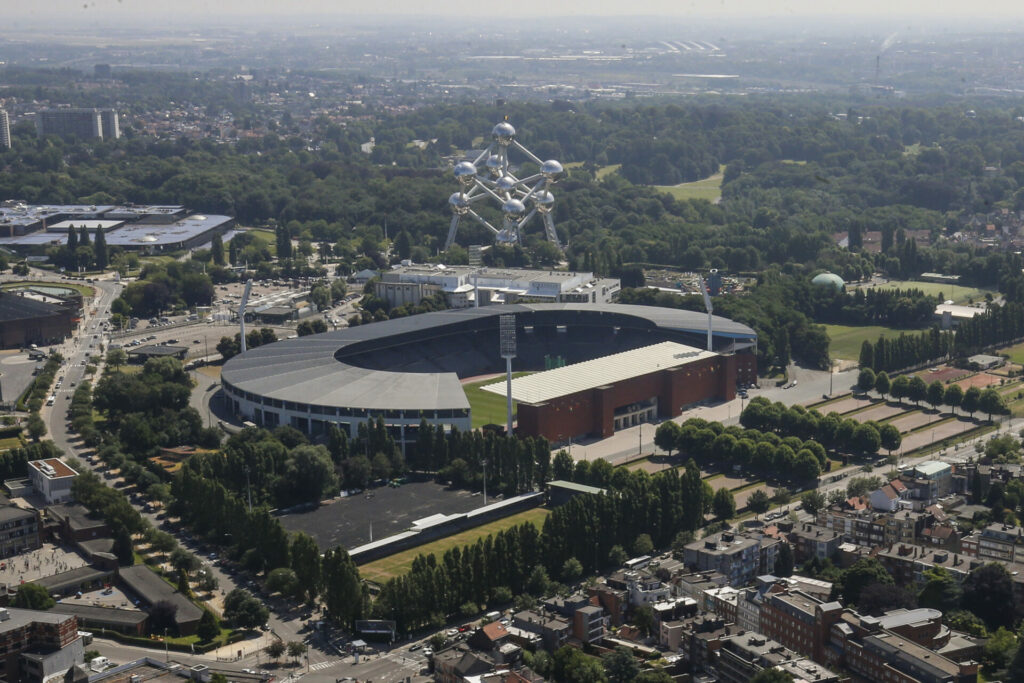
Despite their ambitious green vision, the road to hosting the 2027 Women's World Cup remains fraught with obstacles. A recent survey by De Standaard suggests that the stringent FIFA requirements may hinder the bid's progress. Notably, the two largest stadiums in Belgium, the King Baudouin Stadium in Brussels and the Standard stadium in Sclessin, have officially dropped out of the running.
Genk chairman Peter Croonen has voiced his concerns over the affordability of temporary constructions and necessary investments. The Belgian federation is in ongoing negotiations with Ghent and Genk, both of which are still assessing the criteria, while Charleroi's stadium remains to be built from scratch.
No Brussels stadiums
FIFA's requirements for candidate host cities closely mirror those for a men's World Cup, making it a costly endeavour. Sacha Feytongs, Standard de Liege's stadium manager, lamented that their American owners were unwilling to bear the additional financial burden. Similarly, the King Baudouin Stadium's owner, the City of Brussels, decided to reduce its renovations to a level compliant with UEFA's criteria but not FIFA's, after the government withdrew its support following the Covid-19 pandemic.
In an interview with De Standaard Manu Leroy, the football association's chief executive, acknowledged that Brussels' withdrawal leaves the tournament's final out of reach (a minimum capacity of 65,000 spectators is required), but they are still willing to host pool matches up to the quarter-finals.
Related News
- Spanish football's #MeToo moment shines light on sexism in the sport
- What is a Q-Collar? Women's World Cup draws attention to new protective device
- The Red Flames remain 19th in the FIFA rankings
In a bid to have representation from all regions, the association has approached Anderlecht to consider becoming a candidate. Anderlecht, along with Gent and Genk, is assessing the financial feasibility of hosting a handful of matches.
As the 8 December deadline for submitting their candidacy to FIFA approaches, these nations are grappling with infrastructure challenges while trying to ensure their efforts align with their green ambitions. They are seeking a balance between necessary improvements to enhance their candidacy and maintaining financial prudence.
Flemish Sport Minister Ben Weyts is willing to offer financial support, though he aims to avoid creating an uneven playing field for clubs. This support will likely take the form of smaller investments, such as lighting improvements, that would not confer a significant competitive advantage to any particular club.
The journey to host the 2027 Women's World Cup may be laden with obstacles, but Belgium, the Netherlands, and Germany remain undeterred in their mission to showcase the best in women's football, with a sustainable and eco-conscious touch. Their commitment to this vision is a testament to their dedication to the sport and the planet.
