BRUSSELS BEHIND THE SCENES
Weekly analysis with Sam Morgan
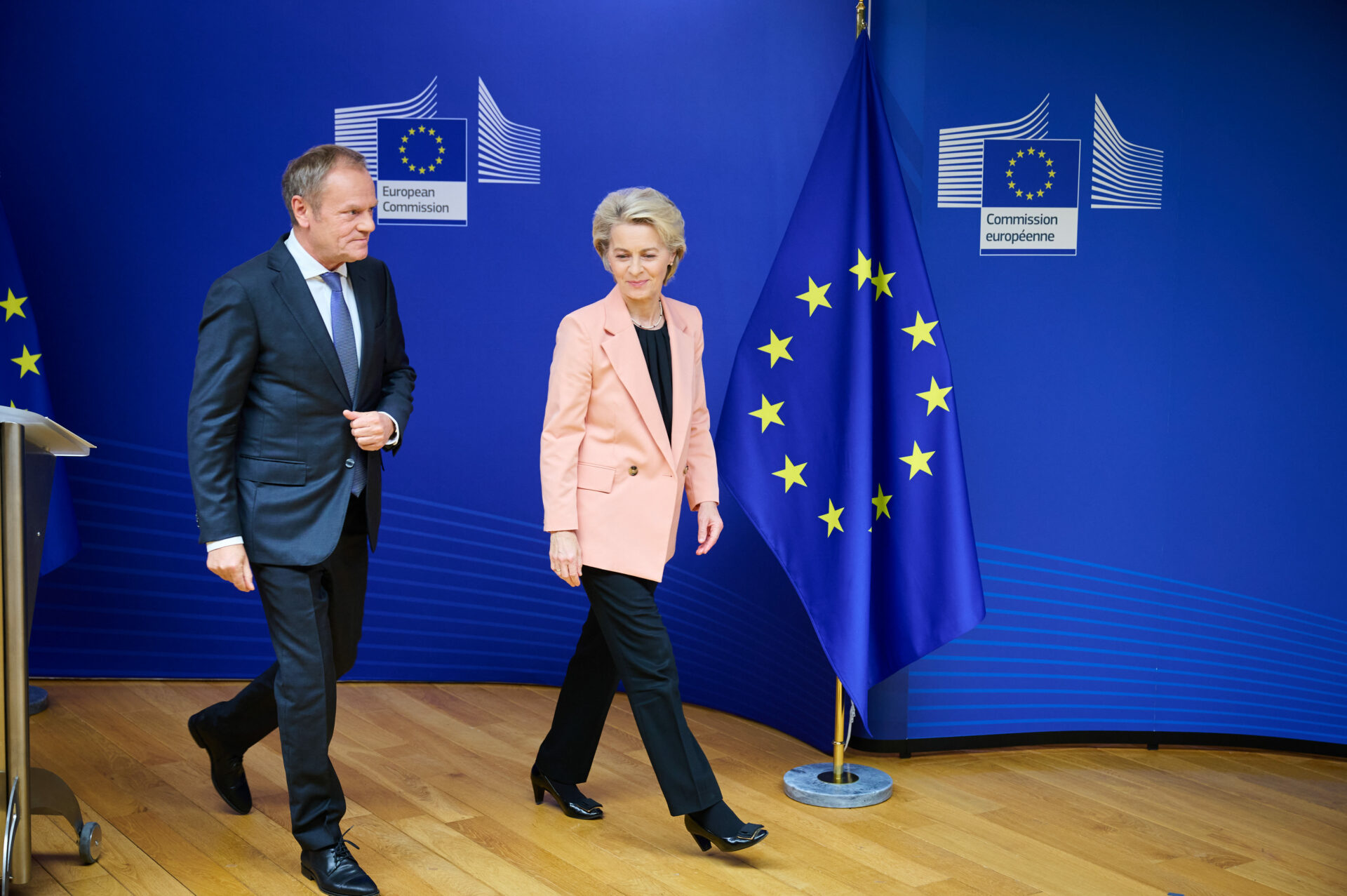
Poland’s likely next prime minister, Donald Tusk, was in Brussels on Wednesday and met with the European Commission president. That meeting was way too premature and the EU should be careful not to start bucking the very democratic norms that it rightly accuses the current Polish government of undermining.
The European Commission plays the ‘we do not comment on national politics’ card quickly and regularly. If a journalist asks a question about an election result or similar, the answer will normally be non-committal and vague.
Populist parties often insist that Brussels ‘meddles in national affairs’ so EU officials are careful not to feed the fires of that particular narrative.
But this week, the Commission was not careful and risked expressing a clear preference for a candidate that has not even been asked to try and form a government yet. This is not a precedent that the EU executive should be making.
BRUSSELS BEHIND THE SCENES includes weekly analysis not found anywhere else, as Sam Morgan helps you make sense of what is happening in Brussels. If you want to receive Brussels Behind the Scenes straight to your inbox every week, subscribe to the newsletter here.
Donald Tusk’s party and its allies emerged victorious in the recent Polish elections, garnering more support than the ruling rightwing Law and Justice party (PiS). That puts the current opposition in a good spot to try and form a government.
Poland’s head of state, Andrej Duda, hails from PiS and is giving his party a chance to try and form a government, because it got the most seats. The odds are stacked against PiS, though, with no obvious way of clinging on to power.
However, politics is an unpredictable beast as we all know.
If PiS fails, there is still no guarantee – there is no such thing in politics – that Tusk will succeed in putting together a viable coalition agreement. A lot can happen in the next two or three months.
That is why Tusk’s meeting at European Commission HQ with Ursula von der Leyen stinks just a little bit.
Both belong to the European Peoples’ Party, which hosted a pre-summit meeting on Thursday, where they could have met as political colleagues. Instead, he was afforded a welcome and press point normally reserved for heads of government and state.
Tusk admittedly said during his tete-a-tete that “I am here as the leader of the opposition, not as the prime minister, but time is of the essence,” referring to billions of euros in EU funding that is currently frozen due to rule of law concerns.
But the optics of this are clear: the European Commission wants Tusk to be prime minister and unlocking Poland’s billions will be a smoother process if he is in charge rather than Mateusz Morawiecki, the incumbent PM.
Von der Leyen celebrated the high turnout and democratic process during the meeting, the subtext of which is also clear: PiS cannot win unless the system is stacked in its favour.
Tusk’s meeting is like saying the quiet part out loud.
Of course all of these things are true but wait until the job is done and a new government is formed to start slagging off the bad guys.
The Commission froze Poland’s payments because of legitimate concerns about rule of law and where that money will be spent. Kicking off a prospective new period of Brussels-Warsaw relations by trampling more democratic norms is not a great start.
Von der Leyen is also perhaps helping to put the cart before the horse by taking this meeting. Even if Tusk is made PM, he will not be able to fix the situation overnight, as the damage done to the judiciary by years of PiS rule is substantial.
Reforming or re-reforming that system will require political decisions and will take time to bed in. The European Parliament will also insist on the process being completed to the letter, with no fast-tracking or half measures allowed before the funds are unlocked.
As a former European Council president and former prime minister, Tusk should also know better. It is only because he is seen as ‘one of the good guys’ and the great redeemer that will bring Poland back into the pro-EU fold that this has not been criticised more widely.
PiS has been screeching into the void lately, claiming that Brussels and Berlin have meddled in the election and pushed Tusk back into power. It is the same playbook that Viktor Orban uses and probably helped write in the first place.
The claims have very little grounding but Tusk’s Commission meeting gives that kind of Euroscepticism a tiny whiff of oxygen. It is all it needs to keep burning and threatening the next round of elections.
Pro-EU champions have already said that you have to fight fire with fire and that PiS will likely try to bend the rules, so Tusk is right to play a little dirty as well.
OK, that view is perfectly acceptable. But don’t be surprised when more countries start undermining previously sacred rules and more strongmen appear in Europe’s political landscape.
Lowering the bar never helped anybody.
BRUSSELS BEHIND THE SCENES includes weekly analysis not found anywhere else, as Sam Morgan helps you make sense of what is happening in Brussels. If you want to receive Brussels Behind the Scenes straight to your inbox every week, subscribe to the newsletter here.
