
During his recent five-day mission to Israel, Palestine, Bahrain, Qatar and Jordan, Josep Borrell, the High Representative for EU’s Foreign Affairs and Security Policy, conveyed the same consistent and balanced message on the Israel-Hamas war on behalf of all the 27 EU member states.
As already reported, his debriefing after his travels started last Monday evening with an informal video-conference with the EU foreign ministers. What actually emerged from that conference has not been published but in his speaking notes, seen by The Brussels Times, he expressed a sense of absolute urgency as regards the humanitarian situation in Gaza and a shared desire to work towards peace in the region.
“I will ask the External European Action Service (EEAS) to put forward an option paper regarding the future of Gaza which I would like to discuss with the ministers,“ he said. Next foreign affairs council in December will take stock of the situation again and focus in particular on the stabilisation of Gaza and the revitalisation of the two-state solution.
In his speech to the European Parliament on Tuesday, he seemed to preempt that discussion and deviate from the current EU position. “It should be possible to conduct the debate about what is happening, overcoming the emotions and with an eye [on] building peace,” he said, speaking in Spanish, but himself overwhelmed by feelings.
Normally he acts as a facilitator and coordinator in implementing EU’s foreign policy which is decided by the member states. This time, he admitted that he had some difficulty in presenting it - either because he disagrees with it or because not all member states are aligned to the same position.
In the United Nations General Assembly, they voted differently on the issue of a permanent ceasefire or humanitarian pauses in the war. The Belgian and Spanish prime ministers, who just visited the region, appear already to have deviated from the EU common position.
“In the European Parliament, High Representative Borrell described his work to forge consensus among the member states in an area which requires unanimity for all common actions, decisions and positions,” Peter Stano, EU lead spokesperson for foreign affairs and security, explained to The Brussels Times.
“The member states are entitled to have their own positions and his task as the High Representative is to work towards consensus by helping them to reach it but in the end the final decision is always in the hands and in the competence of the member states, whether they want to insist on their position or are able to agree to a compromise.”
Protection of civilians
During his visit in Israel, Borrell called for the protection of the civilian Palestinian population and highlighted the humanitarian crisis in Gaza. He conveyed EU’s common position that Israel has a right to self-defense in accordance with international and humanitarian law and did not imply that it has committed war crimes as Hamas did on 7 October and is still doing.
In his speech to the Parliament, he sharpened his opinion. While defining the Hamas terrorist attack as “the largest pogrom of Jews after the Second World War”, he said that “the bombings in Gaza have created an unprecedented humanitarian catastrophe,” which he described in Spanish as a “massacre”. The United Nations itself describes it as “carnage”, he added.
He also referred to the International Criminal Court (ICC) in the Hague which has started an investigation to find out what is happening in Gaza, and its chief prosecutor, Karim Khan, with whom he had been in contact. Borrell seemed to doubt the evidence published recently that civilian sites in Gaza, even hospitals, are used by Hamas for military purposes and therefore have lost their protected status, as Israel claims.
The ICC chief prosecutor started an investigation of alleged war crimes by both sides in 2021. In an announcement on 17 November, he said that he had received a referral from five countries of the situation in the State of Palestine. He replied that the investigation is on-going and “extends to the escalation of hostilities and violence since the attacks that took place on 7 October 2023”.
“In the Parliamentary debate and also when speaking in Qatar, High Representative Borrell was referring to descriptions made by the UN when he quoted them as using the French word ‘carnage’,” his spokesperson explained. “He was also referring to the ICC chief prosecutor, who had cautioned against the possibility that war crimes were committed.”
No military solution
The drama that has exploded shows us that what EU has done until now is not enough, the High Representative underlined and reiterated the three yes’s and 3 no’s for the “day after” and the future political solution. One of them is that there can be no reoccupation of Gaza by Israel and no return of Hamas to Gaza.
“We must also make peace between Israel and Palestine. And, to make peace between Israel and Palestine, it will be necessary for everyone – and in particular us Europeans – to commit ourselves to overcome the gigantic pain that the events initiated by the Hamas terrorist attack against the border kibbutzim in Gaza have produced.”
In his latest statement on Friday, Borrell further clarified his position. EU welcomed “the fact that, finally, the truce agreed between Israel and Hamas” had started. “It should be fully implemented as a first step towards ending the ongoing horrific humanitarian situation in Gaza, and extended for a longer period.”
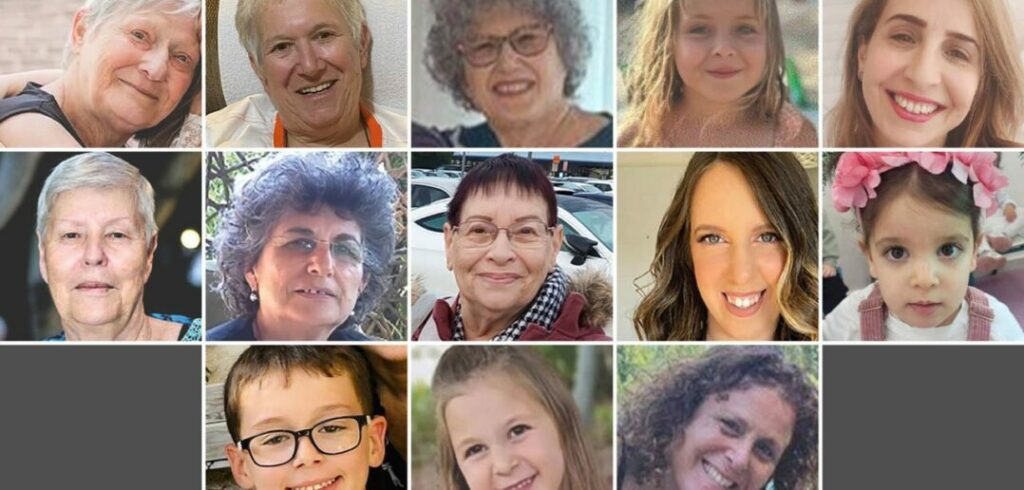
“The agreement foresees the release of a group of innocent women and children who had been abducted during Hamas’ horrific attack on 7 October. All hostages should be unconditionally freed. Nobody should bargain with civilian lives.”
He has said before that he is convinced that there is no military solution to the conflict. In the statement he clarified that “the security of Israel cannot be guaranteed by military means alone”. The dilemma is that there cannot be any progress to a peaceful solution without dismantling Hamas which opposes any peace with Israel.
If Hamas does not surrender, the war is likely to continue despite the international pressure for a permanent cease-fire. In the past, there was some hope that it would be possible to agree on a “hudna” or long-term truce with Hamas and that this truce would lead to a peace agreement but there is hardly anyone after the 7 October attack who believes that this a realistic scenario.
M. Apelblat
The Brussels Times
