
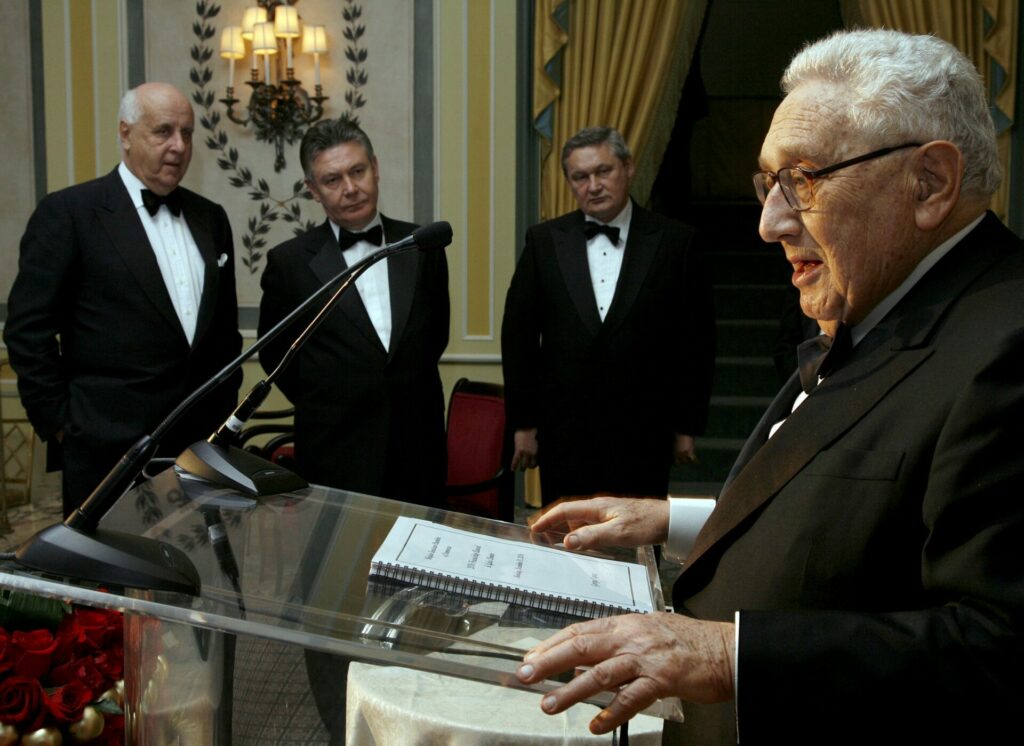
Henry Kissinger, a controversial figure of American diplomacy during the Cold War, passed away on Wednesday at the age of 100. The diplomat's death has generated an outpouring of international tributes.
Serving as US Secretary of State under Richard Nixon and Gerald Ford, Kissinger died at his home in Connecticut, according to his consulting firm Kissinger Associates. A private family funeral will be held followed by a public memorial service in New York at a later date.
Former US President George W. Bush paid tribute to Kissinger, remarking America lost "one of its most reliable and listened-to voices in foreign policy."
However, his advocacy of 'realpolitik', emphasising national interests above ethical considerations, made him a heavily critiqued figure worldwide. Kissinger's reputation was tarnished by his support for the 1973 coup in Chile and the invasion of East Timor in 1975, as well as his involvement in the Vietnam War. He was, however, central to fostering an understanding with Moscow and Beijing in the 1970s.
Known for his gruff voice, Kissinger was keen to voice his views to journalists and at international colloquia. Famed for his longevity and vast experience, he was equally revered by some and reviled by others as a war criminal.
Celebrating his 100th birthday in May, Kissinger remained a significant influence for global leaders, decades after stepping back from international affairs.
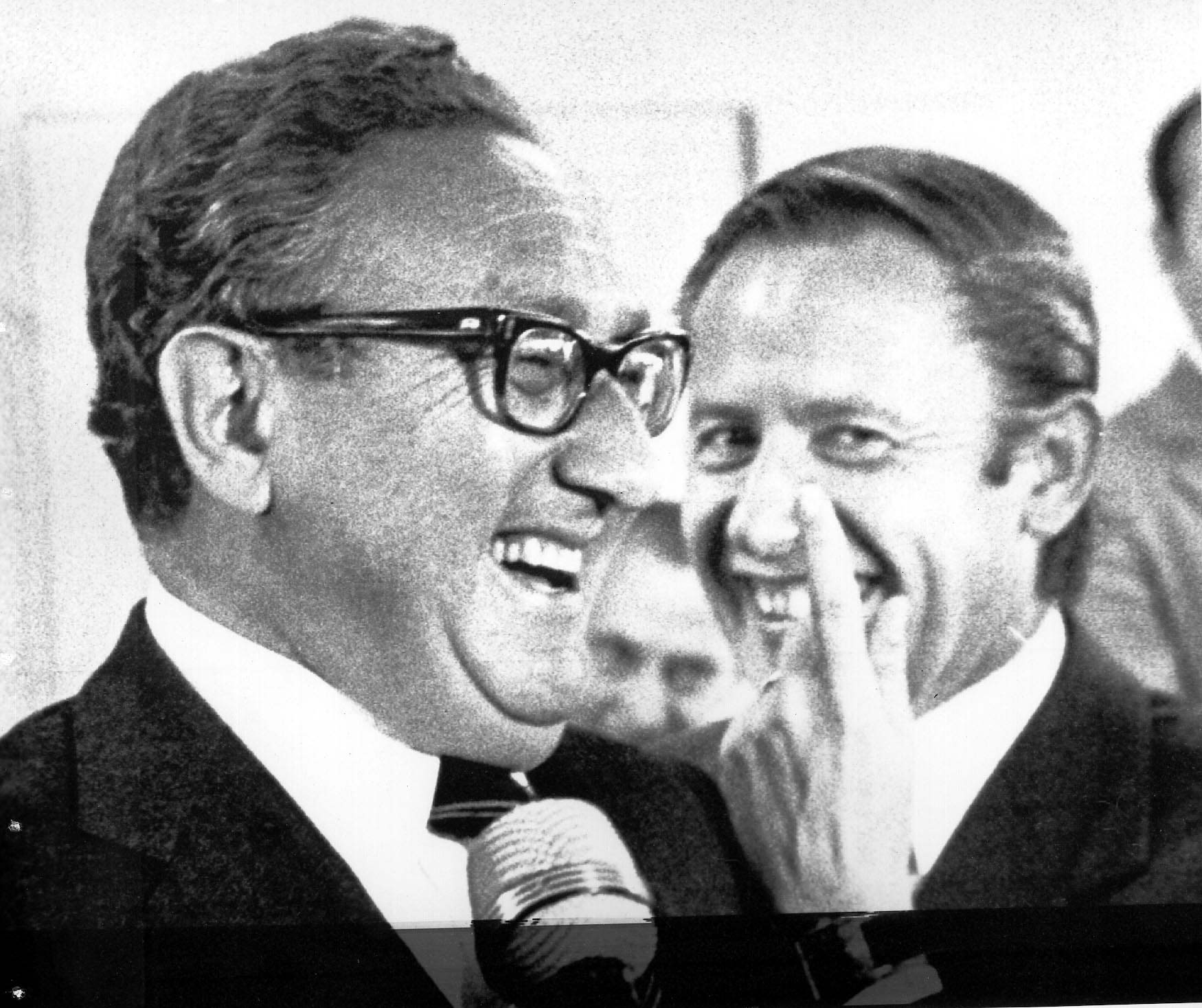
US State Secretary with Luxembourg Prime Minister Gustav Thorn. Credit: Belga
Russian President Vladimir Putin linked Kissinger's name to pragmatic policies that led to eased international tensions and significant US-Soviet agreements, which bolstered global security.
Ukraine eulogised Kissinger's "intellectual legacy", which will continue to influence global diplomacy. Germany's Chancellor Olaf Scholz said that the world had lost a "great diplomat" in his tribute. French President Emmanuel Macron also saluted Kissinger as a "giant of history" with a durable influence on his time, while British Foreign Secretary David Cameron hailed him as a "great statesman."
In July, Kissinger met with Chinese President Xi Jinping, who lauded him as a "legendary diplomat." China subsequently commemorated his "historic contributions" to US-Chinese relations, as he had visited China "more than a hundred times." Japan's Prime Minister Fumio Kishida meanwhile acknowledged his "significant contributions" to peace and stability in Asia.
Kissinger played a pivotal role in thawing US relations with Mao's China, facilitating secret trips to organise President Nixon's historic visit to Beijing in 1972. Other significant contributions include secretly negotiated talks to end the Vietnam War, simultaneous with the bombing of Hanoi.
In 1973, after a surprise attack from Arab countries on Yom Kippur, he organised massive airlifts to resupply Israel with arms.
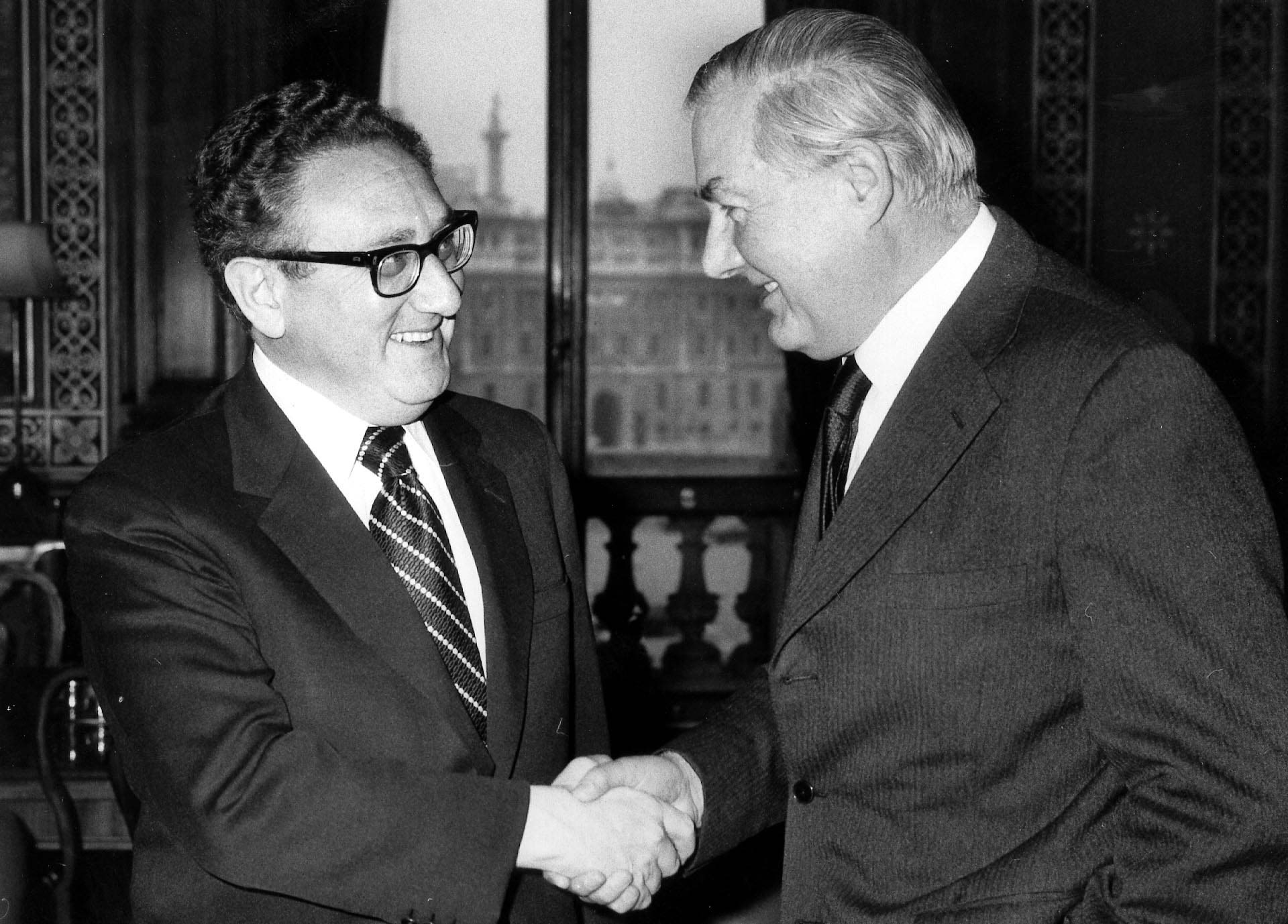
Henry Kissinger greeting British Foreign Secretary Jim Callaghan when the two met at the Foreign and Commonwealth Office. Credit: Belga
Born as Heinz Alfred Kissinger in 1923 in Bavaria, he fled Nazi Germany and became a US citizen at 20. He went on to study at Harvard, where he also later lectured.
With his distinct glasses, Kissinger became the face of global diplomacy when Nixon appointed him as National Security Advisor and later as Secretary of State between 1973 and 1975. Surviving Nixon's resignation in 1974 following the Watergate scandal, he remained in control of diplomacy under Gerald Ford until 1977.
For orchestrating a ceasefire, he was awarded the 1973 Nobel Peace Prize shared with North Vietnam's leader, making it one of the most controversial in Nobel history. His co-laureate declined the honour, however, claiming that the truce was not being honoured. Fearing protests, Kissinger did not attend the ceremony in Oslo.
