Citing the result of a referendum in Venezuela on Sunday, Venezuelan President Nicolas Maduro has pledged to get back the oil-rich Essequibo region from neighbouring Guyana.
The referendum, conducted on Sunday, resulted in a resounding ‘yes’ vote, particularly to the fifth question, in response to which 96.33% of voters said they wanted the disputed region to join Venezuela. The Essequibo area, sometimes known in Venezuela as Guayana Esequiba, spans 160,000 km2 and is home to one fifth of Guyana’s population of just under 800,000.
Recent oil discoveries have placed Guyana among the nations with the highest per capita oil reserves worldwide.
Following the official vote results, Maduro assured at the results handover ceremony that Venezuela would now reclaim its “historical rights” to Guayana Esequiba and seek justice. “The people’s voice is the voice of God and it manifested itself on 3 December. That’s the path I will follow as the head of state,” he said.
Maduro described the referendum outcome as the start of a new phase in the struggle for Guayana Esequiba and revealed plans for the future.
In contrast, Guyana’s Foreign Minister, Hugh Todd, warned his country to remain vigilant.
Despite stating that Guyana did not expect an invasion from Maduro, Todd stressed the need for realism about Venezuela’s circumstances and Maduro’s unpredictability. Internationally, Todd confirmed that Guyana would continue to cooperate on defence matters with strategic partners like the United States.
Guyana is also in diplomatic negotiations to persuade Venezuela to participate in proceedings at the International Court of Justice (ICJ), even though Caracas does not recognise its jurisdiction.
In recent days, Guyana’s President Irfaan Ali and Vice President Bharrat Jagdeo have discussed this with various international figures, including Cuba’s President Miguel Diaz-Canel and British Foreign Minister David Cameron.
However, Todd downplayed the importance of the referendum, noting Venezuelans’ apparent priorities elsewhere. Officially, turnout was around 50%, a figure contested by Venezuelan opposition leaders and analysts. Twice presidential opposition candidate Henrique Capriles disputed the figure, deeming it a “resounding failure.”
Opposition and observers also pointed to the apparent low turnout at voting stations. The United States has called on Venezuela and Guyana to seek a peaceful resolution to their disagreement and emphasised that the referendum won’t solve the issue.
Mariano de Alba from the International Crisis Group reiterated that the vote count did not alter the proceedings at the ICJ. “This kind of consultation isn’t binding in public international law,” said Guillermo Tell Aveledo, a professor at the Metropolitan University.
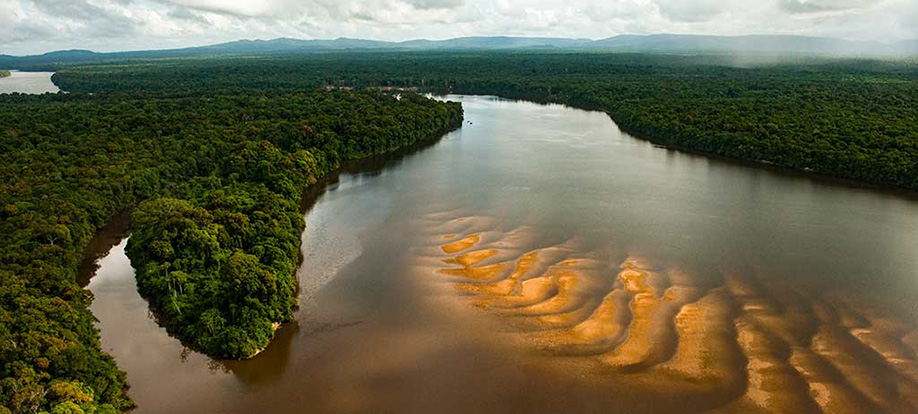
Caracas insists that the Essequibo River should form the natural border, mirroring conditions in 1777 under the Spanish Empire.
Guyana counters that the colonial-era border was ratified by an arbitration court in 1899, and has appealed to the ICJ for validation.
