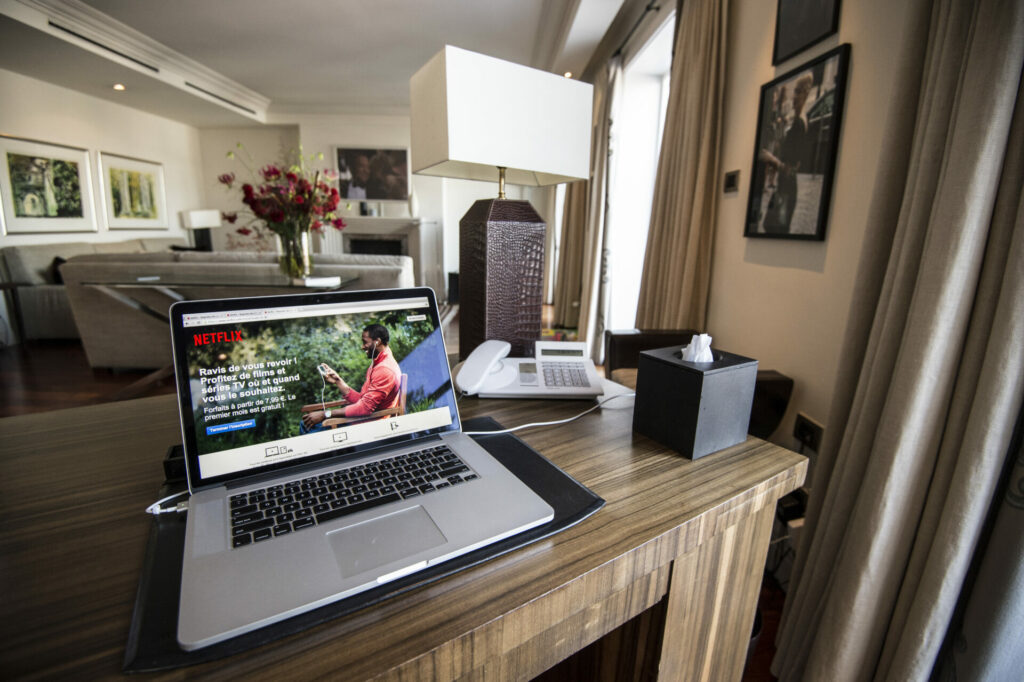
The European Parliament voted to reject the inclusion of audio-visual services (AV) in the Geo-blocking Regulation, which would have torn down specific Member State restrictions for streaming films and TV series inside the European Union.
On Wednesday, MEPs underscored the need to re-assess the EU’s rules on geo-blocking, particularly in light of the surge in online shopping in recent years.
The existing rules allow consumers to shop online and access services across borders without restriction, but MEPs say rules must be applied fully and the remaining barriers need to be removed.
One hotly-debated topic was the inclusion of audio-visual services in the regulation. After an initial vote in the Internal Market Committee (IMCO) in October saw them included in the regulation, the Parliament approved a number of amendments on Wednesday which excluded the AV sector.
An intense lobbying campaign from the audio-visual sector has proved successful – with directors and members of the film and TV industry also speaking out on the matter.
The sector sustained that tearing down country-specific restrictions would affect cultural diversity – and ultimately drive up prices for consumers, while also lowering the quality of the offer. Swedish film director Robert Ostlund, known most recently for Triangle of Sadness, told the Guardian ahead of the vote that the sector would come under commercial pressure to aim "for the lowest common denominator of human experience."
The International Federation of Film Distributors’ and Publishers’ Associations (FIAD), a key opponent of ending country restrictions for the sector, welcomed the result.
"Today’s vote sends a strong message to the European Commission and Member States that there is no appetite in the European Parliament for including the film-audiovisual sector in the scope of the Geo-blocking Regulation," said FIAD Secretary General Robert Heslop. "Different political groups were united in their defence of European cultural diversity and the film-audiovisual industry in Europe."
Pas de Parlement
MEPs who were in favour of ending country restrictions have meanwhile expressed disappointment at the vote. Citing the success of pan-European shows such as France’s Parlement or Denmark’s Borgen, MEPs were pushing for opening up access to content across the EU.
"Bad news actually for anyone who wants to stream Parlement," said Dutch Greens/EFA MEP, Kim van Sparrentak. “After our success in IMCO, an aggressive media lobby campaign swayed a majority of the EP to vote against ending the geoblocking of streaming services."
In October, Danish MEP Karen Melchior argued that in the past, people living in border communities could tune their television to the neighbouring country's channel, while today Europeans face "unjustified geo-blocking" – country-specific restrictions which mean many people cannot access certain content.
"It is an even more significant problem in border regions and for linguistic minorities across the EU, for example, in Belgium, where the German-speaking community are increasingly cut off from films and series in German," said Karen Melchior.
