
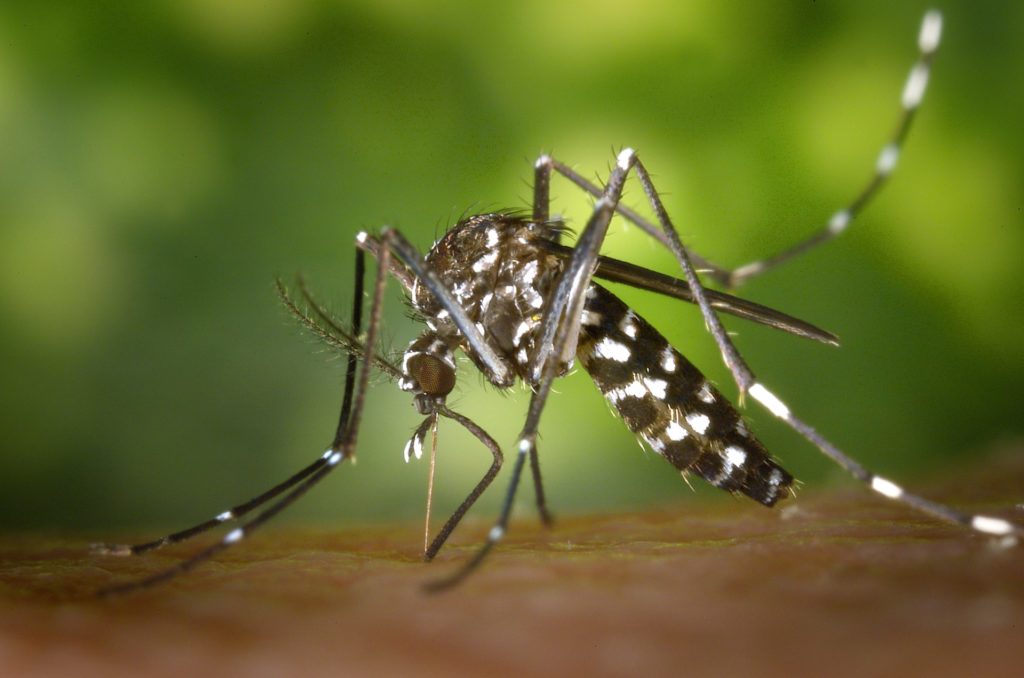
As a record number of more than five million people contracted dengue (also called "break-bone fever") last year, the World Health Organisation (WHO) warned of the rise of the "tropical disease" in Europe, as it is no longer confined to tropical regions.
Dengue is steadily continuing its global advance: between 2000 and 2019, the annual number of cases increased tenfold. This year, 82 local cases were reported in Italy, three in Spain and 43 in France. In Paris last summer, concerns about a dengue outbreak shut down traffic in part of the city and residents were asked to stay indoors so health authorities could use insecticide to eradicate the tiger mosquitoes.
"Perhaps the cases reported in Europe are just the tip of the iceberg," virologist Johan Neyts (KU Leuven) told De Morgen, pointing out that Paris will receive a lot of people from all over the world at short notice next summer due to the Olympics. "That makes the chance of importing the dengue virus a bit higher. As a result, local outbreaks could occur again."
Transmitted by mosquitoes
The virus is transmitted by female Aedes mosquitoes, particularly the yellow fever mosquito (Aedes aegypti) and the Asian tiger mosquito (Aedes albopictus). The latter species in particular is increasingly managing to survive in Europe due to the milder climate.
"It is true, however, that the Asian tiger mosquito is a less efficient vector," said Neyts. "The likelihood of multiple variants circulating in Europe at the same time remains low. As a result, the risk of severe infections, which can lead to bleeding, is also limited here for the time being."
However, Neyts pointed out that one in four people infected with dengue may experience symptoms such as high fever, headache, nausea or severe muscle and joint pain. "That is why awareness must grow around the disease so that doctors can recognise it faster and request lab tests."
Related News
- Invasive species fuel most global animal, plant extinctions
- 'Unexpected and disturbing': High number of tiger mosquitoes in Belgium
- Belgium to launch information campaign on exotic mosquitoes
There are currently two vaccines on the market, but they offer only partial protection. Neyts (together with the Leuven Centre for Drug Design and Discovery CD3), has developed an antiviral agent that inhibits the multiplication of the virus and can also have a preventive effect.
In October, pharmaceutical company Janssen Pharmaceutica published the first promising results of the antiviral drug in humans. "If development continues favourably, this antiviral drug could be on the market in a few years. People could then take such a pill when travelling to an area with a lot of dengue, as we do against malaria."
