
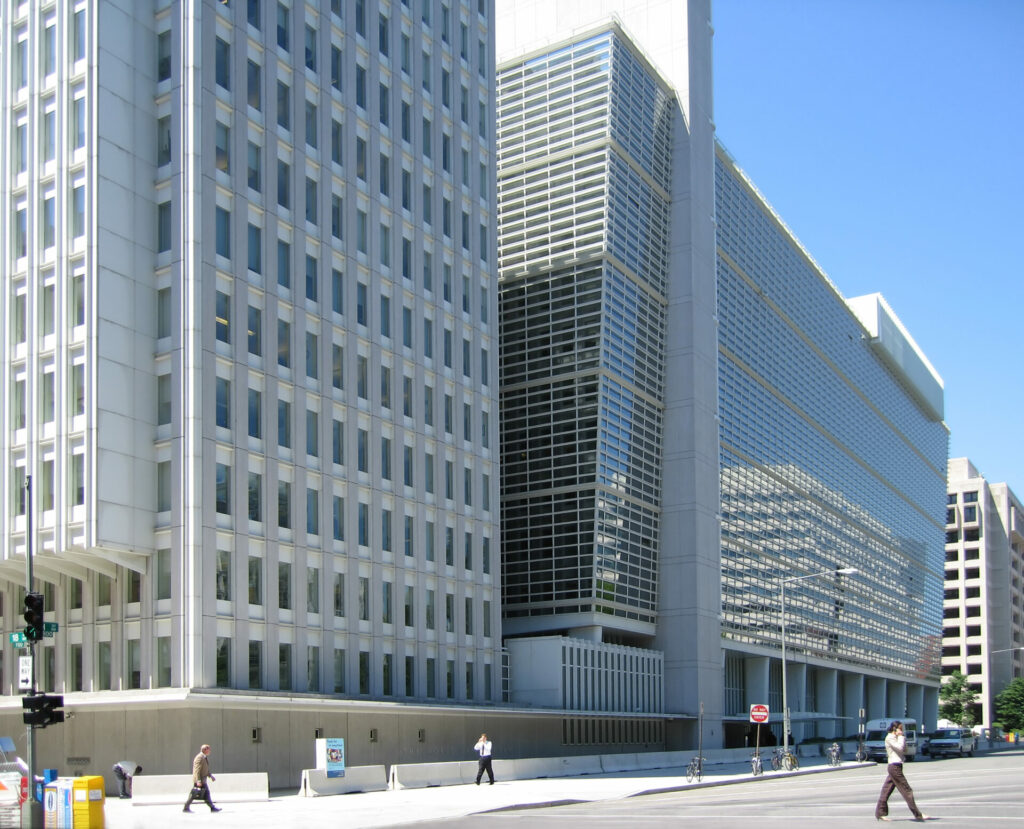
The World Bank (WB) has warned of a potential “decade of missed opportunities” for the global economy, given that growth over the past five years has been the lowest recorded in over 30 years.
Based in Washington, the institution anticipates a 2.4% rise in the global economy this year – a decrease for the third consecutive year after peaking at 2.6% in 2023.
This reflects a 0.75 percentage point drop from the average observed since the early 2000s. With the exception of 2020’s severe recession caused by the Covid-19 pandemic and the subsequent shutdown of large sectors of the global economy, this would mark the weakest annual global growth since the 2008 financial crisis.
However, the report emphasised the stronger position of the global economy, largely credited to the robust American economy which has helped ward off a worldwide recession.
Searching for stability
The bank highlighted short-term geopolitical tensions that will bring economic duress. Combined with complications in emerging economies, the World Bank’s Chief Economist Indermit Gill fears that the 2020s could become a decade of missed opportunities.
As a result, expected growth will be unevenly distributed across regions, with only 1.2% for advancing economies, a decrease from the previous year and less than 4% for emerging countries, where private and public investments are decelerating.
China, the world’s second-largest economy, is expected to have an especially difficult year, with its iconic output dwindling from 5.2% in 2023 to 4.5% this year, further decelerating to 4.3% by 2025. This decline is attributed to a sharp decrease in consumption and household expenditure along with long-term challenges such as an ageing population, debt-reducing investment, and fewer opportunities to boost productivity.
Related News
- Almost €900 million in irregular income declared in 2023
- Richest 10% own more than half of Belgium's wealth
- Will your wage increase in January? And by how much?
Highlighting the stark contrasts in post-Covid recovery across countries, advanced economies have mostly returned to or exceeded pre-pandemic levels, which is not the case for many developing or emerging countries.
“By the end of 2024, we estimate that every developed country will have a GDP higher than pre-pandemic per capita. This ratio is two-thirds for emerging countries and even less for developing countries. It’s below half for the most fragile countries or those affected by wars,” Gill added.
Furthermore, without a quickening of global growth in the upcoming years, “the residents of one in four developing countries will be poorer at the end of the 2020s than they were before the pandemic.”
