
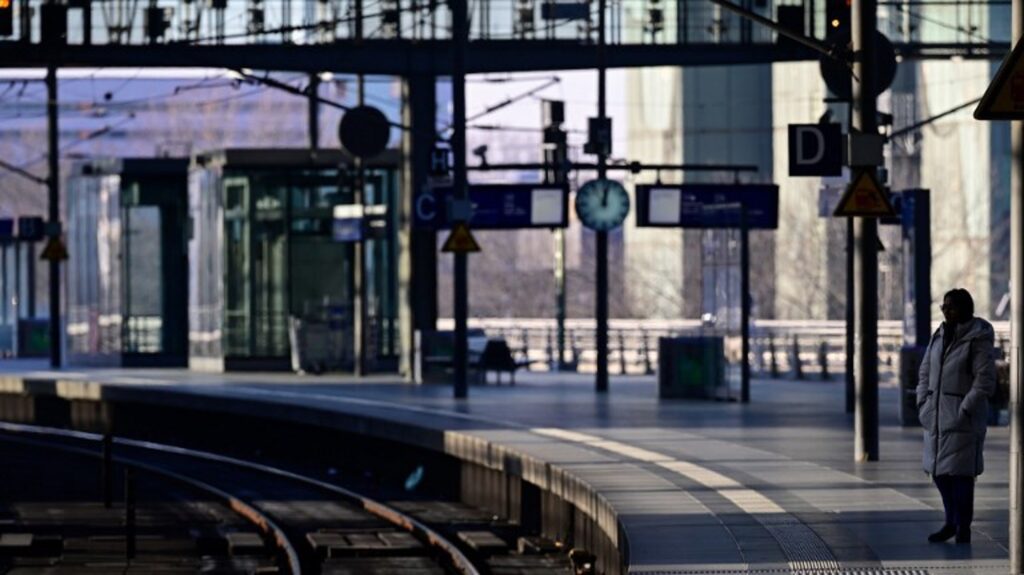
A strike by German train drivers affected railway services between Belgium and Germany on Thursday in addition to causing large-scale disruptions for rail commuters across Germany.
The strike led to the cancellation of ICE connections between Brussels and Cologne, while around one in five long-distance trains run by Deutsche Bahn have been cancelled, with substantial delays on regional routes.
Transdev, another operator, is similarly affected by the strike, which is scheduled to continue until 6.00 p.m. on Thursday.
This marks the third – and thus far, the longest – strike in an escalating conflict between the German train drivers union, GDL, and the railway companies, which had sought unsuccessfully to block it through legal action.
At the heart of the dispute is the union’s demand to reduce the typical working week for shift employees from 38 to 35 hours, for the same salary. Deutsche Bahn is not amenable to this and has offered a counter-proposal. Its suggestion would allow workers to choose fewer hours, but with reduced income.
That idea was coldly received by the train drivers’ union.
GDL previously initiated two 24-hour work stoppages. In December, however, members voted in favour of an indefinite strike. Consequently, work could now be halted for an extensive period.
