
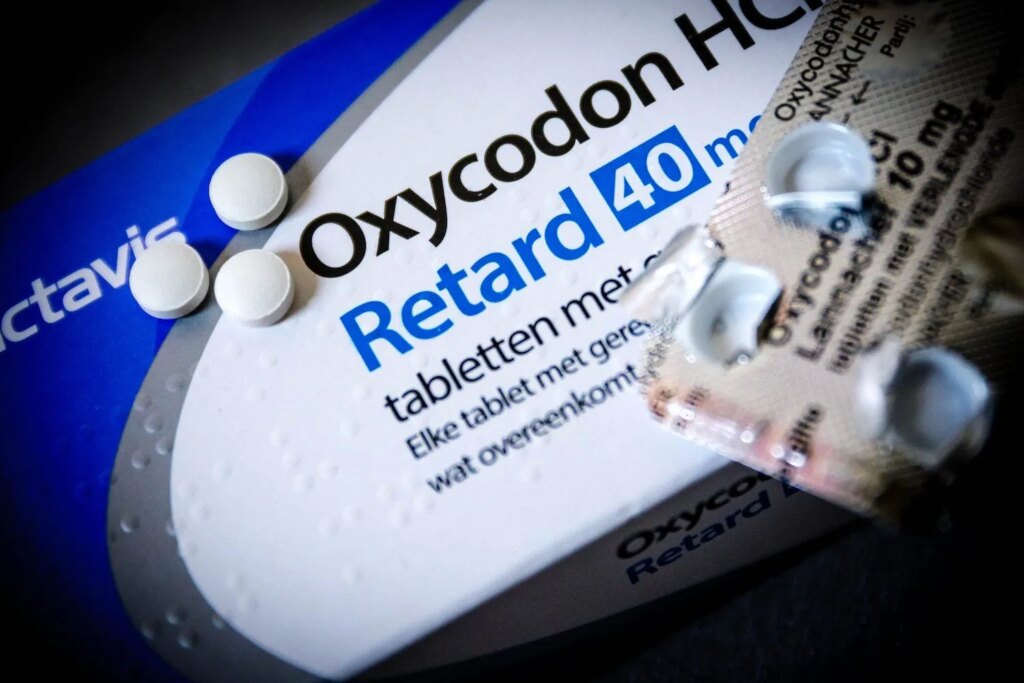
Now that the Taliban has imposed a ban on opium cultivation in Afghanistan, more powerful synthetic opioids or stimulants such as methamphetamine are at risk of entering Europe – posing a major threat to public health, warns the European police organisation Europol.
Illicit opioid use remains a major problem in the EU, causing around three-quarters of the more than 6,000 drug-related overdose deaths in 2021. The drugs are used to reduce pain and are highly addictive. In the EU, around a million opioid users are at high risk of overdose.
"Although we are seeing a decline in opium poppy cultivation in Afghanistan, close monitoring of the supply chain and the diversification of the market is paramount, as criminal networks are known to be business-oriented, flexible and always on the lookout for new opportunities," said Europol director Catherine De Bolle.
The amount of heroin seized by EU Member States more than doubled in 2021 to 9.5 tonnes – the most in two decades. New, highly potent synthetic opioids are also emerging more.
📢 New report! Latest module of the Europol-@EMCDDA EU Drug Market analysis on heroin and other opioids now available.
⚠️ The analysis describes the European market for heroin, from production and trafficking to distribution and use. Details here ⤵️https://t.co/RYgw634SYs pic.twitter.com/ONrJvwN1ry — Europol (@Europol) January 24, 2024
The value of heroin trafficking in the EU is estimated at at least €5.2 billion per year. For some criminal networks operating in the EU, heroin trafficking and distribution of heroin is their main activity.
Almost all heroin consumed in Europe comes from Afghanistan, where the Taliban imposed a ban on poppy cultivation and opium production in April 2022. As a result, both cultivation and production of the drugs fell by 95% in the country by 2023.
Europol warns that developments in Afghanistan could see the gap in the market be filled by powerful synthetic opioids or stimulants, such as methamphetamine (often just "meth"). These, in turn, can have major negative consequences for public health and safety. The organisation cautions that Europe’s increasingly complex opioid problem will severely test EU and national forces of law and order.
Changing routes and patterns of usage
The four main routes used for heroin smuggling from Afghanistan are via the Balkans, the South, the Caucasus and the North. Here too, shifts have been noticeable in recent years. For example, seizures on the Balkan route appear to be decreasing – mainly due to the "perceived or actual" stricter border controls in Turkey and Bulgaria.
By contrast, heroin trafficking via the southern route to the EU is on the rise, as evidenced by the large quantities of heroin leaving ports in Iran and Pakistan. Though still used, the routes in the North and the Caucasus have been significantly disrupted by Russia's invasion of Ukraine.
Additionally, the United Arab Emirates (UAE) appears to have emerged as an important transhipment point, often used to conceal the origin and nature of heroin shipments. It is also a major centre for money laundering and criminal coordination.
Related News
- One of the EU's largest drug seizures discovered at Brussels Airport
- 'We must keep fentanyl out of Europe' urges Justice Minister
- Opioid use in Belgium doubles in 15 years
"Maintaining and developing an integrated and evidence-based portfolio of health and social responses is more important than ever," said director of the European Monitoring Centre for Drugs and Drug Addiction (EMCDDA) Alexis Goosdeel. He sees major challenges in the need to build on lessons from 30 years of European drug policy, as well as basing new policy on the fundamental rights of people who use drugs.
"As substance use and patterns of use change and become more complex, we must revise our model and adapt our prevention, treatment and harm reduction offer to respond to these new challenges."
